
Garden Offices: The Ultimate Commuter Hack
By My Local London Builder Team | January 26, 2025
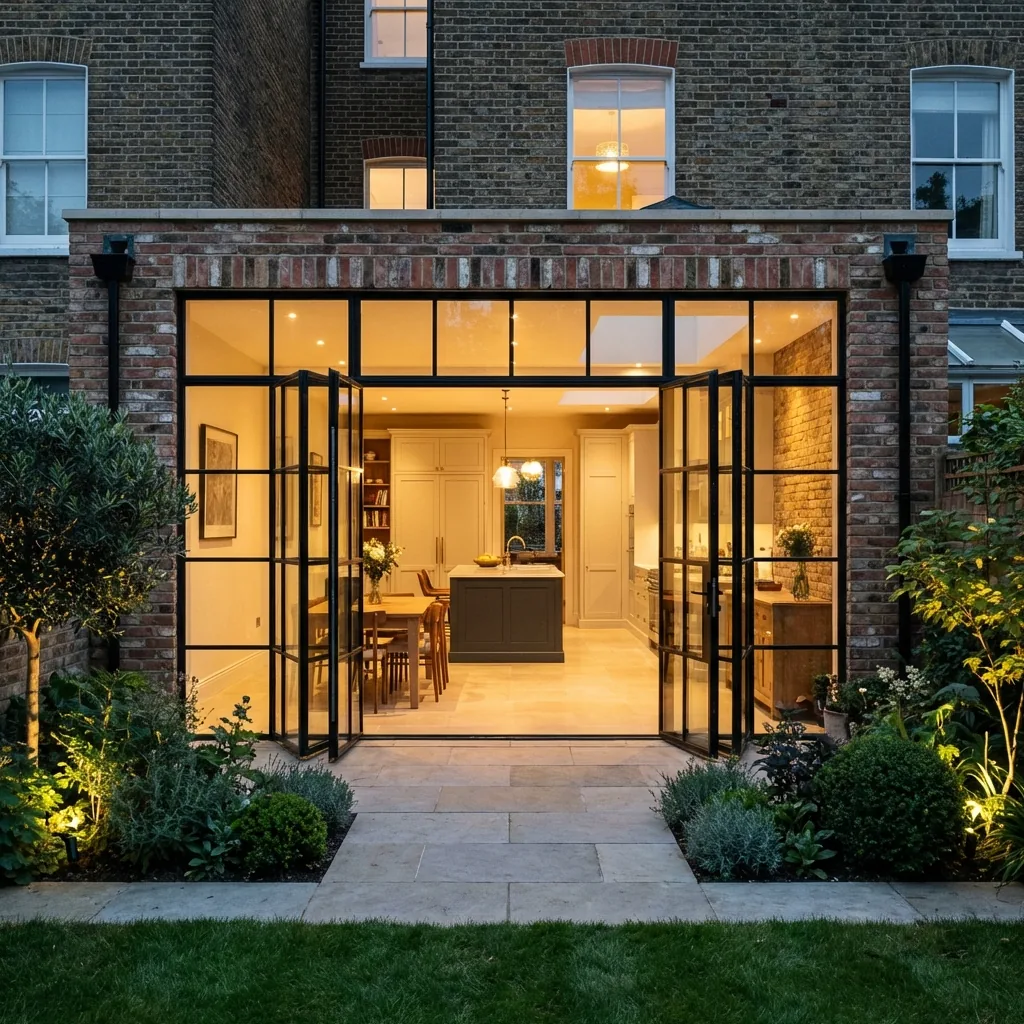
Summary: London has the longest commute times in the UK. The smartest way to beat the traffic involves walking ten metres down your own garden path. But is it a shed, or is it a building? The clear distinction lies in legal status, thermal performance, and connectivity. A high-specification garden studio is a legitimate extension of your living space; a shed is where spiders live. This guide explains how to build a year-round workspace that adds value to your property and sanity to your life.
The Rise of the "Third Space"
Before 2020, working from home was a novelty. Now, it is a requirement. However, working from the kitchen table is unsustainable. You need psychological separation. You need a door you can close at 6pm.
A garden office provides this "Third Space"—neither work nor home, but a hybrid zone where focus is possible. But building one in a London garden is not straightforward. You are navigating planning laws, neighbours, and heavy clay usage.
Planning Permission: The "Incidental" Rule
Most garden offices are built under Permitted Development Rights (Class E). This means you do not need to apply for full planning permission, provided you strict adherence to the rules. The most critical rule is "Incidental Use".
"Incidental" vs "Ancillary"
This is where people get caught out. "Incidental" use means activities like a hobby room, gym, or home office. "Ancillary" use means sleeping, cooking, or living. You can put a toilet and a kitchenette in a garden office, but if you put a bed and a shower in, the council may classify it as a "separate dwelling" and demand its demolition.
Height Restrictions: The 2.5m Ceiling
In London, gardens are small. Your office will almost certainly be within 2 meters of a boundary fence. If it is, the **maximum total height** of the building cannot exceed 2.5 meters from ground level.
This is a tight constraint. By the time you account for the floor structure (150mm) and the roof structure (200mm), you are left with an internal ceiling height of around 2.1 meters. This is adequate, but it feels low. To maximise height, we often use:
- Warm Deck Roofs: Placing insulation on top of the joists (raising the height) is tricky. We often put it between joists to save millimeters.
- Ground Screws: Instead of a thick concrete slab, we use large steel screws driven into the earth. This allows us to mount the building lower to the ground, gaining precious internal headroom.
Construction Methods: SIPs vs Timber Frame
If you buy a cheap log cabin from a generic website, it will be made of 44mm interlocking timber logs. In winter, it will be freezing. In summer, it will be an oven. It is effectively a posh shed.
For a year-round office, you need Residential Grade Construction. There are two main ways we do this:
1. SIPs (Structural Insulated Panels)
This is the gold standard. A SIP is a sandwich of foam insulation glued between two sheets of OSB board. It is incredibly strong and airtight. A 100mm SIP wall has the same thermal performance as a much thicker brick wall.
2. Timber Frame
This is the traditional method. We build a stud wall (like in a house), fill it with rigid PIR insulation (Celotex/Kingspan), and clad it. It is slightly cheaper than SIPs but takes longer to build on site.
Foundations on London Clay
London Clay shrinks in summer and swells in winter. If you build a rigid box on a moving surface, it will twist. Your doors will jam, and your plaster will crack.
We avoid traditional strip foundations for garden rooms because they are messy and damaging to tree roots (which causes issues with neighbors). Instead, we prefer:
- Ground Screws: As mentioned, these are fast and eco-friendly.
- Concrete Plinth Grid: Several small pads of concrete supporting a timber sub-frame. This allows air to circulate under the building, preventing the floor from rotting.
Connectivity: The Invisible Umbilical Cord
You are building this office to work. If you cannot make a Zoom call, the building is useless. Do not rely on Wi-Fi extenders or "Powerline" adapters; they are flaky over distances greater than 15 meters.
The Solution: Hardwired Cat6
When we dig the trench for the electricity cable (armored SWA cable), we lay a separate duct for a Cat6 outdoor-grade data cable. This runs directly from your home router to a data socket in the office. It guarantees full-speed, low-latency internet, identical to being in your hallway.
Cladding and aesthetics
The office is a large object in your garden. It needs to look good. The choice of cladding defines the maintenance regime.
Western Red Cedar
The architect's choice. It smells incredible and has a rich, variegated orange colour when new. However, UV light will bleach it to a silver-grey within 12 months unless you treat it with UV oil every year. It is a high-maintenance beauty.
Composite Cladding
Made from recycled plastic and wood flour. It looks uniform (some say "plastic"), but it is bulletproof. It will never rot, warp, or fade. If you want to build it and forget it, composite is the rational choice.
Heating and Cooling
In a highly insulated SIPs building, you do not need much heat. A single robust oil-filled radiator or a sleek electric panel heater is usually sufficient.
However, the bigger problem in garden offices is cooling. South-facing glass creates a greenhouse effect. We strongly recommend:
- Air Conditioning: A small wall-mounted split unit provides heating in winter and, crucially, cooling in summer. It is the ultimate luxury upgrade.
- Blinds: Integral blinds (inside the glass) or external Venetian blinds are essential to stop solar gain before it enters the room.
Summary: A Room of One's Own
A garden office is the fastest, least disruptive way to add square footage to your home. There are no party wall awards (usually), no heavy structural steels, and no dust in your bedroom.
But respect the complexity. It is not a DIY weekend project. It requires damp-proofing, structural integrity, and electrical safety certification (Part P). Get it right, and it is the best commute you will ever have.
Frequently Asked Questions
1. Can I build right up to the boundary?
Under planning rules, yes. But for maintenance, you should leave a 400-500mm gap so you can paint/repair the back wall. Also, if you build timber cladding right against a neighbor's fence, it creates a damp trap that will rot your building.
2. Does it need Building Regulations sign-off?
If the internal floor area is less than 15sqm, usually NO (provided it doesn't contain sleeping accommodation). Between 15sqm and 30sqm, it still usually NO, provided it is 1m away from the boundary OR constructed of non-combustible materials. However, the electrics MUST always be certified by a Part P electrician.
3. Can I have a toilet?
Yes, but the plumbing is expensive. You need to pump the waste back to the main house's soil stack using a macerator pump (Saniflo) and a small bore pipe buried in the garden trench. It adds significant complexity but huge functionality.
4. How long does it take to build?
A SIPs garden room can be erected in 2-3 days, but the full fit-out (plastering, electrics, flooring, painting) takes about 2-3 weeks in total.
5. Will it add value to my house?
Yes. Post-pandemic, a high-quality external home office is a massive selling point. Estate agents estimates suggest it can add 5-10% to the property value, often exceeding the cost of installation.
6. Can I use it as a gym?
Absolutely. But if you plan to drop heavy weights, tell us. We will need to reinforce the floor structure with extra joists or a thicker ply sub-floor to stop the building bouncing.
7. What if I live in a flat / maisonette?
Permitted Development rights (Class E) only apply to houses. If you live in a flat or maisonette, you do not have these rights. You must apply for Full Planning Permission, which is harder to get.
8. Is a green roof worth it?
A sedum roof looks beautiful (especially if overlooked by upstairs bedrooms) and helps with biodiversity. However, it is very heavy (saturated soil). The roof structure needs to be engineered to take the extra load, which increases the cost.
Read Next: Related Guides
- → Permitted Development The detailed rules of Class E.
- → Conservation Areas Can you build a garden office in a CA?