
How Long Does a Rear Extension Take in London?
By My Local London Builder Team | March 2026
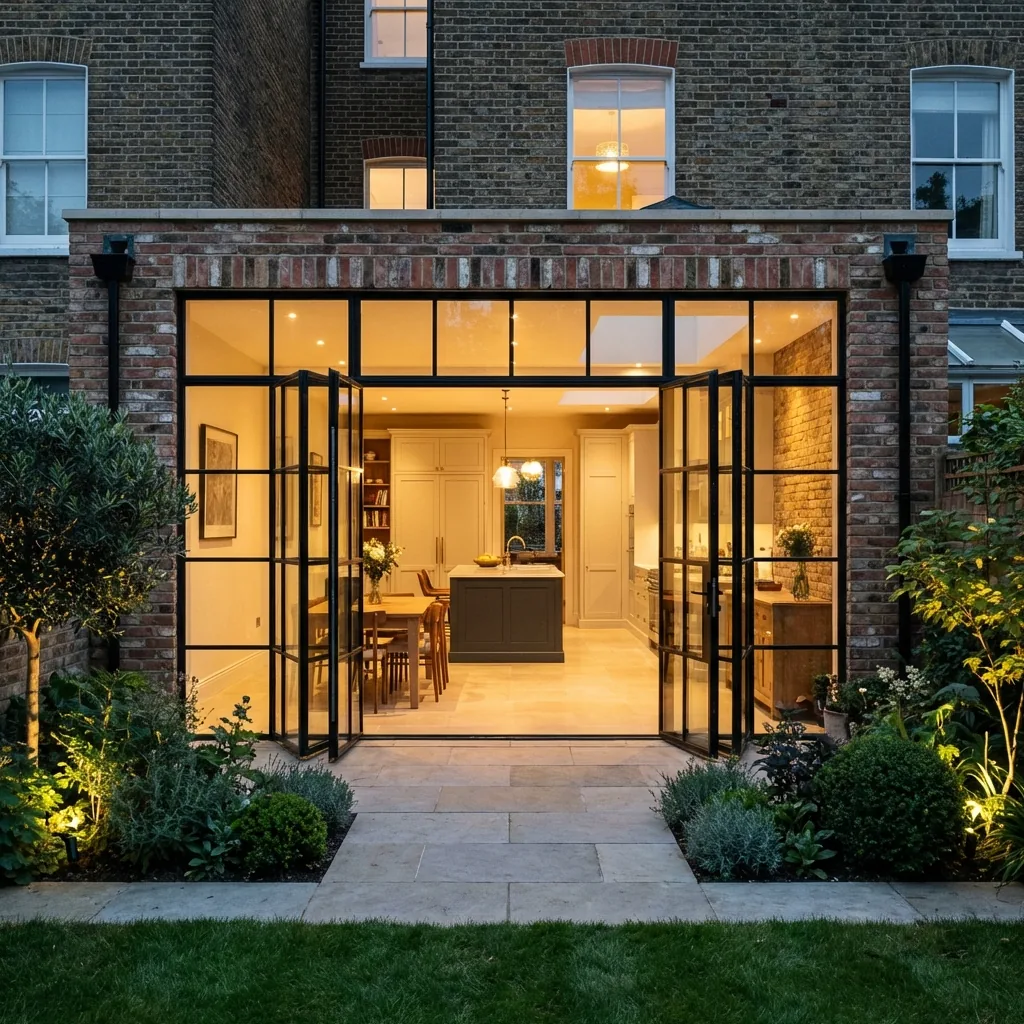
Summary: Most people underestimate how long a rear extension takes — not because the build is slow, but because the pre-construction phase is longer than expected. Planning permission, party wall notices, Building Regulations approval, and procurement all run before a single foundation is dug. This guide gives you the honest numbers at every stage, explains what can run in parallel, and tells you where London-specific factors add time that projects elsewhere in the country don't have to account for.
The Honest Answer: Two Numbers to Keep in Mind
There are two timelines that matter for a rear extension, and most people only think about one of them.
The build programme — the time work is actually happening on site — is typically 10–16 weeks for a single-storey rear extension. That is the number people tend to focus on. It is also the shorter of the two.
The total project programme — from appointing an architect to moving back into your finished kitchen — is typically 9–14 months for a London terrace requiring full planning permission. The gap between those two numbers is the pre-construction phase: the planning process, the party wall process, Building Regulations approval, and procurement. None of it involves a tradesperson on your property, but all of it needs to happen before the groundbreaking can.
Understanding both numbers — and what drives each of them — is the starting point for planning a rear extension in London realistically.
Stage 1: Architect and Design (6–10 weeks)
The process begins with appointing an architect and agreeing a brief. From that first meeting to having planning-ready drawings in hand typically takes six to ten weeks for a single-storey rear extension, depending on the complexity of the design and how quickly decisions are made at each review stage.
This phase produces the drawings needed for planning permission, structural engineering, and the Party Wall Notice. It is worth investing properly in the brief at the outset: changes made during design are inexpensive; changes made once on site are not.
Stage 2: Planning Permission (8–14 weeks from submission)
Most rear extensions in London require full planning permission. The statutory determination period is eight weeks from the point the council validates the application, but the realistic expectation across London boroughs is 10–14 weeks. Conservation area applications, or those that attract neighbour objections, can take 16 weeks or longer.
There is also a pre-submission period: drawing preparation, application assembly, and the council's validation process typically add two to three weeks before the eight-week clock starts. For boroughs that offer pre-application advice — which is worth using in complex conservation area cases — add a further four to six weeks for that process.
Total realistic allowance from first submission to decision: 12–16 weeks. From appointing an architect to having planning permission in hand: 4–5 months.
Stage 3: Party Wall (run in parallel — 10–14 weeks where Award needed)
The Party Wall Notice can be served as soon as structural drawings are available — it does not need to wait for planning permission. This is one of the most important programme decisions on a London extension, and one that is frequently got wrong.
Serving the notice the moment structural drawings are ready — even before the planning decision — means the two-month notice period runs concurrently with the planning determination. If planning is granted in week 12 and the notice was served in week 8, the party wall period may already be close to expiring. If the notice is only served after planning is granted, two more months are added to the programme for no reason.
Where a neighbour consents in writing, the party wall process adds no time beyond the two-month notice period. Where a dispute arises and surveyors must be appointed, allow 10–14 weeks from service of the notice to receipt of the Award.
For a full explanation of the process, see our Party Wall Act guide and our article on party wall agreements for loft conversions.
Stage 4: Building Regulations (run in parallel — 5–8 weeks for approval)
Building Regulations approval is a separate process from planning permission and should run in parallel with it. A Full Plans application — where detailed structural drawings are submitted in advance for approval before works begin — typically takes five to eight weeks to be checked and approved by either the local authority building control department or an Approved Inspector.
Submitting the Building Regulations application at the same time as the planning application means that by the time planning permission arrives, Building Regulations approval may already be in hand — or close to it. Waiting until after planning is granted to start the Building Regulations process adds six to eight unnecessary weeks.
Full Programme — Single-Storey Rear Extension, London Terrace
- Architect appointment to planning drawings: 6–10 weeks
- Planning application to decision: 10–14 weeks (can overlap with above)
- Party Wall Notice period (run in parallel with planning): 8 weeks minimum; 10–14 weeks if Award needed
- Building Regulations Full Plans approval (run in parallel): 5–8 weeks
- Procurement: steelwork, glazing, fittings (run in parallel): 4–10 weeks depending on specification
- Total pre-construction (realistically): 5–7 months
- Groundworks and foundations: 2–3 weeks on site
- Structural frame, walls, and roof: 3–5 weeks on site
- Weathertight / roofing complete: 1–2 weeks on site
- First fix (electrical, plumbing, structural openings): 2–3 weeks on site
- Plastering and drying time: 2–3 weeks on site
- Second fix, flooring, joinery: 2–3 weeks on site
- Decoration and snagging: 1–2 weeks on site
- Total build programme: 10–16 weeks on site
- Full project start to practical completion: 9–14 months
Stage 5: Procurement (run in parallel — 4–10 weeks)
Long-lead items must be ordered before they are needed on site, not when they are. The two most common culprits for programme delays are structural steelwork and bespoke glazing.
Structural steelwork — the beams that carry the rear wall of the original house once the opening is created — typically has a lead time of three to five weeks from the point a fabricator receives certified drawings. If steelwork is only ordered after foundations are complete, work will stop on site and wait for delivery.
Bespoke bifold, sliding, or fixed glazed doors and roof lights often have lead times of six to ten weeks from order. For less common specifications — very wide spans, structural glass, bespoke frame colours — twelve weeks is not unusual. Ordering immediately after planning permission is granted, rather than waiting until the frame is up, keeps these items arriving on programme.
The Build in Detail
Groundworks and Foundations (2–3 weeks)
The project begins with marking out, excavating, and pouring the extension foundations. In London, foundations are typically deeper than elsewhere in the country due to the prevalence of clay soils — which shrink and swell seasonally — and the proximity of trees. A standard strip foundation on London clay is usually at least 1.0–1.5 metres deep. Where trees are close or ground conditions are unusual, structural engineers may specify piled foundations, which add time and complexity.
The Building Regulations inspector visits at foundation stage before concrete is poured. Do not pour until the inspection has been carried out and sign-off given.
Structural Frame, Walls, and Roof (3–5 weeks)
Once the foundations have cured — typically one to two weeks after pouring — the walls go up. For a brick-built extension, this phase sees the external leaf of brickwork rise, the structural steelwork installed to form the rear opening in the original house, and the roof structure built. This is the most visually dramatic phase of the build: the extension takes shape quickly and the rear of the house is exposed to the elements at roof level.
The party wall surveyor (where one is appointed) will typically carry out a site inspection during this phase, particularly when steelwork is being installed into or alongside the party wall.
Weathertight (1–2 weeks)
Before internal trades can begin, the extension must be weathertight — roof finished, all openings protected, and temporary weatherproofing removed from the original house rear wall. For a flat roof extension, this means the waterproof membrane and insulation are complete. For a pitched or glazed roof, the roof lights or glazed panels must be installed. This is the point where bespoke glazing lead times bite if ordering was left too late.
First Fix (2–3 weeks)
First fix covers all the services that need to be installed before walls are plastered: electrical conduit and back boxes, plumbing runs for underfloor heating or radiators, structural openings formed in the original rear wall, and any reconfiguration of drains. This phase requires careful coordination between electricians, plumbers, and the structural programme — trades working in the same space simultaneously need managing carefully to avoid rework.
Plastering and Drying (2–3 weeks)
Plastering is typically completed in a week, but the drying time afterwards is often underestimated. Freshly plastered walls need adequate drying time before decoration — two to three weeks minimum, and longer in winter when ventilation is reduced. Attempting to paint or install joinery before plaster is fully dry leads to cracking, poor adhesion, and remedial work. This is not a phase to rush.
Second Fix, Flooring, and Joinery (2–3 weeks)
Second fix brings the electrical sockets, light fittings, and plumbing connections; floor finishes are laid; kitchen or utility fittings are installed. This is also when internal doors and architraves are fitted. The pace of this phase depends heavily on how quickly client decisions on finishes, fittings, and fixtures have been made. Late decisions here — a kitchen that has not been designed, tiles that have not been chosen — are one of the most common causes of programme overrun at the end of a project.
Decoration and Snagging (1–2 weeks)
The final phase covers painting and decorating, external making-good to the original rear elevation, landscaping of disturbed garden areas, and the snagging process — a systematic walk-through to identify and rectify any items that are incomplete or below standard before the project is formally handed over.
"The build is the easy part to schedule. It is the nine months before groundbreaking that rewards careful planning."
London-Specific Factors That Add Time
London projects carry a set of programme risks that are less pronounced elsewhere in the country.
Conservation Area Planning
A large proportion of London's residential streets sit within conservation areas where standard Permitted Development rights do not apply and planning applications are scrutinised more carefully. Conservation area applications attract more objections, more detailed officer assessments, and a higher rate of committee referral — all of which extend the determination period. See our guide to rear extensions in Islington for an example of what this looks like in one of London's most tightly controlled boroughs.
Deep Foundations on Clay
London's clay soils — particularly the London Clay that underlies much of the capital — require deeper foundations than the national norm. On terraces with mature trees in rear gardens, foundation depths of 2 metres or more may be specified by the structural engineer to reach below the zone of seasonal movement. This adds time to the groundworks phase and occasionally requires specialist piling equipment.
Skip and Delivery Logistics
Working on a London terrace street often means navigating parking restrictions, resident permit zones, and limited access for large vehicles. Skip permits, scaffolding licences, and materials deliveries all require advance coordination with the local authority highways department. These are not optional: an unplanned skip on a controlled parking zone can result in removal and fines, and a delivery that cannot access the site stalls the programme.
Neighbouring Properties in Close Proximity
London terraces are built in close proximity, and works that would be straightforward on an isolated rural property become more complex when the neighbouring kitchen is three feet from where steelwork is being installed. The party wall process exists precisely for this reason, but managing the programme around neighbour-facing constraints — restricted working hours under the Award, unexpected neighbour objections, access requirements — adds a layer of coordination that rural and suburban projects do not have.
Most Common Causes of Programme Delay — London Rear Extensions
- Running planning and party wall sequentially instead of in parallel — adds 2–3 months unnecessarily
- Late procurement of steelwork or glazing — stops work on site and waits for delivery
- Unexpected ground conditions — deeper-than-expected foundations or tree root intrusion requiring revised structural design
- Late client decisions on kitchen, tiles, or fittings — second fix and fit-out cannot proceed without confirmed specifications
- Neighbour dispute under Party Wall Act — assumed consent but formal Award required, adding 4–8 weeks
- Building Regulations inspector availability — inspections at foundation and completion stages must be booked in advance; delays in inspector availability hold the programme
- Wet weather in winter — groundworks and brickwork are weather-sensitive; a November start carries more weather risk than a March start
How to Run a Tighter Programme
The single most effective thing you can do to shorten the total project timeline is to run the pre-construction processes in parallel rather than sequentially. Planning, party wall, Building Regulations, and procurement can all run concurrently once structural drawings are available. A project team that coordinates these four threads simultaneously can compress a 14-month programme to nine or ten months without rushing anything.
The second most important factor is decision-making speed. Every week a finish, fitting, or specification remains undecided is a week the programme cannot advance in that area. Go into the project with a clear brief and a decisive approach to the choices that will be put in front of you — kitchens, floor finishes, lighting, sanitaryware — and the tail end of the programme will run to time.
If you are planning a rear extension and want to understand how the programme would look for your specific property and borough, get in touch — we can talk through the realistic timeline from where you are now.
Frequently Asked Questions
1. How long does a rear extension take from start to finish in London?
For a typical single-storey rear extension requiring planning permission, the full programme from appointing an architect to practical completion is 9–14 months. The build itself takes 10–16 weeks on site. The majority of the timeline is pre-construction: planning, party wall, Building Regulations, and procurement.
2. How long does planning permission take for a rear extension in London?
The statutory period is 8 weeks from validation. In practice, allow 10–14 weeks. Conservation area applications or those with objections can take 16 weeks or more. Add 3–6 weeks for drawing preparation before the clock starts.
3. Can I speed up the rear extension process?
Yes — by running planning, party wall, Building Regulations, and procurement in parallel rather than sequentially. Serve the Party Wall Notice as soon as structural drawings are ready. Submit Building Regulations at the same time as planning. Order long-lead items immediately after planning is granted. Each of these saves 6–8 weeks.
4. How long does the Party Wall process take for a rear extension?
A minimum of two months from notice to starting structural work. Where a formal Award is needed, allow 10–14 weeks total. Serve the notice in parallel with the planning application to avoid this adding to your overall programme.
5. How long does the actual build take for a single-storey rear extension?
Typically 10–14 weeks on site for a single-storey rear extension. A larger or more complex project — wraparound, double-storey, or with significant internal reconfiguration — will take 14–20 weeks.
6. What causes the most delays on rear extension projects in London?
Running pre-construction processes sequentially, late procurement of steelwork or glazing, unexpected ground conditions, late client decisions on finishes, and party wall disputes where consent was assumed but a formal Award was needed.
7. Do I need to move out during a rear extension?
Most families stay in the property. The kitchen will be unavailable for several weeks when the rear is opened up. The noisiest phase — groundworks and structural frame — lasts around 3–4 weeks. Whether to move out depends on your tolerance for disruption and the scale of the project.
8. When is the best time of year to start a rear extension in London?
Spring (March–May) is generally preferred. Good ground conditions, long summer days ahead, and the open-roof phase of the build falling in warmer months. Autumn starts carry more weather risk for groundworks and brickwork in the colder months that follow.
9. How long does Building Regulations approval take for a rear extension?
A Full Plans application typically takes 5–8 weeks. Submit it in parallel with planning to have approval in hand or close to it when the planning decision arrives.
10. What is practical completion?
The point at which the works are complete to a standard that allows occupation, with only minor snagging items outstanding. The defects liability period — typically 6–12 months — begins at practical completion, during which any defects are made good. The Building Regulations completion certificate follows a satisfactory final inspection.