
Rear Extensions in Islington: Planning, Conservation Areas & What the Council Approves
By My Local London Builder Team | March 2026
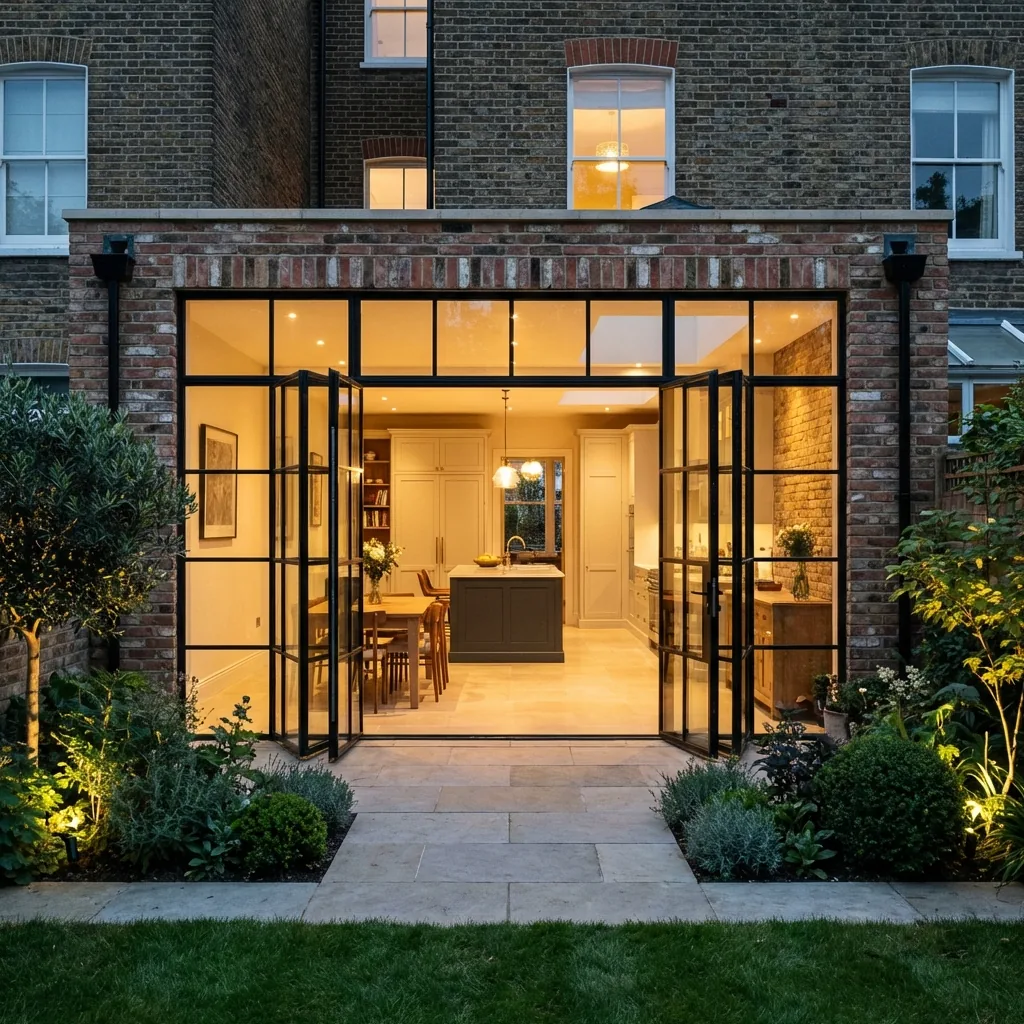
Summary: Islington is one of London's most rewarding boroughs for residential architecture — and one of its most tightly controlled. A large proportion of its housing stock sits within designated conservation areas subject to Article 4 directions that remove standard Permitted Development rights entirely. Getting a rear extension approved here requires understanding how the planning team thinks, what the conservation area guidance actually says, and how to design something the council will say yes to. This guide covers all of it.
Why Islington is Different
Most London boroughs contain a handful of conservation areas concentrated in their historic cores. Islington is different: conservation area designation covers a large proportion of the entire borough, spanning Georgian squares in Barnsbury and Canonbury through Victorian terraces in Highbury and Tufnell Park to the dense mixed-use fabric of Clerkenwell and Finsbury. The practical consequence for homeowners is that Permitted Development rights — the national framework that allows many extensions without planning permission — simply do not apply to the majority of Islington properties.
Islington Council has also applied Article 4 directions across much of this conservation area land. An Article 4 direction is a formal removal of specified Permitted Development rights, meaning that works which would elsewhere require no permission at all must go through the full planning application process in Islington. If you own a property in N1, N5, N7, or EC1, you should assume from the outset that full planning permission will be needed for any rear extension, and plan your programme accordingly.
None of this makes an extension impossible. Hundreds of rear extensions are approved by Islington Council every year. What it does mean is that the design, the application, and the professional team behind it all need to be calibrated to what the council expects — not what was approved in a neighbouring borough.
Islington's Housing Stock: Know What You Are Working With
Understanding the character of Islington's housing stock is the starting point for any extension design, because the council's planning guidance is written specifically to protect it.
Georgian Terraces (1780–1840)
The Georgian terraces of Barnsbury, Canonbury, and Canonbury Square represent the oldest surviving residential fabric in the borough. These properties — typically three or four storeys, stock brick, with regular fenestration and rendered ground floors — were designed as complete compositions. Rear extensions on Georgian terraces are typically confined to single-storey additions well below the eaves line, and the council is particularly protective of rear gardens, rear elevations, and the characteristic pattern of mews or rear access lanes that serve these properties.
Victorian Terraces (1840–1914)
The majority of Islington's housing stock is Victorian: two- and three-storey terraces across Highbury, Tufnell Park, Holloway, and Finsbury Park. Many have an existing rear outrigger — a narrow single-storey projection that originally housed a scullery or WC. The most common extension type on a Victorian terrace in Islington is either an infill alongside the outrigger, an extension behind the outrigger, or both combined. The council treats these differently to a clean new projection from a flush rear wall.
Edwardian and Inter-War Stock
Properties built between 1900 and 1940 — common in parts of Highbury, Manor House, and the fringes of Finsbury Park — tend to sit on slightly wider plots than the Victorian terraces and often have more generous rear gardens. They are frequently outside the most restrictive conservation area designations, making Permitted Development more likely to apply, though this should always be confirmed rather than assumed.
Islington's Main Conservation Areas — Quick Reference
- Barnsbury: Georgian and early Victorian terraces; Article 4 directions apply; among the most restrictive in the borough
- Canonbury: Georgian squares and Victorian terraces; strong protection for rear elevations and garden character
- Highbury Fields: Victorian terraces around the park; conservation area applies but with somewhat more flexibility than Barnsbury
- Clerkenwell: Dense mixed residential and commercial fabric; extensions assessed against the borough's design guide for urban intensification
- Mildmay: Victorian terrace grid; conservation area applies across much of the area
- Tufnell Park: Large Victorian semi-detached and terrace stock; check Article 4 status by property
- Finsbury: EC1 fringe; conservation designation applies to significant portions
Permitted Development: Why It Rarely Applies in Islington
Under national planning policy, householders in England have a right to extend their homes without planning permission — up to certain limits — under Permitted Development (PD) rights. For a terrace, the standard PD right allows a single-storey rear extension up to 3 metres deep, or up to 6 metres under the Prior Approval (Larger Home Extension) scheme. For a detached property, the limits are 4 metres and 8 metres respectively.
In most of Islington, these rights either do not apply at all, or apply in a significantly curtailed form:
- Conservation area designation removes PD rights for cladding, side extensions, and some roof alterations, and restricts the size and form of rear extensions.
- Article 4 directions go further, removing specific PD rights by local order. Islington has applied Article 4 directions extensively across its conservation areas, meaning that rear extensions which would be PD nationally require a full planning application here.
- Listed buildings are subject to Listed Building Consent for all internal and external alterations, entirely separate from planning permission. Islington has a significant number of listed Georgian and Victorian properties.
Before assuming any extension is Permitted Development, check your property's exact status on Islington Council's planning portal. Enter your address and look at both the conservation area designation and any Article 4 directions that apply. If you are uncertain, a Certificate of Lawful Development (CLD) is the appropriate mechanism to confirm PD status in writing — it is legally binding and protects you at sale.
What Islington Council Looks For in a Rear Extension Application
Islington Council's planning decisions on householder extensions are guided primarily by its Supplementary Planning Document on Extensions and Alterations and the borough's Local Plan. The consistent thread running through both is the principle of subservience: the extension must read as secondary to the original building in scale, height, and visual character.
Height and Scale
Single-storey rear extensions in conservation areas are typically expected to sit well below the eaves line of the original property. For a typical two-storey Victorian terrace, this means a flat or mono-pitched roof at no more than 3.0–3.5 metres to the ridge or flat roof level. Extensions that push up to or beyond 4 metres in height — bringing them level with the first floor of the original property — are usually refused on subservience grounds unless there is an exceptional design justification.
Depth
Three to three and a half metres of rear projection is the working norm for most conservation area applications in Islington. Deeper extensions are not automatically refused, but they require a stronger design justification, careful assessment of the impact on the rear garden and neighbouring amenity, and often a meaningful reduction in width or height to compensate for the increased depth.
Materials
London stock brick — the yellow-brown brick characteristic of the borough's original building stock — is the default expected material for any masonry elements of a rear extension in Islington's conservation areas. The council will accept well-chosen alternatives, particularly modern materials such as zinc cladding, timber, or structural glazing for contemporary rear extensions, but these require a coherent design rationale. The one material that frequently causes difficulty is render: Islington's conservation team tends to view rendered extensions as out of character with the brick-dominated rear elevations of the Victorian terrace streets, though it is not universally refused.
Glazing and Doors
Large rear glazing — bifold doors, sliding doors, structural roof lights — is broadly accepted in Islington for rear extensions, as it does not affect the street scene and contributes to the quality of the internal living space. The council expects framing to be in a restrained colour: dark grey, black, or bronze aluminium are the norm. UPVC frames in white are strongly discouraged in conservation areas and will frequently draw an objection from the conservation officer.
"Islington's planning team is not opposed to good contemporary architecture. What they are opposed to is design that ignores the context it sits in."
Pre-Application Advice: Use It
Islington Council offers a pre-application advice service that allows you to submit outline drawings and receive written officer feedback before committing to a full application. For anything other than a straightforward, clearly compliant proposal, using this service is strongly advisable. The reasons are practical rather than procedural:
- You identify any fundamental objections before spending on detailed drawings and structural engineering.
- You get written confirmation of the officer's view, which carries significant weight if the application is later referred to committee.
- You reduce the risk of a refusal — which creates a planning history on your property that future applications must address.
Pre-application advice at Islington is not free, but it is considerably less expensive than a refused application and revised submission. Budget for it as part of your professional fees at the outset.
The Planning Application Process at Islington
Once your architect has produced planning drawings — typically a site location plan, existing and proposed floor plans, sections, and elevations — the application is submitted through the national Planning Portal and validated by Islington Council. The statutory determination period is eight weeks from the validation date, though complex or contested applications routinely run to twelve or sixteen weeks.
During the determination period, the council will:
- Notify all adjoining neighbours by letter, allowing 21 days for representations.
- Consult internal departments — typically highways, sustainability, and the conservation officer for any conservation area application.
- Carry out a site visit, usually by the case officer.
- Issue a decision notice — either approved with conditions, refused with reasons, or (rarely) referred to the planning committee for determination by elected members.
Planning permission, once granted, is valid for three years from the date of the decision notice. Building Regulations approval is a separate process and must be obtained before structural work begins — permission does not imply compliance with the Building Regulations.
Typical Planning Application Timeline — Islington Rear Extension
- Pre-application meeting (optional but recommended): 4–6 weeks to receive written response from submission
- Architectural drawings and application preparation: 3–6 weeks depending on complexity
- Validation by Islington Council: 1–2 weeks from submission
- Statutory determination period: 8 weeks from validation
- Actual determination (typical): 10–14 weeks from validation
- Building Regulations application and approval: run in parallel once design is fixed; typically 4–6 weeks for Full Plans approval
- Party Wall process (if applicable): minimum 2 months from notice; run in parallel with planning
- Total pre-construction programme (realistic): 5–7 months from appointing an architect to starting on site
Party Wall Considerations in Islington
Islington's dense terrace streets mean that rear extensions almost universally require Party Wall Notices. The Act's excavation provisions — which apply to any excavation within 3 metres of an adjoining structure — are triggered by virtually every rear extension that involves foundation work in a Victorian or Georgian street. The structural party walls between terraced properties are equally relevant wherever steelwork is required to span openings or support upper floors.
The Party Wall process runs in parallel with planning, and both timelines need to be managed together. You cannot serve a Party Wall Notice until you have a fixed structural design, which typically means waiting until Building Regulations drawings are sufficiently advanced. A common programme error is to receive planning permission, instruct structural engineers, and only then begin the Party Wall process — adding two to three months to what could have been a concurrent programme.
For a full explanation of the Party Wall process, see our guide to Party Wall Agreements, and for guidance on choosing a surveyor, our Party Wall Surveyors in London article.
Design Approaches That Work in Islington
The most successful rear extension applications in Islington are those where the design responds honestly to both the character of the original property and the constraints of the conservation area, rather than attempting to maximise every dimension and argue the case afterwards.
The Modest Contemporary Extension
A single-storey extension of 3–3.5 metres depth, flat or mono-pitched roof at low eaves height, London stock brick side walls, and a large rear glazed elevation. This is the most consistently approved form in Islington conservation areas. It does not try to push boundaries, and it rarely receives objections from neighbours or the conservation officer because it is visibly respectful of its context.
The Outrigger Infill
Where a Victorian terrace has an existing rear outrigger, infilling the space alongside it creates a more generous ground floor footprint without extending further into the garden. This approach is generally well-received by Islington's planning team because it does not increase the overall depth of the rear projection — it simply rationalises an irregular plan. The junction between the new infill and the existing outrigger requires careful detailing to avoid water ingress and to read as a coherent composition.
The Glazed Wrap
For properties at the end of a terrace or with a generous side return, a combined rear and side return extension creates a substantial additional ground floor area. In conservation areas, this requires particular care: the side elevation of the extension faces the shared boundary and is often visible from the street or a shared access. The council will expect the side walls to be in brick matching the original, with glazing confined to the rear face. See our full guide to Victorian side return extensions for the specifics of this approach.
Frequently Asked Questions
1. Do I need planning permission for a rear extension in Islington?
Almost certainly yes. The vast majority of Islington properties fall within either a designated conservation area or an Article 4 direction area that removes standard Permitted Development rights. Check your property's status on Islington Council's planning portal before assuming any works are Permitted Development.
2. What is the maximum depth Islington Council will approve for a single-storey rear extension?
In conservation areas, Islington typically approves single-storey rear extensions of 3–3.5 metres in depth. Deeper extensions are not automatically refused but require a strong design justification and careful assessment of garden loss and neighbourly impact. The national Permitted Development limits of 3 metres (terrace) and 4 metres (detached) rarely apply in Islington because PD rights have been removed.
3. Can I add a flat roof to my rear extension in Islington?
Yes. Flat roofs with roof lights are common and generally accepted in Islington conservation areas at the rear. A pitched or mono-pitched roof may be viewed more favourably by the conservation officer where the extension is visible from neighbouring properties, but neither form is automatically preferred over the other.
4. My property is in the Canonbury conservation area. What restrictions apply?
Canonbury is among Islington's most closely managed conservation areas. Article 4 directions apply across much of it. The council expects rear extensions to be clearly subservient, constructed in matching stock brick, and designed to complement rather than compete with the original house. Modern glazed elements at ground floor level are generally acceptable.
5. What does 'subservience' mean in Islington planning decisions?
Subservience is the core design test: the extension must read as secondary to the original property in scale, height, and visual prominence. Practically, the roof of the extension must sit well below the original eaves, the extension width should not dominate the full rear elevation, and materials and fenestration must complement the host building. Applications that fail this test are almost always refused.
6. How long does planning permission take at Islington Council?
The statutory period is 8 weeks from validation. In practice, allow 10–14 weeks for a straightforward householder application, and up to 16 weeks for complex conservation area submissions or those with neighbour objections. Factor the full programme — including pre-application advice, drawing preparation, and parallel Party Wall and Building Regulations processes — when setting your project timeline.
7. Will Islington Council consult my neighbours?
Yes. Adjoining owners are notified and have 21 days to submit representations. Objections do not automatically result in refusal — the council decides on planning grounds — but significant objections can trigger a referral to the planning committee rather than officer determination, extending the timeline by several weeks.
8. Do I need a Party Wall Agreement for a rear extension in Islington?
Very likely yes. Rear extension foundations almost always come within 3 metres of a neighbouring structure in Islington's terrace streets, triggering the Party Wall etc. Act 1996. Party Wall Notices must be served at least 2 months before structural work starts. Begin this process in parallel with your planning application, not after you receive permission.
9. What materials does Islington Council prefer for rear extensions?
London stock brick for masonry elements; dark-framed aluminium for glazing and doors; zinc, copper, or timber as cladding alternatives where a contemporary approach is justified. White UPVC frames and render finishes are frequently refused in conservation areas.
10. Can I do a double-storey rear extension in Islington?
It is possible but significantly harder to approve than a single-storey extension. Double-storey additions are more likely to be approved on non-designated properties with generous plots. In conservation areas, a pre-application meeting with the council is essential before committing to full drawings — the planning team's view will determine whether the proposal has any realistic prospect of approval.