
Loft Conversions in Walthamstow: The E17 Builder's Honest Guide
By My Local London Builder Team | March 2026
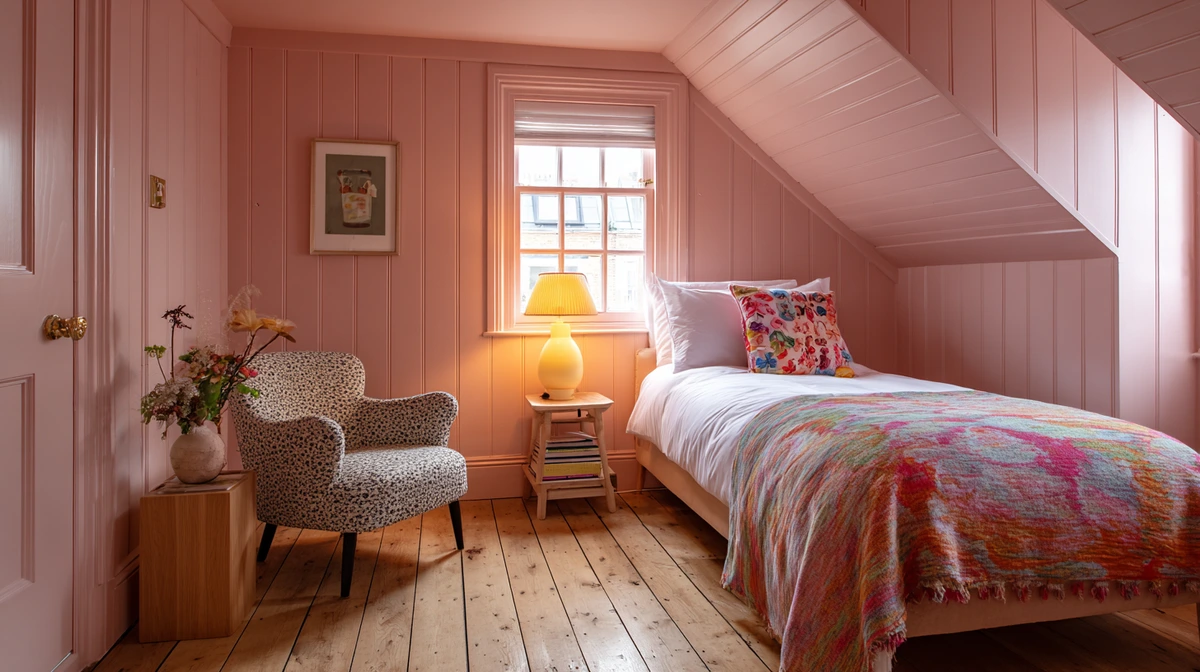
Summary: Walthamstow is having a moment. Prices have doubled in a decade, young families are rooted here, and moving further out is no longer the obvious answer. The loft conversion has become the defining home improvement of E17. This guide cuts through the noise: what type works for your house, what Waltham Forest Council will and won't approve, what it actually costs, and what to look for in a builder who knows this postcode.
Drive down any residential street in E17 — Leucha Road, Boundary Road, Tavistock Avenue — and you will see them. The tell-tale zinc-clad dormers rising from Victorian rooflines. The Velux windows. The scaffolding. Walthamstow is in the middle of a loft conversion boom, and for good reason.
The maths are straightforward. A Victorian mid-terrace in Walthamstow that sold for £280,000 in 2014 is now worth north of £600,000. Moving to a four-bedroom house in the same area costs you the stamp duty, the agent fees, and another £150,000–£200,000 on top. Or you spend £55,000 on a loft conversion and create the bedroom — and the space — you actually need. The choice is not a difficult one.
The question is not whether to do it. The question is how to do it properly, without getting burned by a cowboy builder, blocked by the council, or surprised by a party wall dispute that poisons your relationship with the neighbours for five years.
The E17 Housing Stock: What You Are Working With
Walthamstow's residential streets are dominated by two property types, and your loft conversion options are determined almost entirely by which one you own.
The Victorian terrace (1870–1900): These are the two-and-three storey houses with steep pitched roofs that line the streets off Hoe Street and Wood Street. They typically have a good roof void — often 2.4 to 2.8 metres from joist to ridge — which makes them strong candidates for a rear dormer. The steep pitch is your friend: it means headroom comes almost for free.
The Edwardian semi-detached (1900–1914): Larger plots, hipped roofs, and more space to play with. These are the houses on the wider roads towards Highams Park and Lloyd Park. The hip-to-gable conversion — where the sloping hip end is replaced with a vertical gable wall — is the classic move here. Combined with a rear dormer, it creates an "L-shaped" loft that maximises every square metre.
Walthamstow Loft Conversion: Cost Benchmarks (2026)
- Basic rear dormer (terrace): £45,000–£60,000
- Rear dormer with en-suite: £55,000–£70,000
- L-shaped dormer (semi): £60,000–£80,000
- Full mansard (planning required): £75,000–£110,000
Planning: What Waltham Forest Council Actually Allows
This is where most homeowners get confused. The planning rules for loft conversions in Walthamstow are a combination of national Permitted Development policy and local discretion, and they are not always applied consistently.
The default rule: A rear dormer loft conversion on a terraced or semi-detached house is usually Permitted Development — meaning no planning application is needed. The national rules allow up to 40 cubic metres of additional roof volume on a terrace, and 50 cubic metres on a detached or semi, provided the dormer does not front the highway, does not exceed the ridge height, and is set back at least 20cm from the eaves.
The Walthamstow wrinkle: Waltham Forest Council has designated several Article 4 Direction areas across the borough that remove Permitted Development rights. If your house sits within one of these areas — and many in central Walthamstow do — you need Full Planning Permission even for a basic rear dormer. Check the council's online planning map before you commission any drawings.
Always get a Certificate of Lawfulness. Even if you are confident your project is Permitted Development, apply for a Certificate. It costs around £200 and creates a formal legal record that the council agreed your works were lawful. This is essential for selling the property and for your mortgage lender.
Walthamstow Village: The Conservation Area Trap
If your property falls within the Walthamstow Village Conservation Area — the historic core around St Mary's Church, Orford Road, and the adjacent residential streets — you are in a different planning universe.
Conservation area designation strips all Permitted Development rights for roof alterations. This means any dormer, any roof light, any alteration to the roofline requires a Full Planning Application to Waltham Forest Council. The council's Conservation Officer will scrutinise the design closely.
What typically gets approved: low-profile, rear-only dormers clad in zinc or lead, set well below the ridge and not visible from the street. What gets refused: front dormers, large flat-roofed dormers that read as a "box" on the roofline, and any alteration visible from a public highway.
If you are in the conservation area, budget an extra £1,500–£3,000 for a planning architect to handle the application, and expect a 10–12 week determination period on top of your construction programme.
Dormer vs Mansard: The Right Choice for Your House
Most homeowners in Walthamstow do not need a mansard. Let us be direct about this. A mansard conversion — where the entire rear roof slope is replaced with a near-vertical wall — is a bigger, more expensive, and more planning-sensitive project. It creates the maximum possible floor area but is almost always outside Permitted Development and requires detailed planning drawings.
For the typical E17 Victorian terrace, a well-designed rear dormer gives you everything you need: a proper double bedroom, an en-suite bathroom, and adequate headroom throughout — all under Permitted Development. Read our full Mansard vs Dormer comparison guide if you are weighing up the options.
The mansard makes sense when: you need to maximise floor area on a smaller footprint; the existing roof pitch is shallow (reducing headroom in a standard dormer); or the property is at the top of the market where the additional value justifies the additional cost.
The Party Wall Reality in a Walthamstow Terrace
Building a loft conversion in a terrace means you have neighbours on both sides, and the Party Wall Act applies every time you touch a shared structure.
In a loft conversion, this typically means: cutting into the party wall to install the steel beam that carries the new floor; raising or trimming the party wall to form the gable end of your dormer; and any excavation for new structural foundations if the existing structure needs reinforcing.
You must serve a Party Wall Notice on both adjoining neighbours at least two months before work starts. If a neighbour dissents — or simply does not respond within 14 days — you are in dispute, and both parties must appoint a Party Wall Surveyor. This adds cost (£700–£1,500 per surveyor) and time, but it is not a catastrophe. Most E17 loft conversions proceed smoothly once notices are served correctly.
The mistake builders make: starting work on site without serving notice. This is illegal. It gives your neighbour the right to apply to court to stop the works entirely. Do not let this happen.
Building Regulations: The Staircase Problem
Every loft conversion needs Building Regulations approval. Full stop. This is not optional and is not the same as planning permission — it applies even when no planning application is required.
The issue that catches most Walthamstow homeowners off guard is the staircase. Building Control requires a protected escape route from the new loft bedroom down to ground level. In practice, this means:
- All habitable room doors on the first-floor landing must become 30-minute fire doors with self-closers
- The new loft staircase must have a minimum 2.0m headroom at the centre line
- Mains-wired, battery-backed smoke alarms must be installed on every floor, all interconnected
- The loft room itself does not need a fire door, but the door at the bottom of the loft stairs does
The staircase also has to fit somewhere. In a typical Walthamstow terrace, it usually comes off the back bedroom landing — which means losing part of that bedroom. This is the trade-off that surprises people most. You are gaining a new bedroom upstairs, but the existing back bedroom shrinks slightly to accommodate the new stairwell. Plan for this early.
What a Loft Conversion Adds to Your E17 Property
The return on a well-executed loft conversion in Walthamstow is among the best of any home improvement in London. The borough has seen consistent price growth driven by families upsizing within the area rather than moving out, which means the premium for a four-bedroom house over a three-bedroom house is unusually high.
"A bedroom-plus-en-suite loft in E17 typically adds £80,000–£130,000 to the market value of a mid-terrace — on a build cost of £55,000–£70,000."
But the return is not just financial. The homeowners who benefit most from a Walthamstow loft conversion are the ones who were genuinely considering moving: to Chingford, to Woodford, to further out of London. A loft keeps them in the schools they know, the community they have built, and the Victoria Line that gets them to work in under twenty minutes. That is harder to put a number on, but it is real.
Choosing a Loft Conversion Builder in Walthamstow
The loft conversion market in East London attracts every category of builder, from the exceptional to the genuinely dangerous. The fact that a company has a polished website and a full portfolio does not mean they know Waltham Forest Council's planning officers, or that they have handled the specific structural challenges of a Walthamstow Victorian terrace.
When selecting a builder, ask for these specifically:
- References in E17 or E10/E11: Not just "London." Ask for addresses and go and look at the finished work if you can.
- Their Building Control relationship: A good builder knows Waltham Forest Building Control by name. They pull their own applications and manage the inspections. They do not leave this to you.
- A written JCT contract: Every penny over £5,000 should be governed by a formal contract. Read our JCT Contracts guide before you sign anything.
- A realistic programme: A rear dormer in Walthamstow takes 8–12 weeks on site. Anyone quoting 4 weeks is either cutting corners or has not planned the job properly.
- Payment terms that protect you: Stage payments tied to completion milestones, not arbitrary calendar dates. Never pay more than 20% upfront.
We work regularly in E17, E10, and across Waltham Forest. If you are ready to get a quote, or just want an honest conversation about what is possible in your specific house, contact our team. We will give you a straight answer.
Frequently Asked Questions
1. Do I need planning permission for a loft conversion in Walthamstow?
Most rear dormer loft conversions on terraced houses in Walthamstow fall under Permitted Development — no formal planning application required — provided the dormer faces the rear, does not exceed 40 cubic metres of additional volume, and sits below the ridge line. However, if your property is in Walthamstow Village Conservation Area or an Article 4 Direction area, Permitted Development rights are removed and you will need Full Planning Permission from Waltham Forest Council.
2. How much does a loft conversion cost in Walthamstow?
A standard rear dormer in Walthamstow costs £45,000–£70,000 in 2026, depending on specification and whether you add an en-suite. An L-shaped dormer on a semi-detached starts around £60,000. A full mansard conversion starts at £75,000 and can exceed £100,000 for a high-specification finish.
3. What type of loft conversion suits a Walthamstow Victorian terrace?
The rear dormer is by far the most practical choice. It maximises headroom, is usually Permitted Development, and suits the steep-pitched roofs typical of E17 housing stock. Hip-to-gable dormers work well on the Edwardian semis along the larger roads. See our full Mansard vs Dormer guide for a detailed comparison.
4. Is Walthamstow Village a conservation area?
Yes. The Walthamstow Village Conservation Area removes standard Permitted Development rights for all roof alterations. Any dormer or roof alteration requires Full Planning Permission, and Waltham Forest Council will scrutinise the impact on the streetscene closely. Only rear-facing, low-profile dormers in zinc or lead are typically approved.
5. How much value does a loft conversion add in E17?
A well-executed loft conversion adding a double bedroom and en-suite typically adds 15–20% to the market value of a Walthamstow terrace — an uplift of £80,000–£130,000 on current E17 prices, well above the build cost. See our full adding value guide for a broader analysis.
6. Do I need a Party Wall Agreement for a loft conversion?
Yes, in almost all cases. If your loft involves cutting into the party wall — which it usually does when installing steel or forming the gable end — you must serve a Party Wall Notice on both adjoining neighbours at least two months before work starts.
7. How long does a loft conversion take in Walthamstow?
A standard rear dormer takes 8–12 weeks on site. Add 3–4 months for the pre-construction phase: drawings, Building Regulations approval, Certificate of Lawfulness, and party wall notices. Start planning earlier than you think you need to.
8. Can I add a bathroom to my Walthamstow loft conversion?
Yes, and you should. The value premium from a bedroom with en-suite is significantly higher than a bedroom alone. Plumbing runs up from the existing first-floor stack. The main constraint is headroom — Building Regulations require 2.1m over at least part of the bathroom floor.
9. What Building Regulations apply to a loft conversion?
All loft conversions require Building Regulations approval regardless of whether planning permission is needed. Key requirements: structural integrity, 30-minute fire resistance, a protected escape route with fire doors on all habitable rooms from ground to loft level, mains-wired interconnected smoke alarms, and Part L insulation. Read our Building Regulations checklist.
10. How do I find a reliable loft conversion builder in Walthamstow?
Ask for references from completed loft conversions in E17 specifically. Confirm they hold valid public liability insurance (minimum £2m), use a written JCT contract, and manage their own Building Regulations application. Never pay more than 20% upfront. Contact us for a no-obligation quote in Walthamstow.