
Mansard vs Dormer: Which London Loft is Right For You?
By My Local London Builder Team | January 25, 2025
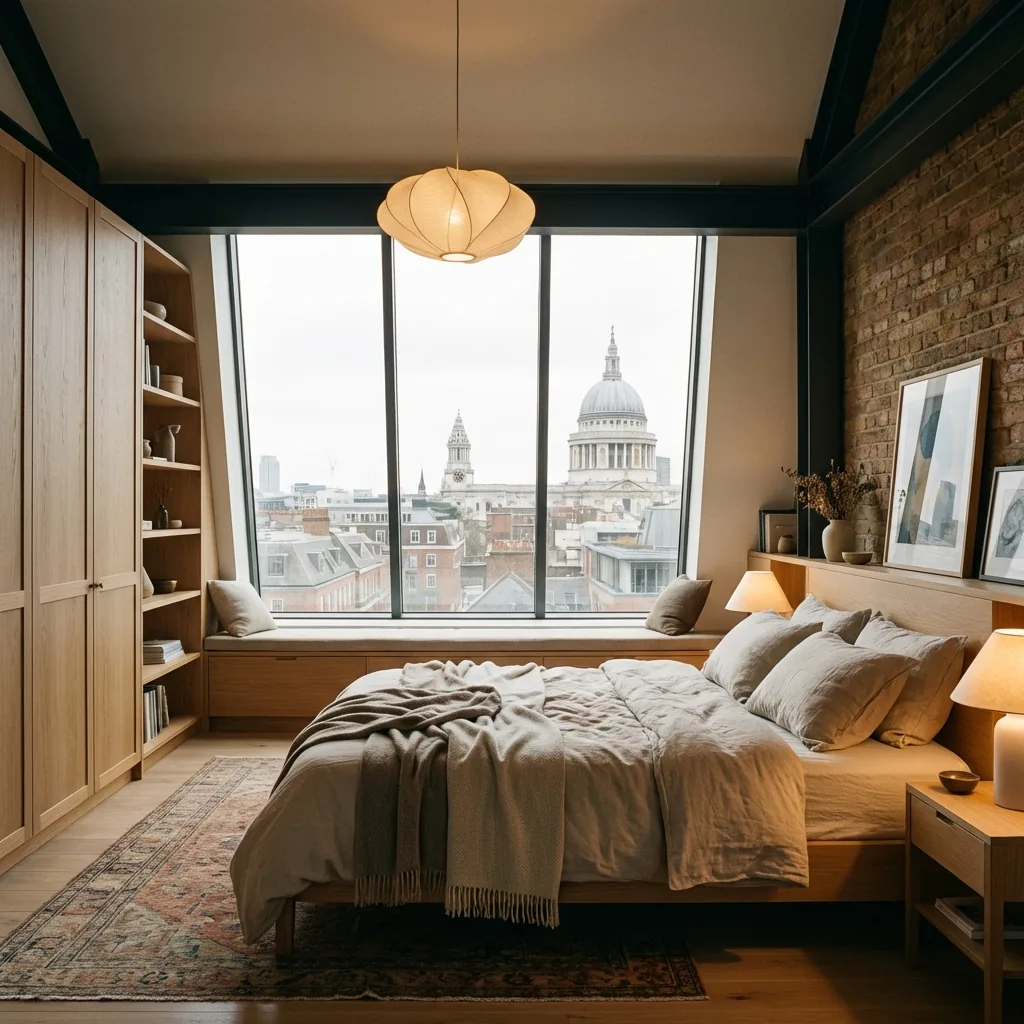
Summary: The London skyline is a battleground of roof shapes. The battle is between the boxy, practical Dormer and the elegant, sloped Mansard. This isn't just a question of taste; it is a question of planning permission, internal volume, and architectural integrity. In this unsparing guide, we dismantle the differences, exposing the pros, the cons, and the planning realities of the two heavyweights of London loft conversions. We help you decide whether to fight for beauty or settle for space.
Look up. Walk down any street in Fulham, Clapham, or Islington, and look at the roofs. You will see a war of geometry.
On one house, a sleek, sloped structure clad in slate that looks like it has always been there. That is a Mansard. On the next, a prominent, box-like projection with vertical windows that shouts "I am a new room." That is a Dormer.
Choosing between them is the first and hardest decision of your loft project. It pits your desire for maximum space against the council's desire for architectural preservation. It pits pragmatism against aesthetics.
We are here to tell you the truth about both. No sales pitch. Just the architectural reality.
The Dormer: The Space Maximiser
The "Rear Dormer" is the workhorse of London extensions. It involves extending the existing roof vertically from the ridge line to the rear of the house, creating a flat-roofed box.
The Pros: It is brutal efficiency. By creating a box, you get full head height across almost the entire footprint of the extension. It gives you 90-degree walls, which means standard wardrobes fit. It is the easiest way to get a master bedroom and an en-suite into a roof.
The Permissions: In many cases, a rear dormer falls under Permitted Development (PD) rights. This is its superpower. If you stay within the volume limits (40 cubic meters for terraces), you often don't need full planning permission. You can bypass the subjective opinions of the council design officer.
The Cons: Let's be honest. It's a box stuck on a roof. From the outside, it rarely wins beauty contests. Planners hate them because they disrupt the roofline. But from the inside? You don't see the roof; you just see the space.
The Mansard: The Architect's Choice
The Mansard is named after the 17th-century French architect François Mansart. It features a flat roof with a rear wall that slopes inwards at an angle of 72 degrees. It is usually clad in slate to match the main roof.
The Pros: It is elegant. It respects the historic fabric of the building. It looks "designed" rather than "bolted on." In high-value areas, a Mansard adds more prestige to the property.
The Permissions: You almost always need Full Planning Permission for a Mansard. They do not fall under Permitted Development because they involve significant alteration to the roof shape. However, in Conservation Areas, councils often *insist* on a Mansard and will refuse a Dormer. Detailed drawings are essential.
The Cons: That 72-degree slope steals space. You lose headroom at the rear of the room, exactly where you might want to put a shower or a wardrobe. You are trading volume for vanity. It is also more complex to frame and tile, meaning a longer build time.
Head-to-Head: The L-Shaped Conversion
In Victorian terraces, we often do something called an "L-Shaped" conversion. This is the holy grail. We build a main dormer over the main house, and a second dormer over the rear "outrigger" (the bit that sticks out the back, usually above the kitchen).
This creates an L-shaped footprint. It is massive. You get a large master bedroom in the main part, and a separate bathroom or study in the rear part. If you have the outrigger, this is invariably the best way to maximise value.
However, be warned: The Party Wall issues here are complex. Party Wall Agreements will be needed on multiple sides, and you are adding significant weight to the structure. Steelwork design is critical.
The Hip-to-Gable: Unlocking the Semi
If you live in a 1930s semi-detached house, your roof probably slopes on three sides (a "hip" roof). This creates a tiny, pyramid-shaped loft that is useless.
A "Hip-to-Gable" conversion involves building up the sloping side wall to make it vertical (a gable). This transforms the triangular loft into a square one. You then add a rear dormer. The result is a cavernous space. This is often Permitted Development, amazingly.
The "Pod" Room: A Warning
Some companies sell "Pod" rooms that are prefabricated and craned on. They promise a 2-week install.
We advise caution. London houses are not straight. They have settled over 100 years. A factory-made pod rarely fits a wonky Victorian house perfectly. The result is often leaks, poor insulation gaps, and a structure that looks like a portacabin. Stick to bespoke, stick-built timber frame. It takes longer, but it respects the house.
Aesthetic details that matter
Whether you choose Mansard or Dormer, the details make the difference between "council estate box" and "penthouse suite."
- Cladding: Don't use white uPVC cladding. Use lead, zinc, or slate. It weathers better and looks premium.
- Windows: Floor-to-ceiling French doors with a Juliet balcony transform a loft. They pull light deep into the plan.
- Stairs: The new staircase must feel like a continuation of the old one. We match the spindles and banister profile perfectly. If the stairs feel like an afterthought, the loft feels like an afterthought.
The Planning Reality Check
Do not assume you can have what you want. Planning policy varies by street.
In Kensington & Chelsea, roof terraces are almost universally banned to protect neighbour privacy. In Hackney, they are more lenient. In a Conservation Area, you might be forced to use timber sash windows instead of aluminium. We check the "Article 4" status of your street before we draw a single line.
Courage to Choose Quality
It is tempting to choose the biggest box possible. We all want more meters squared.
But sometimes, a slightly smaller Mansard, with beautiful slate detailing and a perfectly proportioned window, creates a room that feels better to be in than a giant, uPVC-clad box. Volume is not the only metric of value. Light, proportion, and dignity matter too.
Your roof is the hat of your house. Don't make it wear a baseball cap if it's dressed in a tuxedo.
Frequently Asked Questions
1. What is the main difference between a Mansard and a Dormer?
The main difference is the angle of the rear wall. A Dormer has vertical walls (90 degrees) projecting from the roof, maximising internal volume. A Mansard has a rear wall sloped at 72 degrees, designed to mimic a traditional roof shape. Mansards are considered more aesthetically pleasing by planners but offer slightly less headroom at the rear.
2. Do I need planning permission for a Mansard loft?
Almost always, yes. Because a Mansard alters the structural roof profile significantly and is often front-facing or highly visible, it rarely falls under Permitted Development. Most London boroughs (especially in Conservation Areas) strictly require full planning permission for Mansards.
3. Which loft conversion adds more value?
It depends on the postcode. In high-value Conservation Areas (Kensington, Fulham), a Mansard adds more value because it is the 'correct' architectural form. In non-conservation areas, a Dormer might add equal value simply because it maximises the usable square footage for a new master suite.
4. Can I build an L-shaped dormer on a Victorian terrace?
Yes, this is the most popular London conversion. It involves building a box over the main roof AND a box over the rear outrigger (kitchen). This effectively creates two new rooms (a bedroom and a bathroom). It is often possible under Permitted Development rights.
5. Do I need a Party Wall Agreement for a loft?
Yes. You are inserting steel beams into the shared party wall to support the new floor. This triggers the Party Wall Act. You must serve notice on your neighbours before starting work. See our Party Wall Guide.
6. How much headroom do I need for a loft conversion?
The golden number is 2.2 meters at the highest point (the ridge). Once you add the new floor joists and insulation, you lose about 30cm. If your current loft is less than 2.2m tall, you may need to lower the ceilings on the floor below, which is a major structural job.
7. Is a Hip-to-Gable conversion better?
If you have a 1930s semi-detached house with a sloping side roof (hip), a Hip-to-Gable is essential. It straightens the side roof to create a vertical wall, unlocking huge internal volume for the staircase and room.
8. What is a Velux conversion?
This is the simplest form. You don't change the roof shape; you just add rooflights (Velux windows). It is cheaper and easier but doesn't add any volume. It only works if you already have plenty of headroom.
9. Can I put a bathroom in the loft?
Yes, but plumbing logistics matter. We need to run the waste pipe down to the main stack. If your loft bathroom is directly above the existing bathroom, it's easy. If it's on the other side of the house, we might need a macerator or complex pipe runs.
10. How long does the build take?
A standard rear dormer takes about 8-10 weeks. A complex Mansard can take 12 weeks. The advantage of lofts is that much of the work is done from the scaffolding, so disruption to the main house is minimised until the stairs go in. Read more in our Extension Process Guide and check the building regulations for lofts.