
The Drawing Room: Restoring the Heart of the Home
By My Local London Builder Team | January 26, 2025
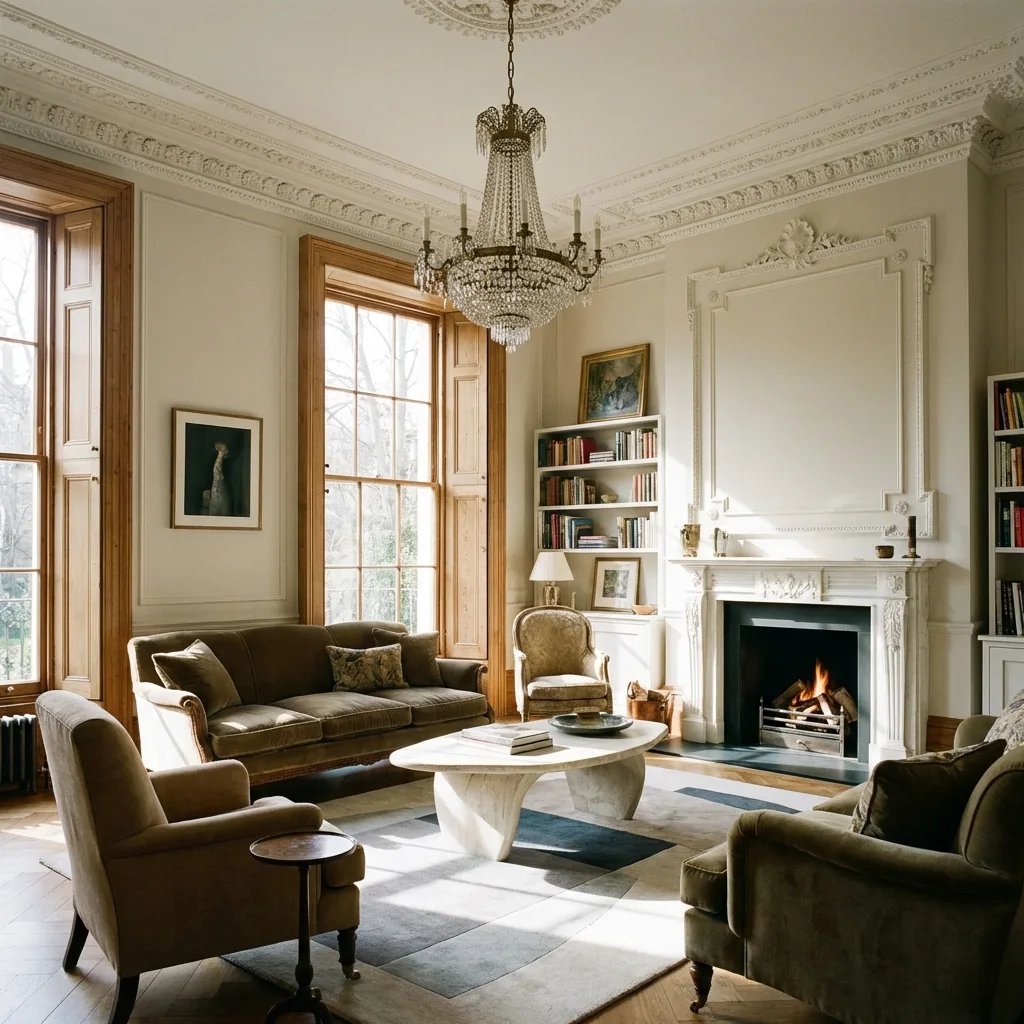
Summary: The Victorian "Drawing Room" (originally 'Withdrawing Room') was the theatre of the house. It was designed to impress guests with height, light, and ornamentation. Today, many of these rooms have been stripped of their soul—fireplaces boarded up, cornices removed, and ceilings lowered. Restoring them is not just decoration; it is an act of historical stewardship. This guide explores the "Holy Trinity" of restoration: Plaster, Marble, and Wood.
The Ceiling: Lath, Plaster, and Cornice
The most defining feature of a Victorian room is the ceiling height. But look closer. The ceiling itself is not a flat sheet of board; it is a handcrafted surface.
Original ceilings are made of Lath and Plaster. Thousands of thin timber strips (laths) were nailed to the joists, and wet lime plaster was troweled over them, squeezing through the gaps to form a "key."
Don't Rip It Down
Builders often suggest ripping down lath and plaster ceilings because they are "cracked" or "messy." Resist this. Lath and plaster has superior sound-deadening qualities to modern plasterboard and feels "softer" acoustically. Unless it is structurally failing (detached from the joists), it should be repaired with washers and screws, then skimmed.
The Cornice (Coving)
The decorative moulding around the edge is not just pretty; it hides the messy join between the wall and ceiling. Victorian cornice is not polished plaster; it is usually "fibrous plaster" reinforced with hessian and timber laths.
If sections are missing, do not try to patch it with Polyfilla. You must hire a specialist plasterer to:
- Take a "squeeze" (a silicone impression) of the existing profile.
- Cast a new 3-meter length on a workbench.
- Install it to match the original seamlessly.
The Fireplace: Opening Up the Hearth
In the 1960s and 70s, thousands of beautiful marble fireplaces were boarded up and replaced with gas fires or radiators. Opening them up is like finding buried treasure.
The Process:
- The Knock-Out: We locate the original "Constructional Hearth" (the concrete slab flush with the floor). We gently chip away the plaster to reveal the "Builders Opening" (the brick arch).
- The Sweep: The chimney has likely not been swept for 50 years. It will be full of soot, birds' nests, and debris. A NACS-certified sweep is essential before you light a match.
- The Surround: Ideally, you find the original Carrara marble or Limestone surround. If not, you can buy reclaimed originals from architectural salvage yards (like LASSCO), though they command a premium. Alternatively, high-quality reproduction cast-iron inserts are available.
- The Hearth: This must be non-combustible material (slate, granite, or tiles) and must extend 300mm in front of the fire for safety.
Windows: Sashes and Shutters
Victorian houses were built to breathe. The original timber sash windows are an integral part of this ventilation system. However, they are often painted shut, rotten, or single-glazed (freezing).
Restoration involves "draft-proofing and overhaul." We route out channels in the timber staff beads and insert brush piles. This stops the rattling and dramatically reduces heat loss, without losing the original glass.
The Box Shutters
Many drawing rooms have "splayed reveals"—the angled walls either side of the window. Often, hidden behind layers of paint or nailed-shut panels, you will find the original folding shutters.
Restoring these is a labour of love. They need to be dipped (to strip the paint), repaired by a joiner, and re-hung with new hinges. But once functional, they provide better blackout and security than any modern curtain.
The Floor: Pine vs Oak
Most London terraces were built with pine floorboards. In the drawing room, these were intended to be covered with a rug, with only the edges stained (vanity borders).
Today, the fashion is for exposed boards across the whole room. This presents two problems:
- Drafts: The gaps between wider Victorian boards can be 5-10mm. This acts as an air conditioning grille from the vented sub-floor below. We recommend filling these gaps with "slivers" (wedge-shaped pine strips glued in) rather than sawdust filler, which falls out.
- Noise: A bare timber floor transmits footfall noise directly to the basement or flat below. If you live in a conversion, you may be required (by lease or Part E regulations) to have carpets or high-spec acoustic underlays.
Skirting and Architraves
Proportion is everything. A high-ceilinged Victorian room (3 meters+) demands a high skirting board (usually 250mm - 300mm, or "10 to 12 inch").
Using a modern 100mm (4 inch) skirting looks comical and ruins the balance of the room. The profile should be "Torus" or "Ogee" to match the era.
Similarly, the architraves (door frames) should be wide and deep. If yours are missing, custom joinery shops can run new timber to match the exact profile of a surviving section.
Summary: Respecting the Fabric
Restoring a drawing room is slower and more skilled than a modern renovation. It requires patience. You are peeling back layers of history.
The result, however, is timeless. A faithfully restored Victorian room does not date. It has survived 150 years of fashion changes, and if treated with respect, it will survive 150 more.
Frequently Asked Questions
1. Can I install a wood burner?
Yes, but you need to line the chimney. The original brick flue is likely leaky (leaking Carbon Monoxide into bedrooms). A flexible stainless steel liner (316 or 904 grade) must be dropped down the stack. Also, if you are in a Smoke Control Area (most of London), you must use a DEFRA-exempt stove.
2. What paint should I use on lime plaster?
Ideally, a breathable paint (claypaint or mineral paint). Standard vinyl emulsion forms a plastic skin that can trap moisture in old walls, causing bubbling. Breathable paints allow the walls to regulate humidity naturally.
3. My ceiling rose is missing. Can I buy a new one?
Yes. Many companies sell cast plaster roses. The key is size. Most people buy one that is too small. In a large room, the rose needs to be substantial (600mm-800mm diameter) to hold its own against the chandelier.
4. Can I double glaze existing sash windows?
Yes. This is called "vacuum glazing" or "slimline glazing." We remove the old single pane and route out a deeper rebate to accept a 12mm double-glazed unit. It looks almost identical but mocks thermal efficiency. However, in Listed Buildings, this is usually forbidden.
5. How do I clean marble fireplaces?
Never use bleach or acidic cleaners (lemon/vinegar) on marble; it will etch the surface. Use warm soapy water or specific pH-neutral stone cleaners. For stubborn soot stains, a "poultice" can be applied to draw the stain out.
6. Are cast iron radiators worth it?
Aesthetically, yes. They complete the look. Practically, they take longer to heat up than steel panels, but they retain heat for much longer after the boiler turns off. They are also very heavy—floor joists may need strengthening.
Read Next: Related Guides
- → Renovation Overview The broader principles of heritage work.
- → Conservation Areas Legal protection for your period features.