
The Wraparound Extension: Maximising the Victorian L-Shape
By My Local London Builder Team | January 26, 2025
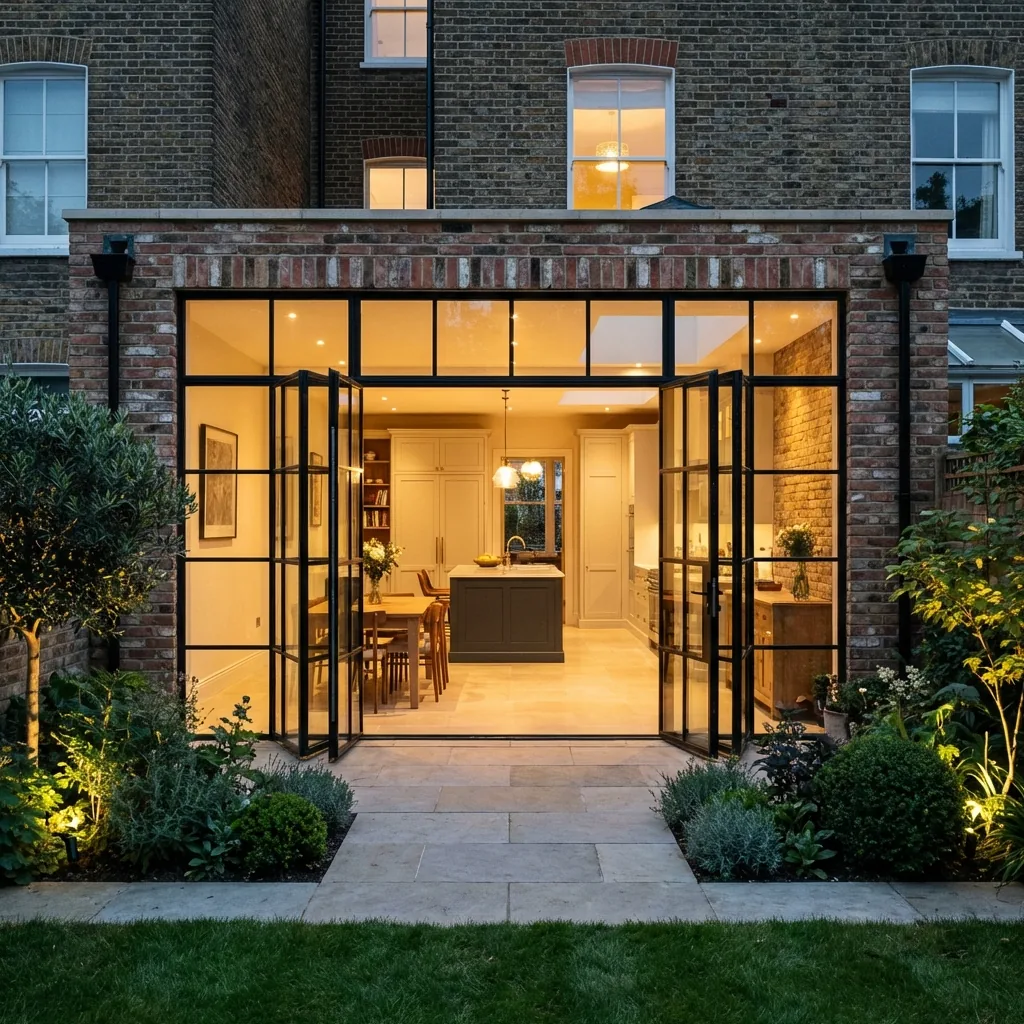
Summary: The "Wraparound" is the ultimate evolution of the Victorian terrace. It is the architectural equivalent of a "power move." By combining a side return extension with a rear extension, it creates a massive, L-shaped open-plan living space that utterly transforms the ground floor. However, with great space comes great complexity. This guide explores the engineering feats, planning battles, and design mastery required to deliver London's most sought-after renovation.
The Anatomy of the L-Shape
London's Victorian housing stock is beautiful but flawed. The original "L-shaped" footprint creates a fatal problem for modern living: the "Closet Wing."
The main body of the house is wide, but the rear kitchen (originally the scullery) is narrow, often less than 3 meters wide. Beside it runs a dark, damp "side return" passage that is used for nothing but storing old bikes and moss.
A wraparound extension solves this by doing two things simultaneously:
- Infill: It reclaims the side return, widening the kitchen to the full width of the plot (often 5-6 meters).
- Extension: It pushes the back wall of the closet wing further into the garden, adding length.
The result is not just a bigger kitchen; it is a unified, rectangular "super room" that wraps around the original footprint, creating space for the "Holy Trinity" of open plan living: a kitchen island, a dining table, and a soft seating area.
The Engineering: The "Floating Corner"
Conceptually, a wraparound is aggressive. You are removing the entire rear corner of your house. The side wall of the closet wing goes. The back removal of the main house goes. The back wall of the closet wing extends.
So, what holds the upstairs bedrooms up?
The Box Frame
A simple beam isn't enough. We have to install a "Box Frame"—a 3D cage of steel columns and beams that acts as a new skeleton for the house. This frame must be rigid. If it flexes even a millimeter, your upstairs plaster will crack.
Often, we encounter a problem: head height. If we put a massive steel beam under the ceiling joists, the ceiling becomes too low. The solution is the "Cranked Steel".
A cranked steel is custom-fabricated to bend like a staircase. It sits inside the floor void of the room above, rather than below it. This allows us to keep a flush ceiling in your new kitchen, making the transition from old to new invisible. It is expensive and difficult to install, but cosmetically, it is non-negotiable.
Planning Permission: The "Tunnel Effect"
Unlike a simple rear extension, a wraparound almost always requires full Planning Permission. It typically exceeds Permitted Development rights because it extends wider than half the width of the original house.
Planning officers are wary of wraparounds for one specific reason: the neighbour's amenity.
The 45-Degree Rule
If you build a high brick wall right along the boundary, you might block the daylight to your neighbour's nearest window. Planners assess this using the "45-degree rule." If your extension breaches a 45-degree line drawn from the centre of their window, it may be refused.
The Solution: The "Step Back"
To win approval, we often design the "wraparound" with a stagger. We build the side return part (the infill) up to the boundary, but the rear extension part steps away from the boundary by 1-2 meters. This "step" allows light to reach the neighbour and breaks up the bulk of the building, satisfying the planners without sacrificing your internal space.
The Party Wall Challenge
A wraparound is a "Party Wall heavy" project. You are likely building on or near the boundary on two sides:
- The Attached Neighbour: You are infilling the side return, which usually involves building a new wall astride the boundary line.
- The "Other" Neighbour: You are extending deeply into the garden, often requiring excavation for foundations near their property.
You will almost certainly need Party Wall Awards with both neighbours. This involves serving notices 2 months in advance. If they dissent (which they often do to protect their interests), you will need to appoint surveyors. This is a statutory process, not a polite request. Ignore it at your peril.
Zoning: Avoiding the "School Hall" Effect
The danger of a wraparound is that it creates too much open space. A 50sqm rectangular room can feel echoey, sterile, and undefined—like a village hall.
Great design is about "Broken Plan"—creating distinct zones within the open space using architecture rather than walls.
- Floor Level Changes: Stepping the kitchen down by 30cm creates a sunken lounge area that feels cozy and separate, even though it is in the same room.
- Ceiling Heights: Using a vaulted ceiling over the dining area but a flat ceiling over the kitchen defines the spaces visually.
- Lighting: You need separate circuits. Bright task lighting for the island, soft low-level lighting for the snug. Never put everything on one switch.
The Utility Problem
With so much open space, where do you put the washing machine? The noise of a spin cycle ruins a dinner party. We always recommend carving out a dedicated Utility Room and WC in the "middle" of the plan (the darkest part of the house). A wraparound gives you enough width to steal 1.5 meters for a laundry room without compromising the kitchen.
Summary: Values and Lifestyles
A wraparound extension is not just about adding square meters; it is about changing the way you live. It moves the center of gravity of the house from the front living room to the rear garden.
It is a significant investment, involving heavy structural intervention and planning complexity. But for a growing family in London, it is often the only alternative to moving house. It safeguards your future in the property for the next 10-15 years.
Frequently Asked Questions
1. Do I need Planning Permission?
Yes. Wraparounds involve extending sideways and backwards simultaneously. This rarely falls under Permitted Development. You should assume a Full Planning Application (8 weeks) is required.
2. Can I build it under Permitted Development?
Technically, you can sometimes split it into two phases: build the side return first (PD), wait, then build the rear extension (PD). However, councils are wise to this "trojan horse" tactic and may reject it. It is safer to apply for the whole thing properly.
3. How long does the build take?
A wraparound is a major project. Expect 14-18 weeks on site. The structural phase (steels and propping) takes longer than a standard extension because of the complexity of the corner removal.
4. Will it make my middle room dark?
Yes, removing the side window to the yard can darken the old dining room. We counter this by installing large rooflights in the new side return roof and using glass doors between the middle room and the new kitchen to borrow light.
5. How much disruption is there?
Total. The back of your house is effectively missing for 3 months. We strongly recommend moving out during the demolition and steelwork phase. Living on site with a wraparound is extremely stressful and slows down the builders.
6. What if my neighbour refuses the Party Wall?
They cannot "refuse" the work (if it is lawful planning), but they can dissent to the notice. This triggers the appointment of surveyors to agree on the "Award" (the method statement). It adds time and professional fees, but it cannot stop the build.
7. Is it worth it financially?
In high-value areas (Zone 1-3), absolutely. The value of the extra square footage usually exceeds the build cost. In outer zones, you must be careful not to hit the "ceiling price" of the street. However, the lifestyle value—staying in your neighbourhood—is often priceless.
8. Can I have a glass roof?
Yes, structural glass roofs are stunning but expensive. They also make the room hot in summer and cold in winter. We often recommend high-spec solar control glass or smaller, strategic rooflights (Velux) which offer better thermal performance and ventilation.
Read Next: Related Guides
- → The Side Return Guide The smaller, simpler cousin of the wraparound.
- → Planning Permission Explained How to navigate the council.