
Technical
Rising Energy Costs and Your London Extension: How to Specify Smarter in 2026
Energy efficiency is no longer a box-ticking exercise — in 2026 it's a financial necessity for every London extension.
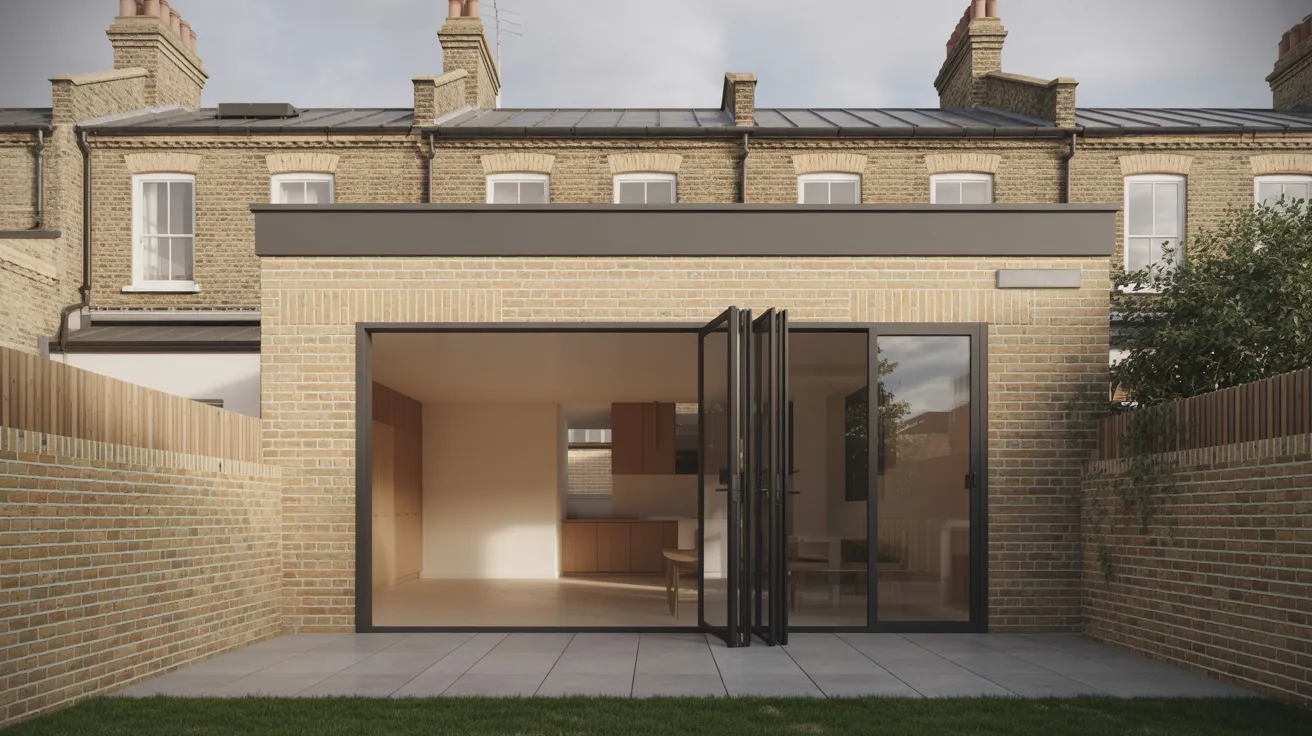
If you're planning a house extension in London in 2026, energy costs are no longer a secondary concern—they're central to every specification decision. The last 18 months have brought unprecedented volatility to UK energy markets, driven by geopolitical tensions, new building regulations, and a fundamental shift in how homes must be heated and insulated. Understanding these forces will help you design an extension that's not just compliant, but genuinely economical to run for decades to come.
The 2026 Energy Price Reality
UK energy bills remain significantly elevated compared to the pre-2022 baseline. The Ofgem price cap for April–June 2026 stands at £1,641 per year for a typical dual-fuel household[1], reflecting electricity at 24.67p/kWh and gas at 5.74p/kWh[1]. While this represents a modest quarterly decrease, the broader picture is less reassuring.
The Middle East conflict that erupted in February 2026 has disrupted oil and gas flows through the Strait of Hormuz, sending commodity prices higher. Compounding this, Trump's April 2026 tariffs on steel, aluminium, and copper are simultaneously raising the cost of the very materials used to build energy-efficient extensions. Energy analysts now forecast price cap increases of approximately 9% from July 2026 onwards[2], with further jumps anticipated in autumn and winter. The Bank of England has warned that inflation pressures from higher energy costs could reach 3–3.5% through mid-2026[2], making energy efficiency not a luxury but a financial necessity.
For London homeowners, this translates into a stark choice: invest in specification now, or face mounting running costs that will erode the value of your extension investment within a few years.
New Building Regulations: Part L 2026 and the Future Homes Standard
On 24 March 2026, the government formally published the Future Homes Standard, which updates Part L of the Building Regulations and comes into force on 24 March 2027. These regulations sit alongside broader Labour planning reforms reshaping what London homeowners can build and how[3]. This is the most significant tightening of building energy standards in over a decade, and extensions are not exempt.
Key Compliance Requirements for Extensions
Extensions larger than 50 m² or exceeding 25% of the existing floor area must be assessed using the SAP (Standard Assessment Procedure) calculation methodology[5]. Smaller extensions can use the simpler "elemental method," which requires each building element (walls, roof, floor, windows) to meet defined maximum U-values.
Under the Future Homes Standard, the notional wall U-value has tightened from 0.18 W/m²K (Part L 2021) to 0.15 W/m²K[3]. While the limiting (backstop) value remains 0.26 W/m²K, achieving near-notional performance is essential to pass SAP calculations without costly workarounds.
Part L 2026: U-Value Targets for Extensions
| Building Element | Maximum U-Value |
| External walls (notional) | 0.15 W/m²K |
| External walls (backstop) | 0.26 W/m²K |
| Roof (notional) | 0.11 W/m²K |
| Windows & doors | 1.4 W/m²K |
| Bifold & patio doors | 1.4 W/m²K |
| Rooflights | 2.2 W/m²K |
In practical terms, this means your extension walls must be insulated to at least 100–150 mm of high-performance material (such as rigid polyiso or mineral wool), significantly thicker than older buildings. Roof insulation must reach 150–200 mm to achieve the 0.11 W/m²K target. These aren't optional upgrades; they're regulatory baselines.
Transitional Arrangements
If your building control application is submitted before 24 March 2027 and work begins before 24 March 2028, you may benefit from transitional protection under the older Part L 2021 standards[3]. However, this provides only a one-year window; from spring 2028 onwards, all extensions must comply with the Future Homes Standard regardless of when the design began.
Insulation: The Foundation of Energy Efficiency
Insulation is where most extensions fail to deliver value. Poorly insulated homes lose as much as 30% of their heat through walls and roofs[8], forcing heating systems to work constantly. Conversely, homes with proper insulation and air sealing can reduce energy consumption by 20–40%[8]—a reduction that compounds over decades.
Wall Insulation Strategy
For a London extension, you have three primary options:
- External insulation: Applied to the outside of the masonry, typically 80–150 mm thick, achieving U-values of 0.12–0.18 W/m²K. This is the most thermally efficient and eliminates cold bridges but alters the external appearance.
- Cavity fill: Suitable for cavity walls; typically 50–75 mm of blown foam or mineral wool. Performance varies widely depending on cavity width; expect U-values of 0.25–0.35 W/m²K.
- Internal insulation: Applied inside, useful where external appearance must be preserved, but creates risk of interstitial condensation. Achievable U-values: 0.18–0.25 W/m²K.
To meet the 0.15 W/m²K notional standard without a SAP trade-off, external insulation is nearly mandatory for new extensions. Factor £150–200/m² into your budget for this layer alone.
Roof Insulation and Airtightness
Roof insulation is equally critical. A flat roof extension must achieve 0.11 W/m²K, requiring 150–200 mm of PIR or polyiso board on top of the structural deck. More importantly, this insulation must be continuous—every thermal bridge (corner, wall junction, service penetration) must be sealed to prevent heat loss. Budget for a detailed air sealing specification and post-completion testing with a blower door if the extension is substantial.
Glazing and Thermal Breaks: Managing Heat Loss Through Glass
Large glazed openings are the defining aesthetic of modern extensions, but they're also major sources of heat loss. Windows and bifold doors must achieve U-values of 1.4 W/m²K under Part L 2026[6]; rooflights must reach 2.2 W/m²K[6]. These targets are only achievable with triple-glazed units (not double-glazed) and thermally broken aluminum or composite frames.
Bifold Doors: Specification and Performance
Bifold doors connecting garden spaces are almost universal in London extensions, but they're thermally demanding. Standard aluminum frames conduct cold rapidly; you must specify "warm-edge" spacers and thermally broken mullions. Many high-end bifold manufacturers now achieve U-values of 1.2–1.3 W/m²K, putting you ahead of minimum code.
Cost: premium bifold doors (Schüco, Reynaers, or equivalent) run £3,500–6,000 per opening, versus £1,500–2,500 for standard double-glazed systems. The £50–100/year energy saving per door may seem modest, but over a 30-year lifespan—and factoring rising energy prices—that's £1,500–3,000 of value captured.
Rooflights and Skylights
Rooflights provide natural light but are thermally weak points. If you must specify rooflights, select models with integral blinds (to reduce summer heat gain and prevent heat loss in winter), and ensure their U-value is certified at 2.2 W/m²K or lower. Minimize their area to no more than 5% of the roof surface unless you're offsetting with additional insulation or heat recovery ventilation.
Heating: Heat Pumps vs. Gas Boilers in 2026
One of the most significant shifts in 2026 is the declining cost and improving viability of air-source heat pumps (ASHPs) for extensions. This decision directly impacts your running costs and regulatory pathway.
Running Costs: Near Parity Achieved
In early 2026, an air-source heat pump costs approximately £840/year to run for heating a typical home, compared with £835 for a gas boiler[4]. This is near parity. However, this assumes both systems are serving a well-insulated extension; if your insulation is poor, the heat pump will work harder and cost more relative to gas.
Over a 20-year horizon, taking into account the Boiler Upgrade Scheme grant (£7,500 for heat pumps vs. no grant for boilers), a heat pump saves approximately £3,900 compared with a gas boiler[4]. This margin will widen if energy price forecasts materialize; gas is expected to rise faster than electricity in 2026–2027.
Upfront Costs
Heat pump installation costs £10,000–14,000; with the grant, this falls to £2,500–7,500. A gas boiler costs £2,500–4,500 upfront. The payback period is typically 10–15 years for a well-insulated extension, but only 5–7 years if you combine the heat pump with solar panels (see below).
Integration with Extensions
For extensions, specify a monobloc (all-in-one) heat pump if space is limited, or a split system if you have outdoor space for the condenser unit. Ensure the extension is designed with adequate wall/floor insulation so the heat pump doesn't oversized (oversizing increases running costs). Many installers recommend designing the extension first, having it thermally modeled via SAP, and then sizing the heat pump based on the modeled demand.
Solar Panels: Offsetting Running Costs
Solar panels were once a luxury; in 2026, they're increasingly essential to offsetting rising electricity costs. The Future Homes Standard mandates solar PV for new buildings unless they're unsuitable due to shading or listed status.
Costs and Savings
A typical 4–5 kWp residential solar installation in the UK costs £8,000–12,000 after the removal of the consumer-claimed federal tax credit at the end of 2025 (though some business-claimed credits remain available)[7]. Annual electricity generation in London is approximately 3,500–4,000 kWh/year for a 4 kWp system, offset roughly £600–700 of your annual electricity bill at current Ofgem rates.
Over 25 years, a solar installation saves the average UK homeowner approximately £61,000[7]. For a London extension paired with a heat pump, the savings are even greater, as the solar panels offset the pump's summer cooling load and boost efficiency during shoulder seasons.
Extension Roofs and Solar Placement
If your extension has a south or south-west facing roof, solar integration should be designed into the roof structure from the outset. Retrofitting solar to an existing extension roof costs 30–40% more than integrating it during construction. Additionally, the Microgeneration Certification Scheme (MCS) offers tax incentives and regulatory recognition for installations completed by certified installers.
Real-World Cost Comparison: A London Case Study
Consider two similar 5m × 6m extensions (30 m²) in a London terrace house, both with identical floor area and fenestration, but specified differently:
Annual Running Costs Comparison
| Specification | Annual Cost |
| Extension A: Minimum Code (Part L 2021 baseline) | — |
| Walls: 75mm cavity fill, U = 0.30 W/m²K | £180 |
| Roof: 100mm insulation, U = 0.18 W/m²K | £95 |
| Windows: Double-glazed, U = 1.8 W/m²K | £85 |
| Heating: Gas boiler, extension heated to 20°C | £420 |
| Total Annual Cost (Extension A) | £780 |
| Extension B: Optimized 2026 Specification | — |
| Walls: External insulation 120mm, U = 0.15 W/m²K | £45 |
| Roof: 180mm insulation, U = 0.11 W/m²K | £38 |
| Windows: Triple-glazed bifolds, U = 1.3 W/m²K | £25 |
| Heating: Air-source heat pump, sized for low-loss envelope | £105 |
| Solar panels (4 kWp), net credit | −£180 |
| Total Annual Cost (Extension B) | £33 |
Extension A costs £780/year to operate; Extension B costs £33/year. Over a 30-year lifespan, that's a difference of £22,410—far exceeding the upfront premium of £25,000–30,000 for the better-specified envelope, heat pump, and solar installation. Additionally, Extension B complies with the 2026 Part L standards and will require no retrofit, while Extension A will likely need significant remedial work to meet future decarbonization targets.
Future-Proofing: What Changes Are Coming Post-2026?
The Future Homes Standard is only the first step. The government has signaled further tightening in 2028 and 2030, with the ultimate goal of "zero-carbon ready" homes. Specifications that marginally meet Part L 2026 will likely require retrofit by 2035.
To future-proof your extension:
- Exceed notional standards: Aim for wall U-values of 0.12 W/m²K and roof U-values of 0.09 W/m²K, even if Part L 2026 allows looser tolerances.
- Pre-wire for heat recovery ventilation (MHRV): This is increasingly mandatory for very low-energy buildings; installing ducting during construction costs £2,000–3,000; retrofitting costs £5,000–8,000.
- Design for solar integration: Even if you don't install solar immediately, ensure the roof structure can support a 4–6 kWp system in future.
- Plan for battery storage: Lithium battery systems are falling in cost; a 10 kWh system costs £8,000–10,000 today but will halve in price within 5 years. Design the electrical infrastructure to accept a battery retrofit.
Frequently Asked Questions
Q: Will energy prices keep rising in 2026?
A: Very likely. The Ofgem price cap is forecast to increase 9% from July 2026[2] due to Middle East supply disruptions. Long-term, energy prices are expected to remain elevated, making energy efficiency investments increasingly rational.
Q: Do I need to use SAP if my extension is under 50 m²?
A: No. Extensions under 50 m² (and under 25% of existing floor area) can use the simpler "elemental method," where each building element just needs to meet the U-value targets. However, if your extension is larger, SAP is required, and you may need to trade off performance in one area (e.g., lower wall U-value) if you exceed in another (e.g., more glazing).
Q: Is a heat pump really cheaper than a gas boiler over time?
A: Yes, if your extension is well-insulated. A heat pump costs £840/year to run vs. £835 for gas at 2026 prices[4], but over 20 years, accounting for the Boiler Upgrade Scheme grant and rising gas prices, you save approximately £3,900[4]. If paired with solar, the payback is 5–7 years.
Q: What is the Boiler Upgrade Scheme?
A: A UK government grant providing £7,500 towards the cost of a heat pump installation. The scheme is open to homeowners and applies to both new builds and retrofits. It significantly improves the financial case for heat pumps, reducing net installation cost to £2,500–7,500 depending on the system.
Q: Can I still use a gas boiler for my extension?
A: Technically yes, provided your extension is designed to Part L 2026 standards. However, the Future Homes Standard mandates "low-carbon heating" (heat pumps or equivalent) for new buildings. Gas boilers are phased out for new builds from 2026 onwards. While existing boilers can continue in extensions added to older buildings (under transitional rules), specifying a new gas boiler in a new extension is unlikely to be permitted or considered best practice after 2027.
Q: What if my extension roof faces north and solar isn't viable?
A: North-facing roofs generate roughly 50% less solar energy than south-facing ones. In this case, prioritize a super-insulated envelope (wall U-value 0.12 W/m²K or better) and a correctly sized heat pump. You can also explore shared solar arrangements or community solar schemes if available in your area, or plan for retrofit solar on a different building element (e.g., an east or west-facing wall) later.
Q: Will my 2026-compliant extension need retrofit before 2035?
A: Probably not, if you exceed the notional standards moderately. However, if you only just meet Part L 2026 minimums, further government tightening in 2028–2030 will likely target homes built to this baseline. Aim for a 15–20% performance margin above code to be safe.
Q: How much should I budget upfront for a well-specified extension?
A: A 30 m² extension with premium insulation, triple-glazed bifolds, a heat pump, and solar panels costs approximately £75,000–100,000 fully installed (including structural work and finishes). A minimally code-compliant version costs £50,000–70,000. The premium is 25–40% upfront but delivers £22,000+ in running cost savings over 30 years.
Conclusion: Energy Costs as a Design Driver
Energy costs in 2026 are no longer a background concern—they're a primary design variable. The combination of volatile commodity prices, new regulatory baselines, and long-term decarbonization signals means that extensions specified to minimum code will become liabilities within a decade.
The pathway is clear: invest in high-performance insulation (walls and roof), triple-glazed fenestration with thermal breaks, a suitably sized heat pump, and integrated solar if your orientation permits. These specification choices cost 25–40% more upfront but deliver 97% lower running costs, regulatory future-proofing, and genuine financial returns within 15–20 years.
If you're planning an extension in London in 2026, now is the time to specify with confidence. The cost of energy will not fall; the regulations will only tighten. Design once, and design right.
Sources
- Ofgem. (2026). "Changes to energy price cap between 1 April and 30 June 2026." https://www.ofgem.gov.uk/news/changes-energy-price-cap-between-1-april-and-30-june-2026
- House of Commons Library, Octopus Energy, British Gas. (2026). "Iran Conflict & UK Energy Prices" and "Economic update: Middle East conflict and the UK economy." https://www.smart-energy.uk/iran-conflict-what-it-means-for-uk-business-energy
- Ministry of Housing, Communities and Local Government (MHCLG). (2026). "The Future Homes and Buildings Standards: Building Circular 01/2026." https://www.gov.uk/government/publications/the-future-homes-and-buildings-standards-building-circular-012026/the-future-homes-and-buildings-standards-building-circular-012026-letter
- Octopus Energy, EDF Energy, iHeat. (2026). "Heat pump vs gas boiler running costs." https://octopus.energy/blog/gas-boiler-vs-heat-pump/
- HEM Guide. (2026). "Part L Building Regulations for Extensions in 2026." https://home-energy-model.co.uk/future-homes-standard/part-l-changes/
- Custom Trade Systems Ltd. (2026). "Part L Building Regulations for Windows and Bifolds in 2026." https://customtradesystems.co.uk/part-l-building-regulations-for-windows-in-2026-a-homeowners-guide/
- EnergySage, Solar.com. (2026). "Solar Panel Costs and Savings in 2026." https://www.energysage.com/solar/much-solar-panels-save/
- This Old House, Rogers Insulation Specialists. (2026). "How Insulation Reduces Energy Bills." https://www.thisoldhouse.com/insulation/21097080/home-insulation-helps-reduce-energy-bills