
Planning
How Labour's Planning Reforms in 2026 Affect Your London Extension or Loft Conversion
The biggest overhaul to England's planning system in decades — and what it means for your home improvement project.
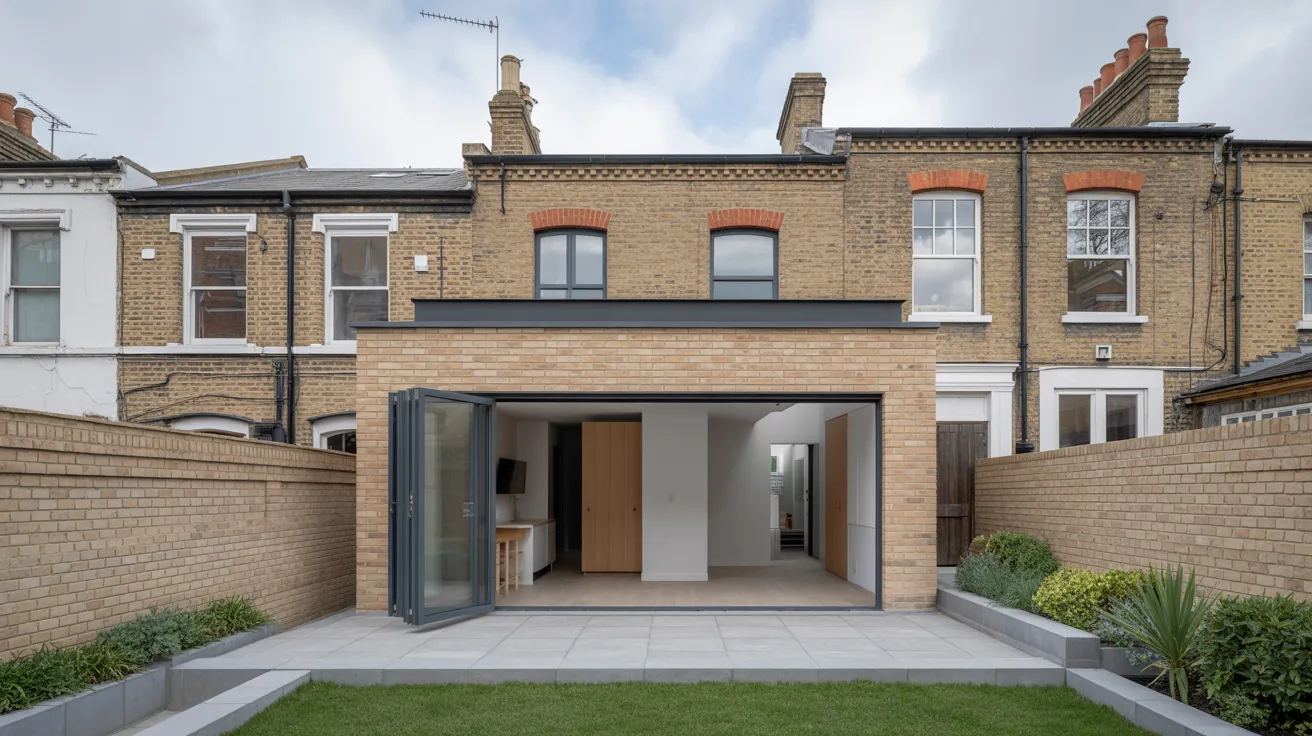
Labour's 2026 planning reforms represent the most significant overhaul of England's planning system in decades. The revised National Planning Policy Framework (NPPF), combined with new grey belt designations, accelerated planning timelines, and potential changes to permitted development rights, has created both opportunities and complexities for London homeowners planning extensions and loft conversions.
If you're considering a home improvement project in 2026, understanding how these reforms affect your planning application, timelines, and costs is essential. This guide breaks down the key changes and what they mean for your London extension or loft conversion.
Labour's 1.5 Million Homes Target and Planning Reform Agenda
The Starmer government has committed to delivering 1.5 million new homes across England during this parliamentary term, while introducing a return to strategic spatial planning and constructing a series of new towns[1]. This ambitious target is driving a fundamental restructuring of how planning decisions are made.
At the heart of Labour's strategy is the belief that England's planning system has been too restrictive, particularly for housing delivery. To address this, the government has introduced:
- Mandatory housing targets for local authorities, with a new standard method underpinning allocations
- Accelerated local plan cycles reducing plan-making timescales from 7+ years to 30 months[2]
- Binding strategic spatial planning through regional "Spatial Development Strategies"
- Simplified approval processes for applications that align with local and national standards
These changes create a more pro-development environment, which generally favours homeowners seeking extensions and loft conversions—provided their projects meet the emerging policy framework. If you're weighing up whether to extend or move entirely, see how planning reforms factor into that decision in 2026.
The Revised NPPF 2024: What's Changed?
The National Planning Policy Framework is the foundation of England's planning system. Labour's 2024 revision, consulted on from December 2025 to March 2026, introduces significant new policies[3].
Critical changes include:
Housing Targets and 5-Year Supply
Under the revised NPPF, housing targets are now mandatory[1]. Local authorities must hit these targets, creating stronger pressure to approve housing-related applications, including extensions that increase housing capacity. The government has also reintroduced a 5% buffer to all housing land supply calculations, providing more flexibility for local planners to approve projects.
Streamlined Development Management
The NPPF 2024 revision encourages local planning authorities to "fast-track" decisions for applications that clearly align with local plans and national policy. For homeowners, this could mean quicker decision times on straightforward extension applications.
Sustainability and Environmental Standards
While reforms focus on delivery, environmental protections remain in place. Extensions must still meet building regulations for energy efficiency and comply with local design guidance—particularly important in conservation areas and on listed buildings. See our guide to specifying your extension for Part L 2026 and the Future Homes Standard.
Understanding the New "Grey Belt" Designation
One of Labour's most significant planning innovations is the formal introduction of "grey belt"[4]. This is a game-changer for many homeowners and developers.
What is Grey Belt?
Grey belt refers to land within the Green Belt that has either:
- Been previously developed (contains buildings, structures, or hardstanding)
- Does not strongly contribute to the three core Green Belt purposes (preventing urban sprawl, protecting the countryside, and separating towns)
Unlike traditional Green Belt, grey belt land is now explicitly recognized as having development potential, especially for housing and home improvements[5].
How Grey Belt Affects Your Extension Plans
If your London property is on or near grey belt land, planning permission for an extension may be easier to obtain. The policy shift recognizes that not all Green Belt land serves its original purpose, and previously developed sites can accommodate sensitive development.
Grey Belt and Your Planning Application
| Property Type | Implication |
| On grey belt land | Planning permission more likely to be approved for extensions; subject to local design and amenity standards |
| On traditional Green Belt | Still restrictive; extensions must demonstrate "special circumstances" or be permitted development |
| In brownfield regeneration area | Fastest-track approvals; government actively encouraging development |
London Mayor Sadiq Khan has pledged to review low-quality Green Belt land as part of the next London Plan. A draft London Plan was expected for consultation in 2026, and this will define which specific London sites fall into the grey belt category[6].
Permitted Development Rights Review: What Could Change?
Permitted development rights (PDR) allow certain home improvements without needing to apply for planning permission. Labour's government has been reviewing these rights with proposals to expand them[7].
Current Permitted Development Rules for Extensions (2026)
Today, you can typically build extensions without permission if they meet these limits:
- Single-storey rear extensions: Up to 3 metres for terraced/semi-detached houses; 4 metres for detached homes
- Side extensions: Single-storey only, no more than 50% of the original house width
- Loft conversions: Up to 40 cubic metres (terraced) or 50 cubic metres (detached/semi-detached), without raising the roof
- Constraints: Listed buildings, conservation areas, and certain designated zones may require permission regardless
Proposed Changes Under Review
The government has indicated it is "keeping PDRs under review" following a consultation that ended in April 2024[7]. Proposals being discussed include:
- Expanded loft conversion allowances: Removing or raising the 40-50 cubic metre limit
- Relaxed curtilage rules: Removing the 50% land coverage restriction that prevents larger extensions
- Height flexibility: Allowing homeowners to convert more loft space without raising the roof
- Officer-led approvals: Empowering planning officers to approve straightforward extensions without committee referral
If these changes are implemented, they would make many home improvements eligible for permitted development that currently require full planning applications, saving time and application fees.
Planning Application Fees: 3.8% Increase from April 2026
Homeowners planning an extension application in 2026 should budget for higher fees. From 1 April 2026, all planning application fees in England increased by 3.8%, reflecting inflation[8].
Typical Planning Fee Increases (3.8% from April 2026)
| Application Type | Approximate Old Fee | Approximate New Fee (April 2026) |
| Householder extensions (under 40m²) | £150–£200 | £155–£207 |
| Householder extensions (40–150m²) | £300–£400 | £311–£415 |
| Householder extensions (over 150m²) | £400–£500 | £415–£519 |
| Full planning application (larger projects) | £500–£2,000+ | £519–£2,076+ |
Timing matters: If you submit your application before 17:00 on 31 March 2026, the old fee schedule applies. Submit after that date, and you pay the new rates[8].
Additionally, the Planning and Infrastructure Act 2025 introduced new powers allowing individual local authorities to set their own planning fees through a "local variation model"[8]. Some boroughs may increase fees further, while others may hold steady. Check your specific borough's website for their fee policy.
How London Boroughs Are Responding to Labour's Reforms
While national policy provides the framework, London boroughs have significant discretion in how they implement Labour's planning reforms. Their responses are varied:
Accelerated Plan-Making
Boroughs are working to meet the new 30-month local plan cycle. Those with outdated local plans from 2015–2018 are prioritizing updates to align with new housing targets and grey belt policy. This creates a transitional period where some applications may face delays as boroughs finalize updated plans.
Brownfield Regeneration Initiatives
Labour's focus on brownfield land before greenfield development is particularly relevant in London. The government is exploring "brownfield passports" to fast-track approvals on previously developed sites[2]. Boroughs like Newham, Tower Hamlets, and Hackney are leading regeneration programmes.
Green Belt Reviews and Divergence
Notably, four London boroughs have opted out of the Greater London Authority's Green Belt review, indicating resistance to some aspects of Labour's approach[9]. This creates a patchwork of policies across London, with some boroughs more supportive of Grey Belt development and extensions than others.
Pre-Application Advice
Many boroughs are expanding pre-application advice services to help homeowners understand the new rules early. This is a valuable step before investing in detailed architectural drawings.
Timeline for Planning Decisions: What to Expect in 2026
Labour's reforms aim to accelerate planning decisions. However, timelines for individual extension applications vary:
- Householder applications (extensions, loft conversions): Typically 8 weeks for a decision, though simpler cases may be decided faster under new streamlining
- More complex applications (large extensions, multiple storeys): 13 weeks to 6 months, depending on consultation requirements
- Listed building or conservation area consent: Often 8–12 weeks, with specialist heritage consultations adding time
- Appeal timelines: If refused, appeals still take 6–12 months through the Planning Inspectorate
The new local plan cycles should improve longer-term decision quality and certainty, but individual application timelines depend on your specific project and borough capacity.
What This Means for Your Extension or Loft Conversion Project
Bringing all these changes together, here's what Labour's 2026 planning reforms mean for you as a London homeowner:
Next Steps for Your Project
If you're planning a London extension or loft conversion in 2026, consider these actions:
- Get pre-application advice from your borough. The costs are modest (£150–£300), and you'll understand the local planning position before investing in detailed designs.
- Check if your property is on grey belt land. Ask your borough planner or search the emerging London Plan documentation (expected for consultation in 2026).
- Confirm your permitted development rights. Not all extensions need planning permission. Many loft conversions and single-storey rear extensions qualify as permitted development.
- Budget for the new fee schedule. If submitting after 31 March 2026, expect 3.8% higher application fees. Your borough may have applied additional local increases. Also factor in rising material costs from Trump's 2026 tariffs on steel and aluminium when drawing up your overall budget.
- Work with an experienced local architect or surveyor. The planning landscape is shifting rapidly. Professional guidance on the latest NPPF, grey belt policy, and borough-specific rules is essential.
FAQ: Labour Planning Reforms and Your Home Improvement
Q: How do Labour's planning reforms affect my home extension plans?
A: Labour's reforms focus on accelerating housing delivery through faster local plan cycles (30 months), introducing grey belt designations for lower-quality green belt land, and potentially expanding permitted development rights. This creates a more pro-housing environment. Planning officers are now under pressure to approve applications that meet policy standards. If your extension fits your borough's design guidance and doesn't harm neighbouring amenity, approval is more likely than in previous years.
Q: What is grey belt and how does it affect my property?
A: Grey belt refers to green belt land that has been previously developed or doesn't strongly contribute to green belt purposes. If your property or extension site is on grey belt land, planning permission becomes significantly easier to obtain. The new London Plan (expected for consultation in 2026) will clarify which London areas fall into this category. Check with your borough planner.
Q: Will planning fees increase in 2026 for my extension application?
A: Yes. From 1 April 2026, planning application fees increased by 3.8% nationally. Householder extension fees rose from roughly £150–£500 to £155–£519, depending on project size. Applications submitted before 17:00 on 31 March 2026 use the old fee schedule. Your borough may have also applied local fee variations under new powers introduced by the Planning and Infrastructure Act 2025.
Q: Are permitted development rights changing for home extensions?
A: The government has been reviewing permitted development rights with proposals to expand them (e.g., larger loft conversions, relaxed size limits), but no final decisions have been announced as of April 2026. Current PDR rules remain in place: single-storey rear extensions up to 3–4 metres and loft conversions up to 40–50 cubic metres without permission. Monitor gov.uk and your borough for updates.
Q: How long will planning applications take under the new system?
A: Labour's reforms aim to speed up the planning system through 30-month local plan cycles and streamlined officer approval processes. However, individual extension applications typically still take 8 weeks for a decision, with more complex projects taking longer. The improvements are mainly to long-term planning certainty. Your timelines depend on project complexity and borough capacity.
Q: Do London boroughs have different rules for extensions under Labour reforms?
A: Yes. While national NPPF rules apply to all boroughs, the Planning and Infrastructure Act 2025 allows individual boroughs to set their own planning fees and implement grey belt policy differently. Some boroughs are opting out of strategic green belt reviews. Rules vary significantly across London, so always check with your specific borough's planning department.
Q: Will my loft conversion need planning permission under new rules?
A: Currently, loft conversions are permitted development if they don't exceed 40–50 cubic metres and don't require raising the roof significantly. Even under current PDR, listed buildings and properties in conservation areas may still need permission. The government is reviewing these limits and may relax them in 2026. Always check with your local borough planning department about your specific property.
Q: When will the new NPPF 2024 revision formally come into force?
A: The NPPF 2024 revision was consulted on from December 2025 to March 2026. The final version is expected to come into force in summer 2026. Boroughs should begin applying the new policies immediately, but formal adoption will lock them in. The key changes include mandatory housing targets, 30-month local plan cycles, grey belt definitions, and streamlined decision-making.
Sources
- Farrer & Co: Things Can Only Get Better: Labour's 2026 Planning Reforms
- GOV.UK: National Planning Policy Framework – Proposed Reforms and Other Changes to the Planning System
- Building Magazine: The Ins and Outs of Labour's New National Planning Policy Framework
- Urbanist Architecture: Grey Belt Demystified (October 2025 Update)
- Savills: Grey Belt Debate Reopened by Latest NPPF Revisions
- London City Hall: Towards a New London Plan
- DeVis Architecture: Permitted Development Extensions [2026]
- Irwin Mitchell: New Draft Fees Order Published – Planning Fees to Rise on 1 April 2025
- Howard Kennedy: Navigating Change – an Overview of Labour's Planning Reforms