
Market
Extend or Move? Why London Homeowners Are Choosing to Stay and Build in 2026
High transaction costs, stamp duty, and a flat market have tipped the balance — for most London families, extending makes more financial sense than moving.
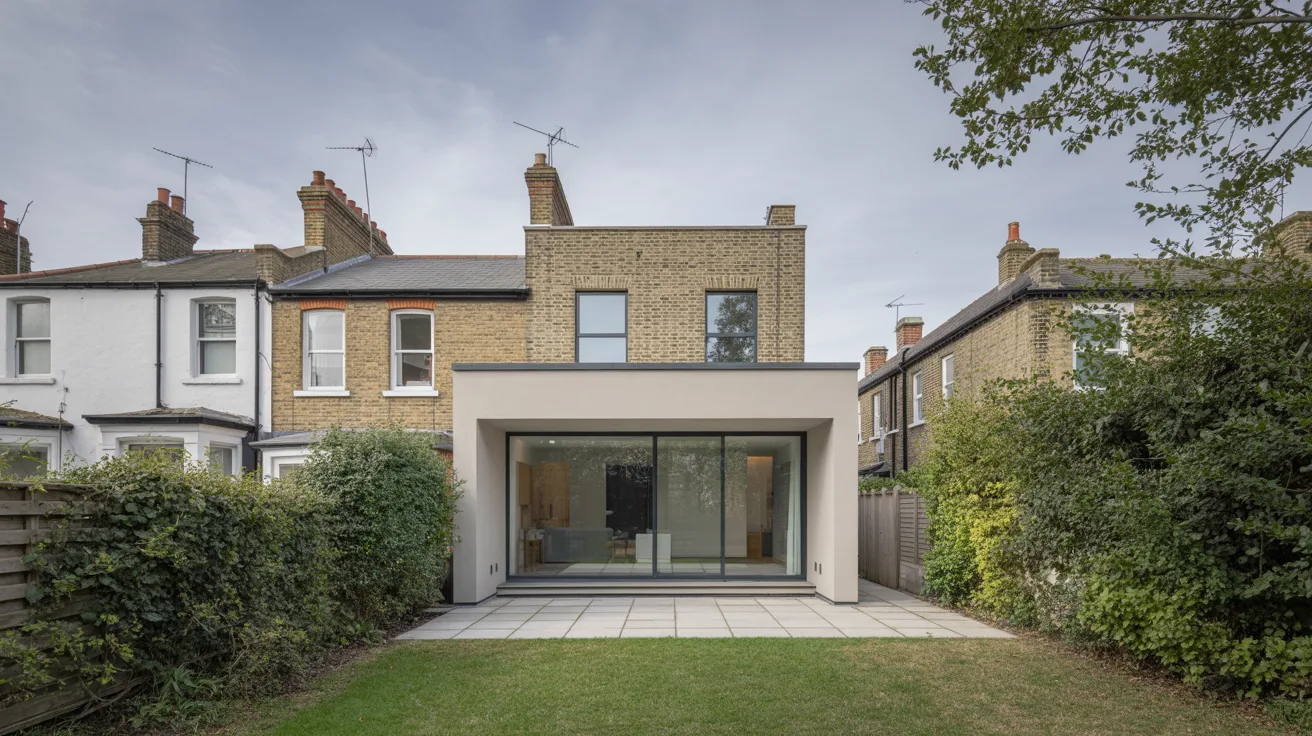
For London homeowners asking "should we extend or move?", the financial answer is increasingly clear: staying and building often makes more sense than moving. With house prices still 5% below their 2022 peak, stamp duty at its highest in years, and estate agent fees eating 1.8% of your sale price, the transaction costs of relocating have never been steeper. Meanwhile, a well-planned extension can deliver 15–20% value gain without the bureaucracy, disruption, or financial drain of moving.
This April, we're breaking down the real numbers: what moving actually costs, why extending delivers better ROI, and how 2026's market conditions make the extension decision a smart financial move for many London families.
The True Cost of Moving in London: Beyond the Headlines
Most London homeowners know that moving is expensive. But few realise just how expensive until they start adding up the costs. Let's walk through the real figures for 2026.
Typical Moving Costs: £500,000 London Property
| Stamp Duty Land Tax (SDLT) | £10,000 |
| Estate Agent Fees (1.8% inc. VAT) | £9,000 |
| Conveyancing & Legal Fees | £1,200 |
| Survey Costs | £600 |
| Mortgage Arrangement Fee | £1,000 |
| Physical Removal & Utilities | £3,000–5,000 |
| TOTAL COST TO MOVE | £24,800–26,800 |
Notice what's happening here: before you've even finished packing, before you've negotiated a single brick with the new owner, you've committed to spending nearly £25,000 just to facilitate the move.[1][2]
The Stamp Duty Shock of April 2025
The biggest culprit in moving costs? Stamp Duty Land Tax (SDLT). From April 1, 2025, the UK government rolled back temporary stamp duty cuts, and the nil-rate threshold for home movers fell sharply.
- Old rates (pre-April 2025): No stamp duty on first £250,000
- New rates (April 2025 onwards): No stamp duty on first £125,000 only
On a £400,000 London property—hardly exceptional in the capital—this change means £5,000 more in stamp duty costs. On a £500,000 property, you're paying roughly £10,000. On a £600,000 property in prime areas like Islington or Wandsworth, you're looking at £13,000.[3]
Add to this the fact that 14.8% of Londoners who sold in 2025 sold for less than they bought the property for, and you see why transaction costs now represent an even larger percentage of remaining equity for many homeowners.
Why London House Prices Matter Right Now
London's property market in 2026 presents a unique paradox: prices have recovered partially from their pandemic lows, yet they remain stubbornly below the 2022 peak. This has profound implications for the extend-or-move decision.
London Property Price Status, April 2026
| Average London House Price | £553,258 |
| Difference from 2022 Peak | 5% below |
| Average Flat Price | £431,000 |
| Year-on-Year Change (to Jan 2026) | –£19,000 (–4.2%) |
| Prime Central London Decline (Annual) | –10% |
| Kensington & Chelsea Average | £950,000 (down from £1.2m) |
What does this mean for your decision? If you're planning to upsize, you're not just paying transaction costs—you're potentially buying into a market that hasn't recovered. Meanwhile, Labour's 2024 planning reforms are making it easier to get permission for extensions, shifting the calculus further in favour of staying. London is the only UK region where prices sit below 2022 levels.[4][5]
Conversely, if you like your current home and neighbourhood, there's a compelling financial case to stay and extend.
The Extension Advantage: Real Numbers
Now let's look at the alternative: extending your existing home. The costs are substantial, but the structure is fundamentally different—every pound spent is adding value to a property you already own, in a neighbourhood you've already chosen.
Extension Costs in London 2026
The cost per square metre for extensions varies by type and location, but here's what you're looking at:[6]
- Single-storey rear extension: £2,500–£4,000 per m²
- Two-storey extension: £5,500–£7,500 per m²
- Loft conversion (dormer): £2,500–£3,500 per m²
Professional fees (architect, structural engineer, building control) add 10–15% on top of construction costs.
Example Extension Project: 25 m² Single-Storey
| Construction Costs (£3,000/m²) | £75,000 |
| Professional Fees (12%) | £9,000 |
| Building Control & Warranties | £2,000 |
| Interior Finishing | £5,000 |
| TOTAL PROJECT COST | £91,000 |
At first glance, £91,000 seems like a lot—and it is. But here's where the financial case becomes compelling: that extension doesn't just cost money; it creates value.
Return on Investment: Extensions vs Moving
The critical difference between spending £91,000 on an extension and spending £25,000 on moving costs is that the extension adds value to your property, while moving costs are pure transaction expense that evaporates the moment you complete on the sale.
What Extensions Add to Property Value
Research from London property specialists shows:[7]
- Single-storey extensions: Add 15–20% to property value
- Two-storey extensions: Add 15–20% to property value
- Kitchen open-plan extensions: Add 10–15% to property value
- Loft conversions: Add 20–25% in inner London, 15–18% in outer London
Let's take a concrete example: you own a £600,000 terraced house in Hackney. You add a £75,000 dormer loft conversion.
Expected value increase: £120,000 (20% gain)
Your return on investment: 60% of the conversion cost is immediately recovered in added property value. Even accounting for future market fluctuations, you've made a smart financial investment while staying in a home you love.
Why Extending Makes Financial Sense
Let's compare two scenarios for a London homeowner with £600,000 in property equity:
Scenario A: Move to a larger property
- Sell current home: £600,000
- Less moving costs: –£28,000
- Equity available for new property: £572,000
- New property cost: £750,000
- Additional mortgage required: £178,000
- Your outcome: Larger home, £178k additional debt, £28k in non-recovered costs
Scenario B: Extend current home
- Extension cost: £91,000
- Value added: £120,000+
- Net position: Same location, enlarged home, £29,000 net equity gain, minimal disruption
In Scenario B, you've achieved more space, added equity, and kept your existing community—without taking on new mortgage debt or paying massive transaction fees.
The Market Context: 2026 Makes Extending More Attractive
Several factors in the 2026 London market make extending particularly attractive right now:
1. Price Uncertainty Remains
With London prices still 5% below their 2022 peak, the idea of "buying low" might seem appealing. But the reality is murkier. Savills predicts London house prices will flatline in 2026 and only resume growth from 2027. This suggests that moving to upsize now means paying for a market that may not appreciate significantly in the near term.[8]
2. Rising Stamp Duty Penalises Movers
The April 2025 stamp duty changes specifically penalise moving. Every £50,000 increase in purchase price now costs £1,000 more in stamp duty than it did previously. If you're already hesitating about moving, stamp duty has just become a stronger argument for staying.
3. Extension Financing is More Flexible
While moving often requires a full new mortgage, extensions can be financed through several routes that are often cheaper and faster:
- Home improvement loans (often with lower rates than mortgages)
- Remortgaging (using equity to release cash at better rates)
- Savings and smaller personal loans
- Combination of the above
This flexibility means you can spread costs and avoid the fixed transaction timeline and stress of the moving process. Bear in mind that Trump's 2026 tariffs on steel and aluminium are pushing material costs upward—another reason to act sooner rather than later if extending is your plan.
When Should You Still Move?
The financial case for extending is strong, but it's not universal. You should consider moving if:
- You need significantly more space. If you're adding a second bathroom and bedroom permanently, extensions are great. If you need a complete different floorplan or dramatically more square footage, a new property might be right.
- You want a different location. Extending keeps you in the same neighbourhood. If you need to move for work, schools, or lifestyle, extending doesn't solve that.
- Structural issues exist. Some older London properties have fundamental issues—subsidence, poor foundations, impossible extensions due to listed status. In these cases, moving saves future headaches.
- You've outgrown the area entirely. If your neighbourhood no longer meets your needs, moving offers a fresh start that extending cannot.
But for many London homeowners simply looking for "a bit more space" or "a better kitchen"? The extension case is financially overwhelming.
Estate Agents and Renewal: The Ongoing Cost of Moving
One final consideration: the estate agent fee structure in London is worth examining. The average estate agent in London charges 1.5% plus VAT (1.8% including VAT) for sole agency on a property sale.[9]
On a £500,000 property, that's £9,000. On a £750,000 property, it's £13,500.
These fees exist regardless of whether the market moves in your favour. Even if you sell quickly, you pay full commission. If the market slows and your property takes longer to sell, you may negotiate, but most London agents are well-protected by contract terms.
Extensions, by contrast, are a one-time investment with permanent value.
Making Your Decision: The Extension-or-Move Framework
Here's a simple framework to help you decide:
- Do you like your home and neighbourhood? If yes, extending is almost always better financially. If no, moving might be right despite the costs.
- Can an extension solve your space problem? Extensions work for kitchens, bathrooms, bedrooms, and living space. They don't work for fundamentally wrong locations or floorplans.
- What would moving actually cost you? Calculate your specific stamp duty (use a calculator for your exact price), get three agent quotes, and factor in legal and survey costs. Many homeowners are shocked by the total.
- What would an extension add to your property value? Talk to local builders and architects. A 25 m² extension typically adds £100k–150k in value across most of London.
- Is the extension ROI positive? If the value added exceeds the extension cost by 20–30%+, you're making a smart financial move.
The Bottom Line for London in 2026
London homeowners asking "extend or move?" are facing unprecedented financial pressure around moving. Stamp duty is at its highest point in years. Estate agent fees are fixed and substantial. The property market is flat. And the cost of your transaction—not your new property—is often the biggest financial drag.
Meanwhile, extensions deliver immediate value, avoid transaction costs, and let you stay in homes and neighbourhoods you love.
For most London families, the financial case is clear: stay and build.
Frequently Asked Questions
Is it cheaper to extend or move house in London in 2026?
In most cases, extending is significantly cheaper than moving. Moving in London typically costs £25,000–£40,000+ when you include stamp duty, estate agent fees, legal costs, and surveys. A comparable extension can often be achieved for lower total cost, especially when the extension adds value to your property that moving costs don't.
What are the new stamp duty rates from April 2025?
From April 1, 2025, stamp duty thresholds changed significantly. Home movers now pay stamp duty starting at 2% on amounts over £125,000 (the threshold was previously £250,000). On a £400,000 property, you now pay approximately £10,000 in stamp duty. First-time buyers pay nil-rate up to £300,000 (reduced from £425,000).
How much does a house extension cost in London in 2026?
Extension costs range from £2,500–£5,000+ per square metre depending on type. Single-storey extensions cost £2,500–£4,000/m², while two-storey extensions cost £5,500–£7,500/m². Professional fees add 10–15%. A typical 25–30 m² single-storey extension costs £50,000–£120,000 including all fees.
How much value does a house extension add in London?
Extensions typically add 15–20% to property value. Loft conversions can add 20–25% in inner London. For example, a £75,000 loft conversion on a £600,000 Hackney property could add £120,000 in value—a 60% return on investment. Kitchen extensions typically add 10–15%.
What are estate agent fees in London in 2026?
Estate agent fees in London average 1.5% plus VAT (1.8% including VAT) for sole agency sales. On a £500,000 property, this equals £9,000. Multi-agency ranges from 2.5% to 3.5% plus VAT. Online agents offer fixed fees of £699–£1,499, which can save thousands on higher-value properties.
Are London house prices still below the 2022 peak in 2026?
Yes. London house prices remain over 5% below their 2022 peak as of April 2026. The average flat price fell from £450,000 to £431,000 in the year to January 2026. London is the only UK region where prices remain below 2022 levels. Prime Central London saw 10% declines, with Kensington & Chelsea down 20%.
What other costs are involved in moving house in London?
Beyond stamp duty and agent fees, costs include: conveyancing and legal fees (£800–£1,500+), survey costs (£400–£800), mortgage arrangement fees (£500–£1,500), and physical removal costs. Total moving expenses typically range from £25,000–£40,000+ depending on property price and chosen services.
Should every London homeowner extend instead of move?
Not necessarily. The extend-over-move case is strongest if you like your location, neighbourhood, and community. If you need a fundamentally different location, different neighbourhood, or have structural issues requiring a fresh start, moving may still be right. But financially, extending wins in most scenarios.
Sources
- Average Estate Agent Fees in 2026 — Moving Costs Calculator
- Cost Of Moving Calculator — HomeOwners Alliance
- Important Changes to Stamp Duty Land Tax from 1 April 2025 for Residential Property — MSRS
- Private rent and house prices, UK: March 2026 — Office for National Statistics
- April 2026 Property Market Update — Black Brick
- How Much Does a House Extension Cost in London in 2026? — Bledi Construction
- How Much Value Does a House Extension Add? London 2026 — LCCL Construction
- What to Expect from the London Property Market in 2026 — Winkworth Estate Agents
- Estate Agent Fees London 2026: Average 1.5% + VAT — Pine