
Finance
Should I Borrow to Fund a House Extension Now? What UK Mortgage Rates in 2026 Mean for London Homeowners
With rates volatile and equity flat, financing an extension in 2026 requires more thought than ever.
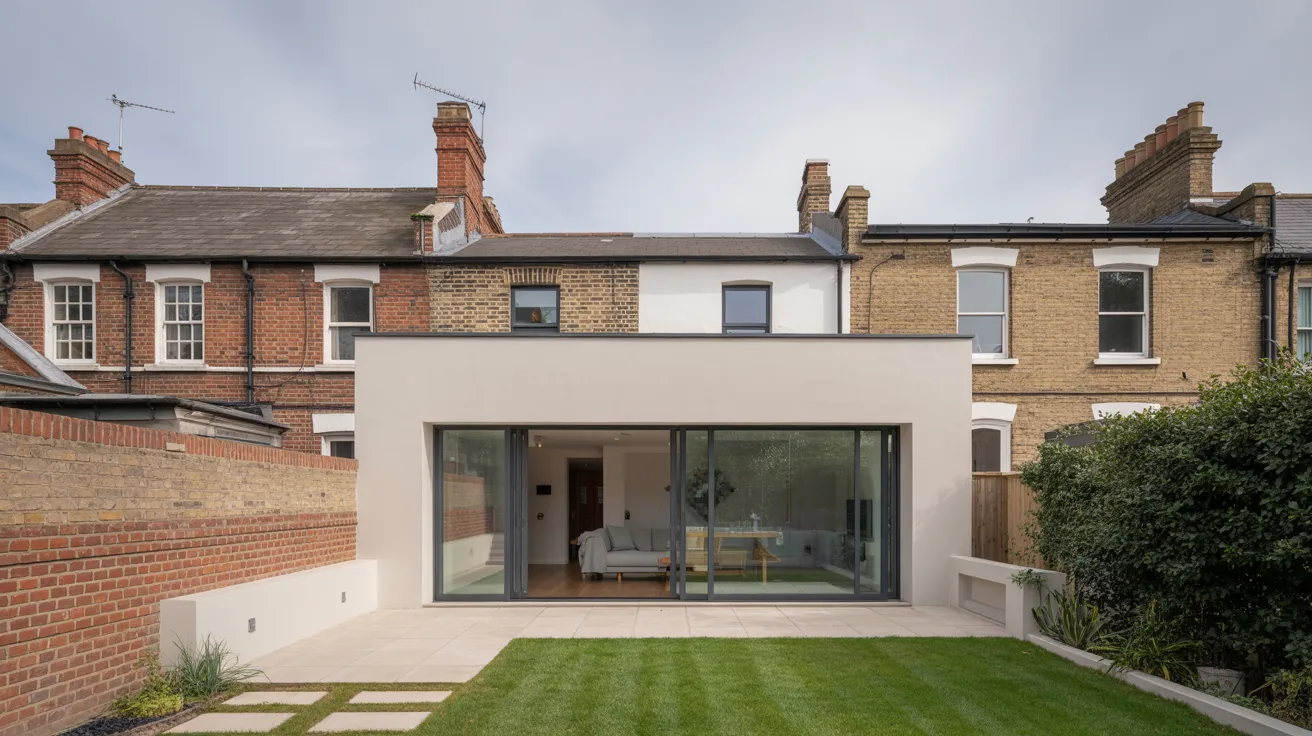
If you're a London homeowner considering a house extension, you're likely asking yourself the same question millions of Britons are wrestling with in April 2026: is now the right time to borrow? The answer depends on several factors—your current mortgage, available equity, the type of extension you're planning, and your tolerance for interest rate risk. This guide explores the current mortgage landscape and helps you make an informed decision about financing your home improvement project. If you're still deciding whether to extend or sell up and move, see our extend or move analysis for London 2026 first.
Where Are UK Mortgage Rates Today?
The mortgage market has been volatile in early 2026, with rates moving sharply upward in March. Understanding the current landscape is essential before you approach a lender.
Current UK Mortgage Rates (April 2026)
| 2-year fixed rate mortgage | 5.56% |
| 5-year fixed rate mortgage | 5.54% |
| Bank of England base rate | 3.75% |
| Further advance / remortgage rates | From 3.99%–5.50% (varies by lender) |
These are the rates being offered to borrowers with good credit scores and substantial equity. Your personal rate will depend on your loan-to-value (LTV) ratio, credit history, and the lender's appetite for the type of borrowing you're seeking.
Why Have Rates Gone Up? The Iran Conflict Effect
In March 2026, mortgage rates climbed sharply, and the primary culprit was an unexpected geopolitical shock: the escalation of the Israel–US–Iran conflict. This shift fundamentally changed rate expectations for the rest of the year.
Here's how the geopolitical situation affects your mortgage options:
- Oil and gas disruption: Tensions in the Middle East have disrupted energy supplies. Historically, energy price shocks lead to higher inflation, which pressures central banks to keep—or raise—interest rates.
- Higher inflation forecast: The OECD now predicts UK inflation could reach 4% in 2026, up from previous expectations of 2.5%. This inflation surge is the primary reason rate cuts have been cancelled.
- Wholesale borrowing costs: Mortgage lenders borrow money in wholesale markets. When interest rate swaps climb (as they did in March), lenders quickly pass those costs on to borrowers through higher product rates.
- Product withdrawal: In March 2026, hundreds of residential mortgage products were withdrawn as lenders reassessed their pricing. This has reduced choice for borrowers seeking further advances and remortgages.
The bottom line: mortgage rates are unlikely to fall in 2026, and the risk of modest rate increases remains real.
Financing Options for a House Extension
London homeowners have several routes to finance an extension. Each has different costs, timescales, and suitability depending on the size of your project and your circumstances.
1. Remortgage to Release Equity
If you have built up equity in your property over time, remortgaging is often the most cost-effective way to fund larger extensions (typically £25,000+). You refinance your existing mortgage with a new lender at a new rate, borrowing an additional amount beyond your current outstanding balance.
Remortgage for Extension Financing
| Typical interest rate range | 3.99% to 5.50% |
| Time to release funds | 4–8 weeks from application |
| Costs (fees & legal) | £1,000–£3,000 depending on lender |
| Best for | Large projects; good credit; significant equity |
When remortgaging makes sense: You have at least 20% equity in your home, credit score of 680+, stable income, and your extension costs more than £25,000. Remortgaging spreads the cost over a long-term mortgage, keeping monthly repayments manageable.
When it doesn't: Your extension is modest (under £15,000), you're within 2–3 years of your current mortgage ending, or your credit score is weak. In these cases, the setup costs and time delay may outweigh the savings.
2. Further Advances from Your Current Lender
A further advance allows you to borrow additional money from your existing mortgage lender without switching mortgages. The funds are added to your loan balance, often at a rate comparable to your current mortgage or only slightly higher.
Further Advance Mortgages
| Interest rate (typical) | Similar to existing mortgage (within 0.5%) |
| Time to funds | 2–4 weeks (faster than remortgage) |
| Costs (usually) | £200–£1,000 (much lower than remortgage) |
| Best for | Moderate projects; existing customers; speed |
Why further advances are increasingly popular: They're simple, quick, and competitive in price. Many lenders favour existing customers and will offer further advances at rates close to the prime mortgage rate. With your existing lender holding first-charge security, they have less risk and can be more flexible on terms.
The catch: Not all lenders offer further advances, and your loan-to-value ratio must be reasonable (typically under 85%). If you're already highly mortgaged relative to your property value, you may be refused.
3. Second Charge Mortgages
A second charge (or further secured lending) is a separate loan secured against your home, taken out alongside your existing mortgage. The original lender holds first charge; the second lender holds second charge. If you default, the first lender is paid first.
Second Charge Mortgages for Extensions
| Interest rate range | 5.5%–7.5% (higher risk premium) |
| Maximum borrow | Up to 80% of available equity |
| Time to funds | 2–6 weeks |
| Best for | Borrowers rejected by main lender; large equity; specialist projects |
According to industry data, second charge lending has surged in 2026. The Finance & Leasing Association reported that second charge new business reached £2.045 billion in the year to October 2025—a 23% increase year-on-year, with over 40,000 new agreements. Many homeowners are choosing to invest in the properties they own rather than entering a competitive purchase market.
Second charge rates are higher because the lender faces greater risk: if your property value falls or you default, they're behind the first lender in the queue. However, for London properties with substantial equity, a second charge can unlock funds at a better rate than unsecured personal loans.
4. Personal Loans and Credit Cards
For smaller extensions (under £10,000), personal loans can be competitive, especially if you have an excellent credit score. Interest rates on personal loans currently range from 4.5% to 12%, depending on your credit profile.
Advantages: Quick approval, no property required as security, interest payments may be tax-deductible if used for business purposes (rare for homeowners).
Disadvantages: Higher interest rates than secured borrowing, typically shorter repayment terms (5–7 years vs. 25 years for a mortgage), smaller maximum borrow amount.
What Does a House Extension Actually Cost?
To decide how much you should borrow, you need to know what your extension will cost. London prices have remained elevated in 2026.
House Extension Costs in London, April 2026
| Cost per square metre (architect-designed) | £3,000–£5,000 |
| Single-storey rear extension (3m) | £45,000–£90,000 |
| Side return extension | £35,000–£55,000 |
| Two-storey extension | £5,500–£7,500 per square metre |
| Basement extension | £6,000–£8,000 per square metre |
| Professional fees (architects, structural engineers) | +15%–20% of build cost |
These costs reflect London's elevated labour rates, planning complexities, and the high standard of finishes expected in the capital. Your actual cost will depend on the design, materials, ground conditions, and planning requirements for your specific property.
Is Now a Good Time to Borrow for a House Extension?
The answer is nuanced. Here's a framework to help you decide:
Reasons to Borrow Now
- Rates are locked into fixed products. A 5-year fixed rate today means you know your exact repayment for five years. If inflation and rates fall, you'll look smart. If rates rise, you're protected. With variable rate uncertainty, fixing now offers peace of mind.
- Property values in London remain robust. Your equity position is likely good. Borrowing against a solid asset base gives you access to cheaper rates than unsecured borrowing.
- Further advances are competitive. If your current lender offers a further advance at a rate close to your existing mortgage, it's hard to beat. This option is increasingly popular precisely because it's cost-effective and quick.
- You're tired of living with the deficit. A cramped kitchen, lack of light, or undersized bathroom affects your quality of life every day. The psychological benefit of the extension might justify the cost.
- Your project adds genuine value. A well-designed extension in London typically adds 5%–15% to property value. If you plan to stay, you recover much of the cost through improved living standards and eventual resale.
Reasons to Pause
- Rates may not fall as expected. The Bank of England's guidance suggests 2026 will see no rate cuts and possible hikes. If you're hoping to refinance at lower rates later, you could be disappointed.
- You're highly mortgaged already. If your LTV is above 80%, you'll struggle to access further advances or remortgages at reasonable rates. Waiting to build more equity might be wise.
- You're uncertain about the project scope. House extensions often run 10%–20% over budget due to unforeseen structural issues, planning requirements, or specification changes. Build in a 20% contingency when calculating your borrow amount.
- Your income is unstable. Lenders now scrutinize employment history closely. If you're self-employed, recently changed jobs, or on probation, delaying until you've been in your role 2+ years will improve your approval odds and rates.
- You're not planning to stay long-term. If there's a chance you'll move within 5–7 years, the setup costs of borrowing (fees, valuation, surveyor) may not be recovered through the extension's added value.
The Borrowing Decision: A Worked Example
Let's walk through a realistic scenario for a North London homeowner.
Scenario: Sarah owns a £750,000 terraced house in Islington. She has a remaining mortgage of £400,000 at 3.5% fixed for another 2 years. She wants to build a 4-metre rear extension (approx. 40 square metres) with a contemporary design, costing £150,000 including professional fees.
Option 1: Further Advance
- Available equity: £350,000 (£750,000 - £400,000). Her LTV: 53%. Most lenders will happily lend further advances at LTV up to 85%.
- Borrow: £150,000
- Rate offered by her lender: 4.25% (0.75% premium to her existing 3.5% rate, typical for further advances)
- New total debt: £550,000 at blended rate of ~3.82% (weighted average)
- Additional monthly cost: ~£330 (spread over her remaining mortgage term)
- Timeline: Approval in 2 weeks, funds released in 4 weeks
- Costs: £350 fee + £600 legal + £0 valuation (often free) = £950
Option 2: Remortgage with a New Lender
- New mortgage: £550,000 (£400,000 + £150,000)
- Rate offered: 5.25% for 5-year fixed (current market for 65% LTV)
- New monthly payment: Higher than further advance, but can extend term to keep it manageable
- Timeline: Approval in 2–3 weeks, funds released in 4–6 weeks
- Costs: £1,500 fee + £1,000 legal + £450 valuation = £2,950
Verdict for Sarah: The further advance saves her £2,000 in setup costs, locks in a lower rate, and is faster. Unless her existing lender refuses, it's the rational choice. The additional £330/month over, say, 18 years is manageable given her equity position and likely salary.
Will Rates Go Down? What the Experts Say
This is the million-pound question. Here's what recent forecasts suggest:
Current Outlook (April 2026): Rate cuts are now off the table for 2026. Instead, the consensus is that the Bank will hold at 3.75% or even raise rates if inflation stays elevated.
The key uncertainty is how long the Middle East tensions persist. If they ease and energy prices normalize, inflation may cool and rate cuts could resume. However, betting on geopolitical resolution is risky.
For borrowers considering an extension: Fix your rate if you decide to proceed. A 5-year fixed means you're protected against any rate rises. If you're tempted to wait for falls that may not arrive, you risk paying higher rates later. The trade-off between certainty and upside is personal, but certainty often wins when you have a genuine need (like a growing family or a deficient kitchen).
Tax and Affordability Checks
Before you commit to borrowing, consider:
- Affordability testing: Lenders will stress-test your mortgage against higher rates. If interest rates rose to 5.75% (a plausible scenario by 2028), could you still afford the payments? Most lenders require you to pass this test.
- Debt-to-income ratio: Lenders typically limit your total borrowing to 4.5 times your annual gross income. Calculate whether adding £100,000–£200,000 in new debt breaches this threshold.
- Stamp Duty considerations: If you're remortgaging, you won't incur additional Stamp Duty. But be aware of the 3% surcharge on additional residential properties if you own any.
- Planning permission and Building Regulations: These are not borrowing questions, but they're essential. Budget for £500–£2,000 in planning and building control fees, and account for delays. Many extensions take 6–9 months to execute once construction starts. Also note the new Part L 2026 energy efficiency requirements, which affect your specification and budget.
How to Move Forward
If you've decided that now is the right time to borrow for your extension, here's your next steps:
- Get a property valuation. Ask your lender for a free desktop valuation or a full valuation (£300–£500). This establishes your current equity and LTV.
- Obtain detailed extension quotes. Get at least three quotes from qualified builders (check NHBC or FMHB certification). Include a 15%–20% contingency in your budget.
- Approach your current lender first. Ask if they offer further advances and what rate they'd offer. If they refuse or quote above 5.0%, seek a quote from a mortgage broker for remortgage options.
- Consult a mortgage broker. For extensions over £50,000, a broker can access products and rates you won't find directly. Brokers are often free (lender-paid) and can save you 0.25%–0.50% in interest.
- Plan your timeline. Factor in 2–3 weeks for mortgage approval, 4–8 weeks for fund release, and 6–12 months for construction. A 12–18 month project timeline is realistic from initial inquiry to completion.
FAQs
What's the difference between a further advance and a remortgage?
A further advance is borrowing from your existing lender; a remortgage is refinancing with a new lender. Further advances are usually faster and cheaper but may have higher rates. Remortgages offer fixed rates at the current market price. Further advances are often the better choice for straightforward extensions under £200,000.
Can I borrow 100% of my extension cost?
No. Lenders typically limit lending to 80%–85% of property value (LTV). If your property is worth £600,000 and you have a £300,000 mortgage, your available equity is £300,000. You can borrow up to ~£180,000 additional (at 85% LTV). Anything above requires savings or a second charge.
What if rates do fall later in 2026?
If you're on a fixed rate, you benefit from the certainty. You could remortgage later to a lower rate (typically requiring 18–24 months from your first fixed deal to avoid early repayment charges). If you're on a variable further advance, your rate could fall, saving you money. This is a potential upside, but it's uncertain.
Will a house extension increase my property's value?
In London, a well-designed extension typically adds 5%–15% to property value, depending on the area, design quality, and how closely it matches market expectations. A £150,000 extension might add £45,000–£100,000 in value. However, this isn't guaranteed, and you'll rarely recover 100% of the cost at resale. The extension should be judged on quality-of-life benefit first and value-add second.
Should I wait for rates to fall before borrowing?
If you have a genuine need (space, light, kitchen), delaying for speculative rate falls is risky. Rates may not fall in 2026, and you'll lose the benefit of fixing today's lower rates. If you're simply optionistic about the future, waiting is defensible—but monitor the Bank of England's signals closely and be ready to move quickly if rates do start to edge lower.
What if my lender refuses to offer a further advance?
Some lenders restrict further advances to existing customers with strong payment history. If yours refuses, explore remortgaging with a new lender or a second charge mortgage. A mortgage broker can identify lenders actively offering extensions financing and compare rates. You may find a more competitive option elsewhere.
How does the Iran conflict affect my extension timeline?
If the Middle East tensions persist, building material costs could rise due to higher oil and energy prices. On top of this, Trump's April 2026 tariffs on steel, aluminium, and copper are adding a second layer of cost pressure on materials. Get fixed-price quotes quickly, and build a 20% contingency. The conflict also means rate cuts are unlikely, so if you're borrowing, fix your rate now rather than gamble on falls.
Can I offset a house extension loan against rental income?
If the extension adds lettable space (e.g., a new bedroom in an HMO or a rental flat), interest on the borrowing may be deductible as a rental expense. This requires your lender's approval and is more complex than owner-occupied borrowing. Consult a tax advisor if this applies to you.
Key Takeaways
- UK mortgage rates are currently 5.5% for new borrowing (April 2026), up from expectations of rate cuts in March. The Iran conflict has shifted the outlook to rate stability or modest hikes.
- Further advances from your existing lender are often the cheapest and fastest route for extensions under £200,000, especially if you have good equity.
- Second charge mortgages have boomed in 2026, offering an alternative for borrowers with equity but limited options from their main lender.
- London extension costs are typically £3,000–£5,000 per square metre, with a typical 4-metre rear extension costing £45,000–£90,000 before professional fees.
- If you have a genuine need for the space and your finances are sound, the case for borrowing now (at a fixed rate) is stronger than waiting for uncertain future rate cuts.
- Always stress-test your affordability against higher rates. If your mortgage payments couldn't rise by 2% without hardship, be cautious about taking on new debt.
About This Article
This guide was prepared to help London homeowners evaluate the decision to borrow for a house extension in the context of April 2026 interest rates and geopolitical uncertainty. For further personalised advice, we recommend speaking with a mortgage broker or your lender directly. At My Local London Builder, we're happy to discuss your extension project and connect you with lending partners we trust.
Sources
- Bank of England – Interest Rates and Bank Rate (Official Decision)
- Uswitch – Current UK Mortgage Rates (3 April 2026)
- HomeOwners Alliance – Interest Rate Predictions 2026
- Yahoo Finance UK – Where are UK Mortgage Rates Heading in 2026 as Iran War Continues
- Mortgage Solutions – The Year of the Second Charge (March 2026)
- Mortgage Solutions – FCA on Second Charge Mortgage Advice Standards (March 2026)
- MoneySuperMarket – Second Charge Mortgage Guide
- Fox Davidson – How to Finance a House Extension 2026 UK Guide
- MoneyHelper (MoneyHelper) – Increasing Your Mortgage: Getting a Further Advance
- BH Studio – How to Finance a House Extension or Renovation in London (2026 Guide)
- Architecture for London – House Extension Costs in London 2026 Update
- Rise Design Studio – The Real Cost of a House Extension in London in 2026
- Nilo Construction – House Extension Cost in London 2026
- LCCL Construction – House Extension Cost London 2026