
Party Wall Surveyors in London: How to Choose and Work With One
By My Local London Builder Team | March 2026
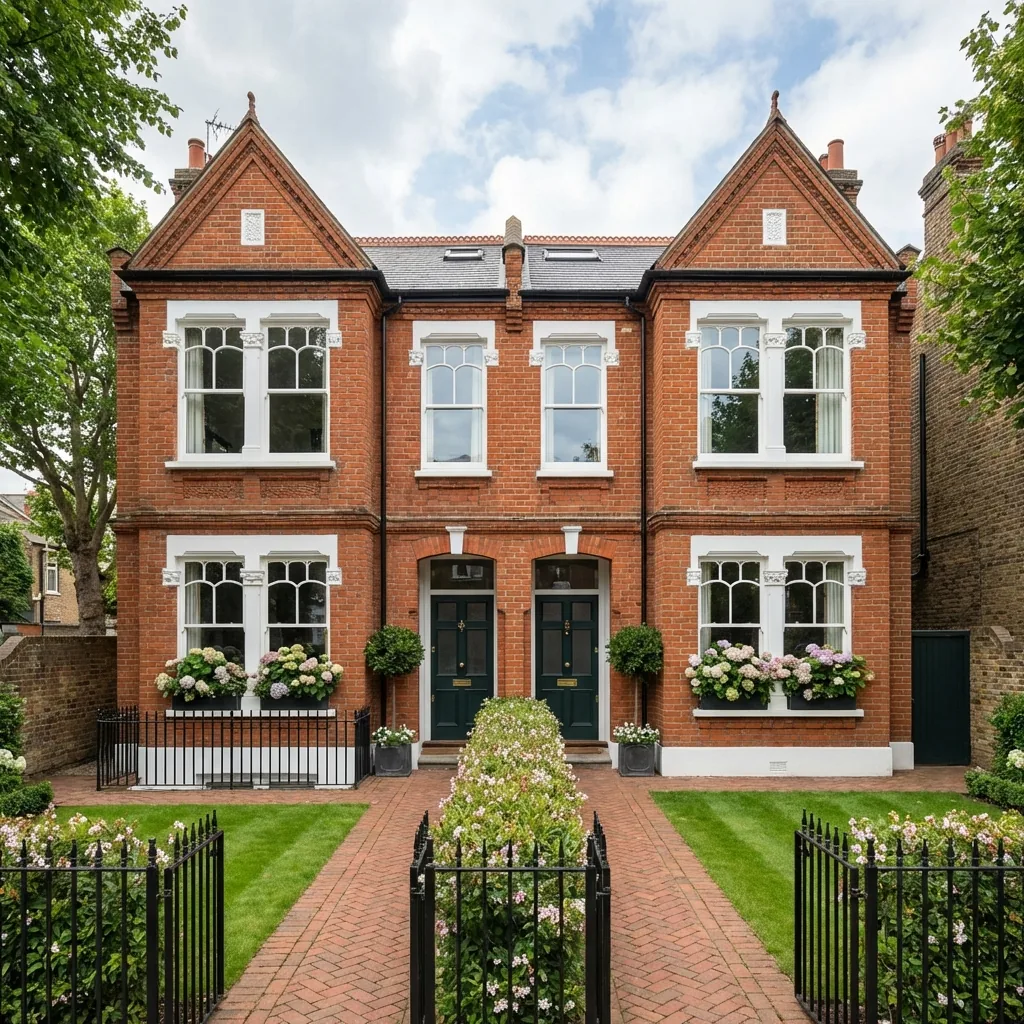
Summary: The Party Wall etc. Act 1996 is one of the most misunderstood pieces of legislation in residential construction. Homeowners assume their neighbour can block their extension. Neighbours assume the Act gives them a veto. Neither is true. What the Act actually does is create a framework — and the surveyor is its guardian. This guide explains what party wall surveyors genuinely do, what qualifications matter, and how to move through the process efficiently without sacrificing the relationship with the person next door.
What a Party Wall Surveyor Actually Does
Most people encounter a party wall surveyor for the first time when they are told they need one. That first encounter can be confusing, because a party wall surveyor does not advise either party on whether the works should proceed — that is not their role. Their job is to protect both sides of a shared boundary by producing a legally binding document, the Party Wall Award, that defines how the works will be carried out.
Think of the surveyor less as an adversary and more as a neutral referee. They inspect both properties before work begins, document existing conditions, agree the terms under which the works may proceed, and — if anything goes wrong during construction — provide the evidentiary framework to resolve disputes without litigation.
In a city like London, where Victorian terraces share walls with four or five neighbours simultaneously and basement excavations can affect properties 15 metres away, the surveyor's role is genuinely significant. A well-prepared Award prevents disputes. A poorly prepared one, or the absence of one entirely, can stop a project in its tracks mid-build.
When the Act Applies
The Party Wall etc. Act 1996 applies to three distinct categories of work:
- Works to a shared party wall or party fence wall — cutting into, raising, underpinning, or building off a shared wall between two properties.
- New structures at or near the boundary — building a new wall astride or adjacent to the boundary line.
- Excavation within 3 metres of an adjoining building (or within 6 metres if the excavation will go deeper than the neighbour's foundations) — the most frequently overlooked trigger in London rear extension projects.
If your proposed works fall into any of these categories, you are legally required to serve a Party Wall Notice before starting. The Act applies in England and Wales. It does not matter whether your neighbour is amicable or obstructive — the obligation to notify exists regardless.
Works That Commonly Trigger the Act in London
- Rear single or double-storey extensions involving excavation near a shared boundary
- Loft conversions where steelwork cuts into the party wall (almost universal in terrace conversions)
- Side return extensions along a boundary shared with a neighbour
- Basement excavations — almost always triggers the 3m or 6m excavation provisions
- Underpinning of any shared structure
- Removing a chimney stack that is shared with or sits on the party wall
- Raising the height of a party wall to form a new habitable floor
Agreed Surveyor vs Two Separate Surveyors
When the Act applies, you and your neighbour each have the right to appoint your own surveyor. Alternatively, you can jointly appoint a single Agreed Surveyor who acts impartially for both parties. The choice matters, and it is worth understanding the difference before the process begins.
The Agreed Surveyor Route
A single Agreed Surveyor is typically faster and more straightforward. There is only one professional to coordinate, one set of site visits, and one Award document produced. When both neighbours are pragmatic and the works are relatively straightforward, this is almost always the better choice. The surveyor's duty is to act impartially — they do not represent the building owner, even though the building owner usually pays their fee.
The limitation is perception. If your neighbour is anxious — worried about cracking, subsidence, or simply uncertain about what the works will involve — they may feel more comfortable having their own surveyor to advocate for their interests. In that case, insisting on an Agreed Surveyor can backfire and create friction before the project even starts.
Two Separate Surveyors
When each party appoints their own surveyor, the two surveyors correspond, inspect together, and produce the Award jointly. If they cannot agree, the Act provides for a third surveyor — selected at the outset and called upon only in deadlock — to make a binding decision.
Two surveyors does not mean the process is adversarial. Experienced party wall surveyors in London work together regularly and produce Awards efficiently even when representing opposing parties. The practical difference from the building owner's perspective is time: two-surveyor processes typically take two to four weeks longer, and the building owner pays both sets of fees.
"The Act was designed to resolve disputes, not create them. A good surveyor on either side holds that principle."
Credentials: What to Look For
The Party Wall etc. Act 1996 does not require surveyors to hold any specific qualifications. Legally, any person over 18 can act as a party wall surveyor. This is not a reassuring fact. An unqualified surveyor can produce an Award that is technically flawed, challenged by either party, or simply incomplete — and the consequences fall on you.
When appointing a party wall surveyor in London, look for the following:
RICS Membership
MRICS (Member) or FRICS (Fellow) of the Royal Institution of Chartered Surveyors. RICS members are bound by a professional standards framework, carry professional indemnity insurance, and are subject to a disciplinary process. They are also required to act with professional impartiality — which is exactly what the Act demands of them.
Faculty of Party Wall Surveyors (FPWS)
The FPWS is a specialist professional body dedicated solely to party wall practice. Membership requires demonstrated experience in party wall matters and a commitment to ongoing professional development. A surveyor who holds FPWS accreditation has focused their practice on this area of law rather than treating it as a sideline to general surveying work.
London Experience
Party wall matters in London are different in character from those elsewhere in England. The density of Victorian terrace housing, the prevalence of basement excavations, the frequency of shared chimney stacks, and the proximity of foundations all create a more complex operating environment than, say, a semi-detached estate in a market town. A surveyor who primarily works in London will have handled these specific conditions repeatedly.
Credentials Checklist When Appointing a Party Wall Surveyor
- MRICS or FRICS: confirms professional standards, indemnity insurance, and disciplinary framework
- FPWS membership: specialist party wall focus — not just a general surveyor doing party wall as a sideline
- Active London practice: asks about their recent project experience in your borough specifically
- Clear written fee agreement: scope of service, basis of charge, and what escalation looks like
- Responsive communication: party wall process has legal deadlines; a surveyor who is hard to reach creates real risk
The Schedule of Condition: Your Most Important Document
Before any work begins, the surveyor will carry out a Schedule of Condition survey of the adjoining property. This is a systematic, room-by-room photographic and written record of every crack, stain, settlement mark, and imperfection that already exists — walls, ceilings, floors, garden walls, outbuildings.
This document is not a formality. It is the single most important piece of paper in the entire party wall process, because it establishes the baseline from which any new damage can be assessed. Without it, your neighbour can point to any crack in their ceiling after your works and reasonably ask how you can prove it was there before. With a thorough Schedule, you have photographic evidence of every pre-existing condition.
The quality of a Schedule of Condition varies enormously. A rushed surveyor might photograph a few walls and call it done. A thorough surveyor will cover every ceiling, every floor junction, every external wall, and every outbuilding — often a hundred photographs or more for a standard London terrace. When reviewing your surveyor, ask specifically about their approach to the Schedule.
What Happens if Damage Occurs
If your neighbour reports damage during or after the works, the Schedule of Condition is reviewed. If the condition was documented before work started, it cannot be attributed to your project. If a new crack appears that was not in the Schedule, the presumption is that it was caused by the works — and the building owner is responsible for making it good.
In the vast majority of London projects, the Schedule is reviewed, no damage is found, and everyone moves on. But the minority of cases where disputes do arise illustrate precisely why a thorough Schedule matters: without one, the building owner has no defence regardless of whether they are actually responsible.
Understanding the Party Wall Award
The Party Wall Award is the legal document produced by the surveyor or surveyors that gives formal permission to proceed with the notifiable works. It is binding on both parties and, importantly, it protects both parties.
A typical Award for a London extension or loft conversion will cover:
- A precise description of the works authorised, usually referencing the drawings
- Working hours restrictions — typically no work before 8am or after 6pm on weekdays, and limited or no Saturday working
- Any special method requirements — for example, specifying that vibration-intensive equipment such as road breakers must not be used near specific junctions
- The completed Schedule of Condition as an appendix
- A right of access for the adjoining owner's surveyor to inspect during the works
- Provisions for making good any damage attributable to the works
- The surveyor's fees and who is responsible for them
Once the Award is served, either party has 14 days to appeal to the County Court if they disagree with its terms. In practice, appeals are rare — a well-drawn Award leaves little room for reasonable objection.
Common Award Conditions on London Projects
- Working hours: Mon–Fri 8am–6pm; Saturdays 8am–1pm by prior agreement; no Sunday or bank holiday working
- Noise and vibration: percussive or vibration-intensive work restricted to specific hours, often 9am–5pm
- Access: surveyor (or their representative) entitled to inspect the party wall and adjoining property at reasonable notice during the works
- Making good: all damage attributable to the works to be made good to the reasonable satisfaction of the surveyor
- Security for expenses: rarely imposed, but available to the surveyor if the risk of damage is considered significant
The Surveyor's Role During Works
The surveyor's involvement does not end when the Award is served. Under the Act, the adjoining owner's surveyor retains the right to inspect the works at any point during the project. In practice, this usually means one or two site visits at critical stages — when the party wall is first opened, when steelwork is installed, or when excavation reaches its deepest point.
A competent surveyor will also be contactable if an unexpected condition is discovered during construction — for example, if a party wall turns out to be thinner than the drawings assumed, or if excavation reveals that the neighbour's foundations are shallower than expected. In these situations, the surveyor's involvement as a neutral professional can be invaluable in agreeing a modified approach quickly, without either party feeling that the other is acting in bad faith.
At the end of the works, a close-out inspection compares the final condition of the adjoining property against the Schedule of Condition. If all is well, the matter is formally concluded. If new damage is identified, the Award's making-good provisions are invoked.
London-Specific Challenges
London's housing stock creates party wall conditions that are genuinely more complex than the national average. An experienced London surveyor will be familiar with all of these — a less experienced one may not be.
Victorian Terrace Foundations
Most Victorian terraces in London were built on shallow strip foundations — typically 600–900mm below ground level. Modern extensions often excavate to 1.5m or deeper, which almost always engages the Act's excavation provisions. The surveyor must assess whether the proposed excavation could undermine the adjoining owner's foundations, and the Award may require specific underpinning or monitoring conditions.
Shared Chimney Stacks
In many London terraces, chimney stacks sit directly on the party wall and serve both properties. Removing or modifying a shared chimney requires particular care, and the Award will typically specify exactly how the stack is to be supported or capped and who is responsible for the shared flaunching.
Basement Excavations
London basement projects engage the Act almost universally. The 6-metre excavation rule — which applies when digging deeper than the neighbour's foundations — means that most basement schemes will require the Act to be followed even when the work appears to be entirely within the building owner's land. Basement Awards are among the most detailed and carefully drawn in London party wall practice.
Conservation Areas and Shared Boundary Walls
In conservation areas across inner London — Islington, Hackney, Lambeth, Kensington and Chelsea — boundary walls and rear garden walls are frequently shared structures. Works to these walls, including removing them to create an open-plan rear garden, can trigger the Act even when no structural building work is involved. A surveyor with experience in these boroughs will have encountered this scenario repeatedly.
How to Find a Party Wall Surveyor in London
The most reliable route is a direct recommendation from someone who has recently completed a similar project in your borough. A surveyor who knows the specific conditions — the soil types, the typical foundation depths, the local planning context — will work more efficiently than one parachuted in from outside London.
If you do not have a personal recommendation, both the RICS and the FPWS maintain searchable registers of their members. Search specifically for surveyors whose listed practice areas include party wall work, and whose office is based in or near your borough.
Be wary of surveyors who are also offering to draw up your planning application, manage your entire project, or provide a one-stop service covering everything. Party wall surveying is a distinct professional discipline that requires independent judgment. A surveyor with conflicting commercial interests in your project cannot be genuinely impartial.
Frequently Asked Questions
1. Do I legally have to use a party wall surveyor?
No — if your neighbour consents in writing within 14 days of receiving the Party Wall Notice, no surveyor is needed. But if they dissent, or simply fail to respond, the Act deems it a dispute and a surveyor must be appointed. In practice, most London projects where excavation or structural work is involved end up needing one.
2. What qualifications should a party wall surveyor have?
Look for MRICS or FRICS (Royal Institution of Chartered Surveyors) or membership of the Faculty of Party Wall Surveyors (FPWS). The Party Wall Act does not require formal qualifications — technically anyone can act as a surveyor — which is exactly why credentials matter. An unqualified surveyor can produce an Award that is legally challenged and delayed.
3. What is an Agreed Surveyor and when should I use one?
An Agreed Surveyor is a single, jointly appointed surveyor who acts impartially for both you and your neighbour. This is usually the fastest and most straightforward route when relations are amicable. However, if your neighbour is anxious or has specific concerns, they may feel more comfortable appointing their own surveyor — and they are fully entitled to do so.
4. Who pays the party wall surveyor's fees?
In the vast majority of cases the building owner (the person doing the works) pays all surveyor fees — including those of the adjoining owner's surveyor. This is the default position under the Act. The only exception is where an adjoining owner has made unreasonable additional requests that increased the surveyor's workload significantly.
5. What is a Schedule of Condition and why does it matter?
A Schedule of Condition is a photographic and written record of the existing state of your neighbour's property before works begin. It is the critical document if a dispute about damage arises later. Without one, your neighbour can claim any existing crack was caused by your project and it becomes very difficult to disprove.
6. What does the Party Wall Award actually contain?
The Award is a legally binding document setting out: the works permitted, any restrictions on working hours or methods, the Schedule of Condition, any security for expenses (rare), and the surveyor's fees. It gives the building owner formal permission to proceed with the specific works described — and gives the adjoining owner defined protections.
7. Can a neighbour stop my extension or loft using the Party Wall Act?
No. The Party Wall Act is not a veto. A dissenting neighbour cannot prevent you from building — they can only trigger the formal Award process, which defines how the works must be carried out. The Act protects both parties; it does not give neighbours a right of objection to the works themselves.
8. How long does the party wall process take in London?
From serving the Notice to receiving the Award, allow 6–10 weeks in most cases. The Notice alone requires a minimum two-month waiting period for structural works. Factoring in surveyor appointment, Schedule of Condition survey, and Award preparation, 10–12 weeks from notice to commencement is a realistic planning assumption for London projects.
9. What happens if I start work without a Party Wall Agreement?
Proceeding without an Agreement when one is required is a civil wrong. Your neighbour can seek an injunction to halt the works — even mid-project — or pursue damages through the courts. An injunction will stop works entirely until a retrospective Award is obtained. It also significantly damages the neighbourly relationship.
10. My neighbour refuses to engage with the party wall process. What happens?
If your neighbour ignores the Notice (no response within 14 days) or refuses to appoint a surveyor, you can appoint a second surveyor on their behalf. This is known as an ex parte appointment and is provided for under the Act. The two surveyors then proceed to produce the Award. Your neighbour's non-engagement does not give them a veto.