
Hip-to-Gable Loft Conversion London — Is Your Roof Suitable and What Does It Involve?
This guide explains what a hipped roof is, which London properties have one, how the hip-to-gable conversion works, what Permitted Development rules apply, and why it is most effective when combined with a rear dormer.
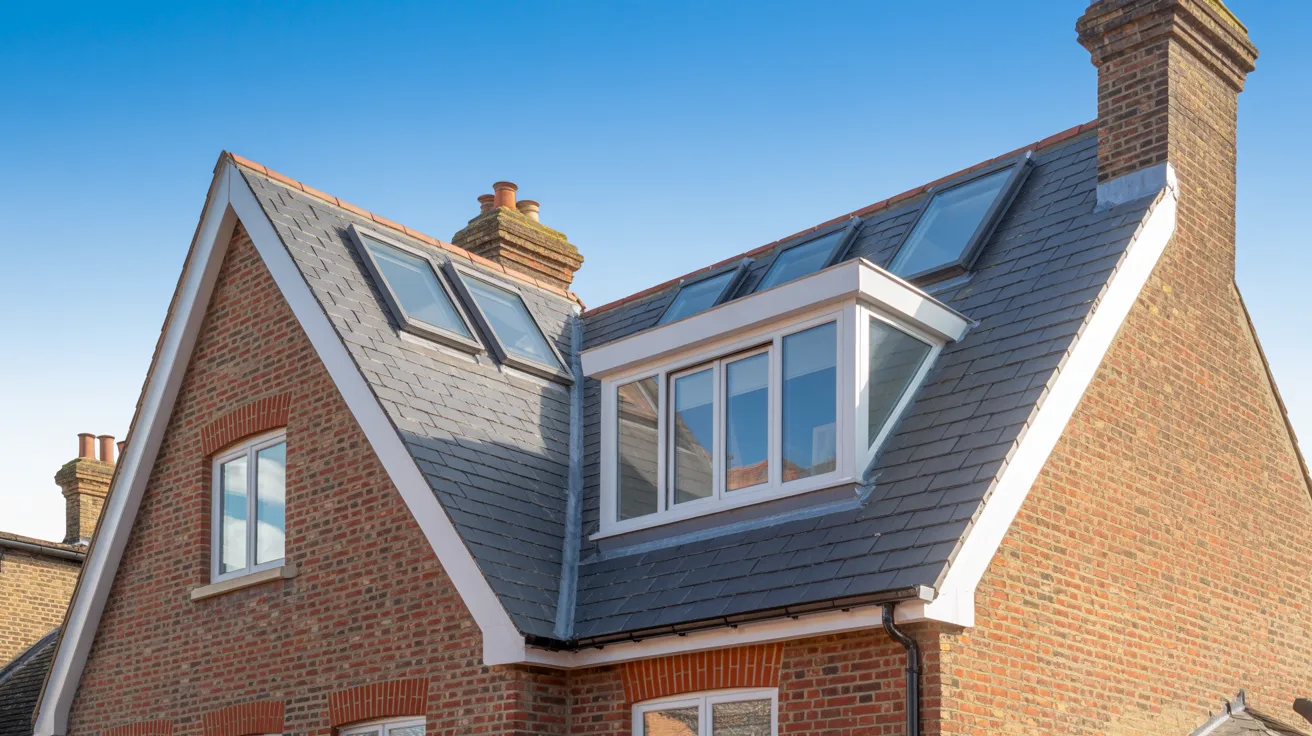
What Is a Hipped Roof?
A hipped roof slopes inward on all four sides, unlike a traditional gable roof, which features a triangular gable end at each end of the ridge. This design is common across London's residential architecture, particularly in semi-detached and terrace properties built throughout the 20th century. The hip — the sloping edge where two roof planes meet — is a defining structural feature of these properties.
The sloping hip at the end of the roof reduces the usable volume within the roof space. It cuts into the floor area and head height at the end closest to the party wall or side boundary. The result is a roof space that has good head height in the centre but tapers sharply toward the ends. This taper presents the most significant barrier to usable loft conversion space on a hipped roof property. Where a gable-end house might accommodate a full storey across the entire roof footprint, a hipped house has a "wedge-shaped" void — wide and tall in the middle, but narrowing toward the edges.
Understanding the hip's geometry is essential before planning any loft conversion work. The hip occupies one end of the roof only — not both ends — which means the conversion potential is concentrated on a portion of the available roof space rather than the full width of the building.
Which London Properties Have Hipped Roofs?
Hipped roofs are found across a wide range of London housing stock, but certain property types are almost universally hipped:
- Semi-detached houses: The hip occupies the non-party-wall end of the roof — the side facing the garden or a gap between properties. This is by far the most common configuration in London. The party wall (the wall shared with the neighbouring semi) is typically a true vertical gable, while the opposite end slopes as a hip.
- End-of-terrace houses: The hip occupies the exposed end of the terrace — the gable end that would otherwise face outward toward the street or a neighbouring property's side wall. End-of-terrace properties offer a distinct opportunity because the hip sits on the side elevation rather than the back.
- 1930s semi-detached houses: The dominant domestic architecture of outer London's inter-war expansion spans Ealing, Barnet, Merton, Lewisham, Wandsworth, and Bromley. Nearly all inter-war semis have hipped roofs. This period marks the suburban growth that defined modern London's character, and hip-to-gable conversion is the defining loft project for these properties.
- Detached houses: All four ends may be hipped, or the property may have a gable end on one or both sides. Hip-to-gable conversion is possible on one or both ends of a detached house, though it is most commonly applied to the rear end to preserve the front elevation's appearance.
- Victorian and Edwardian semis: Less common than inter-war semis, but some have shallow hips at the non-party end. These are typically properties built between the 1870s and 1910s in inner and central London suburbs.
The prevalence of hipped roofs in London's suburban stock means that hip-to-gable conversion represents a significant proportion of loft work carried out in outer London boroughs. Understanding whether your property fits one of these categories is the first step in assessing conversion feasibility.
What a Hip-to-Gable Conversion Involves
The hip-to-gable conversion is a structural intervention that fundamentally alters the roof geometry. Here is what the work entails:
The existing hipped slope on one end of the roof is removed. This is not a simple trimming — it is the demolition of the hip rafters and the roof structure that forms the sloping end. The covering (tiles, slates, or other material) is stripped back, and the hip framework is taken out entirely.
A new vertical gable wall is constructed at the end of the ridge — extending the ridge line to the full length of the building's footprint. This new gable is typically built in cavity masonry matching the existing house. The wall rises from the level of the existing roof plate (the topmost structural member of the side or party wall) vertically to the height of the existing ridge. This vertical face completely replaces the sloping hip.
The new gable creates a dramatically larger volume of usable roof space, particularly at the end of the loft that was previously tapered. Instead of a narrow wedge that tapers to almost nothing at the outer wall, the new geometry provides vertical walls on at least two sides, yielding a rectangular or near-rectangular floor plan.
The existing ridge is extended to reach the new gable wall. The rafters at the hip end are replaced with new rafters bearing on the new gable wall. These new rafters are typically engineered timber members, designed by a structural engineer to span from the ridge to the outer wall with the loads calculated for the new roof configuration.
The floor of the loft — typically new structural floor joists bearing on the party wall and the outer walls — is installed as part of the conversion. This structural floor is essential; it provides a platform for walking, furniture, and future use. The new floor is usually engineered to match the loading capacity of a normal storey.
A staircase is added to provide access from the floor below, usually rising from the first-floor landing through a new structural opening. The position of the staircase is one of the most critical design decisions and must be agreed with the structural engineer before detailed design begins.
Permitted Development Rules for Hip-to-Gable
Hip-to-gable conversions are generally Permitted Development (PD) for semi-detached and detached houses, but not for terraced houses. The regulatory framework is precise, and understanding the limits is essential before committing to a design.
The PD allowance for a semi-detached or detached house is 50 cubic metres of additional roof space (compared to 40 cubic metres for terraced houses, which in any case are not eligible for hip-to-gable conversion). The conversion must not extend beyond the highest point of the existing roof — in other words, the new gable wall cannot be taller than the ridge of the existing roof.
The dormer or gable face must not be visible from a highway on the principal elevation. For a semi-detached house, this typically means the hip-to-gable on the side or rear is acceptable, but a hip-to-gable on the front-facing end is not. Materials used must be similar in appearance to the existing dwelling — matching the brick, tile, and architectural language of the house.
No balconies or raised platforms are permitted under PD. The new roof must integrate with the existing structure without any projections or additions beyond the planned gable wall.
The conversion is not Permitted Development if the property is listed, in a conservation area (Article 4 restrictions on Class B), or if Permitted Development rights have been removed by planning condition. Conservation areas present a particular constraint: Class B restrictions prohibit dormers on the front elevation. A hip-to-gable to the side of a semi may still be possible in some conservation areas, but this must be checked carefully against the specific conservation area guidance.
Article 4 Directions are another critical consideration. These are imposed by local planning authorities to remove or restrict PD rights in specific areas. Check the local planning portal for your property's postcode — inner London boroughs often restrict loft extensions even in areas not formally designated as conservation areas. An Article 4 Direction means what would normally be PD in other parts of London requires full planning permission in your location.
Combining Hip-to-Gable With a Rear Dormer
The most common and practical approach for a semi-detached house is to combine the hip-to-gable with a rear dormer. This combination is far more effective than either element alone.
The hip-to-gable creates usable space at the hip end of the loft — the area that was previously tapered. The rear dormer creates head height along the back slope of the roof, allowing a room to have vertical walls along the full depth of the building rather than sloping ceilings.
Together, they transform a tapered, unusable roof void into a full-sized floor — typically capable of accommodating a good-sized bedroom with an en-suite bathroom and a landing with storage. The floor plan becomes a proper room rather than a corridor with alcoves.
The rear dormer on a terraced or semi-detached house is a separate Permitted Development assessment from the hip-to-gable. Both count toward the cumulative 50 cubic metre allowance; the total volume created by both elements combined must not exceed this limit. This is a critical point: the allowance is shared between the hip-to-gable and the dormer, not separate for each.
For semi-detached houses, the rear dormer is usually the larger space-creating element. The hip-to-gable is the enabler that makes the floor plan work as a complete room rather than a corridor. Without the hip-to-gable, a rear dormer alone on a semi-detached house leaves the hip end of the loft tapered and unusable. Without the rear dormer, a hip-to-gable alone creates a tall but narrow space at the hip end, leaving the rest of the roof slope too low for comfortable use.
Design consideration: the rear dormer should align with the hip-to-gable to produce a clean, continuous roofline rather than a series of unrelated additions. This alignment also maximizes usable floor area and creates a more coherent visual appearance from the street.
Head Height — What You Need
Building Regulations require a minimum head height of 2 metres at the centre of any habitable room in a loft conversion. This is the legal minimum; in practice, 2.3 metres is a more comfortable working dimension for bedrooms and living spaces.
For a hip-to-gable conversion, the head height in the converted space depends on the original roof pitch and the ridge height. Steeper pitches (40 degrees or more) produce more usable volume than shallow pitches (below 30 degrees). A pitch of 45 degrees yields significantly more headroom than a pitch of 25 degrees over the same horizontal span.
1930s semi-detached houses typically have roof pitches of 35–45 degrees. Most of these produce adequate head height for a full conversion when combined with a rear dormer. Properties with steeper pitches (45+ degrees) are ideal; those with shallow pitches (below 35 degrees) require careful measurement and may need additional design work to achieve the required minimum head height.
How to assess without a survey: stand in the existing loft, measure the height from the floor joists to the underside of the ridge. If it is 2.5 metres or more, a conversion is very likely feasible. Below 2 metres, it will be challenging without raising the ridge (which requires full planning permission and is more structurally complex). Between 2 and 2.5 metres, a conversion is usually possible but may require careful design.
The floor structure adds an important consideration: adding a new structural floor to the loft — the platform on which you walk — reduces the apparent head height compared to what you measure from the existing ceiling joists. The floor typically adds 200–250 millimetres, so a measurement of 2.4 metres from joists to ridge becomes approximately 2.15 metres of usable head height once the new floor is installed.
The Staircase — The Most Constrained Element
The staircase to the loft conversion is often the most difficult element to resolve in the design. This single structural and spatial decision drives the entire floor plan of the conversion and determines which rooms are possible and where they can be positioned.
Building Regulations require a minimum stair width of 600 millimetres (in practice 800 millimetres or more is desirable for comfort and moving furniture). Headroom clearance must be at least 2 metres above the stair treads. The stair must comply with pitch angle (no more than 42 degrees for domestic stairs) and riser dimensions (between 150 and 220 millimetres).
On a typical 1930s semi, the staircase rises from a landing on the first floor. This opening can be created within an existing bedroom footprint (creating an en-suite-sized room above and below), or from the landing itself (reducing corridor width on the floor below).
The position of the staircase must be agreed with the structural engineer and architect before any other element of the conversion is designed. It determines the structural penetration through the existing first-floor structure, the loading distribution, and the floor plan of the new storey. The stair location drives decisions about which walls are load-bearing, where the new joists sit, and what rooms are accessible from where.
A well-positioned staircase lands on a new loft landing from which the bedroom and bathroom are accessed independently. Each room has its own doorway and is self-contained. A poorly positioned staircase forces access through one room to reach another — for example, a bedroom that can only be accessed by passing through the bathroom, or vice versa. This is common in rushed designs and creates an unsatisfactory and less valuable floor plan.
The L-Shaped Mansard for End-of-Terrace Properties
For end-of-terrace houses (as opposed to semi-detached), the exposed end of the terrace offers a different and often better opportunity than a simple hip-to-gable conversion.
Rather than a pure hip-to-gable, the end-of-terrace can accommodate an L-shaped mansard — a rear dormer with a near-vertical back face combined with a side mansard on the exposed gable end. This produces significantly more usable floor area than a hip-to-gable alone because the mansard raises the walls on two faces rather than simply removing the hip.
An L-shaped mansard almost always requires full planning permission, as it typically exceeds Permitted Development conditions in most cases. However, the additional space gained — often 60–80 percent more floor area than a hip-to-gable alone — usually justifies the additional planning effort and timing uncertainty.
End-of-terrace properties with the gable exposed to the street or to a highly visible location may face greater planning scrutiny. The visual impact on the streetscene is a material consideration, and the planning authority will assess whether the mansard's design, materials, and proportions integrate appropriately with the existing terrace and the wider character of the area.
| Conversion Type | Space Created | PD Eligible? | Best For | Planning Risk |
|---|---|---|---|---|
| Hip-to-gable only | Additional volume at hip end; usable but floor plan may be restricted without rear head height | Yes — within 50m³ cumulative allowance | Properties with steep pitch and good existing head height | Low (PD); higher in conservation areas or Article 4 areas |
| Hip-to-gable + rear dormer | Full floor — typically a double bedroom, en suite and landing | Yes — combined volume within 50m³ allowance | Most 1930s semi-detached houses; maximises usable floor area | Low (PD); requires conservation area check |
| Rear dormer only (no hip-to-gable) | Good head height along rear slope; floor plan tapers at hip end | Yes — within 40m³ (terrace) or 50m³ (semi) allowance | Where hip end less critical; budget-constrained projects | Low (PD) |
| Velux / rooflight only | No additional volume; improved light to existing roof void | Yes — Class C (150mm projection limit) | Where head height is already adequate and habitable use is the goal without structural alteration | Very low |
| L-shaped mansard (end-of-terrace) | Near-full floor on two faces; typically 60–80% more floor area than hip-to-gable alone | Rarely — usually exceeds PD conditions | End-of-terrace properties where maximum space is the priority | Higher — full planning permission required; streetscene scrutiny |
Assessing Whether Your Property Is Suitable
Before commissioning detailed architectural or structural work, carry out these preliminary checks:
- Garden-facing hip: Check which face of the house the hip occupies. Only a garden-facing or side-facing hip can be converted without affecting the front elevation. A front-facing hip conversion is not Permitted Development and will require full planning permission.
- Ridge height and pitch: Measure or estimate the ridge height and roof pitch to assess feasibility before commissioning structural calculations. Stand at the gable end of a neighbouring property if possible and compare the profiles.
- Previous loft use: Check whether the current loft has been used for anything — water tank, insulation, boarding, or previous structural works. Previous additions count toward the cumulative Permitted Development allowance, reducing what you can now add.
- Neighbouring conversions: If adjacent semi-detached properties have been converted, this is useful evidence that the conversion is achievable and has been approved in this context. It also suggests the property is likely suitable and the structural loads are compatible.
- Flat or party wall ceiling: Confirm which direction the party wall runs and which structural elements bear on it — the structural engineer needs this information from the outset. A party wall that runs across the width of the building (rather than end-to-end) affects how the new floor joists are oriented and supported.
The hip-to-gable conversion is the defining loft project for London's inter-war semi-detached houses. When done well, it transforms a tapering, unusable roof void into a proper floor — usually a bedroom and bathroom that the house has always needed.
Hip-to-Gable Conversion — Key Facts
- Property types: semi-detached, end-of-terrace, detached
- PD allowance: 50 cubic metres (cumulative) for semi and detached
- Terraced houses: NOT eligible for hip-to-gable under PD (40m³ limit)
- Planning permission required: conservation areas, Article 4 areas, listed buildings, volumes exceeding 50m³
- Best combined with: rear dormer for maximum usable floor area
- Minimum head height: 2m at centre of habitable room (Building Regs minimum); 2.3m+ recommended
- Staircase: rising from first-floor landing; position is critical to floor plan
Frequently Asked Questions
1. What is a hip-to-gable loft conversion?
The removal of the sloping hip end of a roof, replaced by a vertical gable wall. This extends the ridge and creates significantly more usable volume at the end of the loft that was previously tapered by the hip. The new gable is a full-height vertical wall that reaches from the building's outer wall to the height of the existing ridge.
2. Which properties have hipped roofs?
Semi-detached houses, end-of-terrace houses, detached houses, and many 1930s inter-war properties. The hip typically occupies the non-party-wall end of a semi or the exposed end of a terrace. Nearly all properties built in outer London between 1920 and 1940 have hipped roofs.
3. Is a hip-to-gable conversion Permitted Development?
Generally yes for semi-detached and detached houses, within the 50 cubic metre allowance. It is not available for terraced houses. Conservation areas and Article 4 Directions may remove or restrict this right. Always check your local planning portal before assuming Permitted Development status.
4. How much additional space does a hip-to-gable conversion create?
Significantly more than a dormer-only conversion on the same property. Combined with a rear dormer, a hip-to-gable typically creates a full floor — usually enough for a double bedroom and en-suite bathroom with a proper landing. The hip-to-gable alone creates space at one end; the dormer creates usable height along the back slope.
5. Does a hip-to-gable conversion require a rear dormer as well?
Not technically, but in practice they are almost always combined. The hip-to-gable creates space at the end of the loft; the rear dormer creates head height along the back slope. Together they produce a complete, usable floor. A hip-to-gable alone, without a rear dormer, leaves much of the roof too low for habitable use.
6. Is my 1930s semi-detached suitable for a hip-to-gable conversion?
Most 1930s semis have roof pitches of 35–45 degrees and ridge heights that make conversion feasible. The hipped end is almost universally present. The key check is head height — measure from the floor joists to the underside of the ridge. If this is 2.5m or more, conversion is very likely feasible.
7. Do I need planning permission for a hip-to-gable conversion?
Not necessarily, if the property is a semi or detached house, Permitted Development rights have not been removed, and the cumulative volume stays within 50 cubic metres. Full planning permission is required in conservation areas, Article 4 areas, listed buildings, and if the volume exceeds the allowed threshold.
8. How does the staircase work in a hip-to-gable conversion?
The staircase typically rises from the first-floor landing, cutting through the existing first-floor structure. Its position is the most critical design decision — it determines the floor plan of the new loft storey and must be agreed with the structural engineer early in the design process. A well-positioned stair creates independent access to rooms; a poorly positioned stair can force traffic through one room to reach another.
9. What is an L-shaped mansard and is it different from hip-to-gable?
An L-shaped mansard uses near-vertical rear and side faces (rather than simply removing the hip) to maximise head height on two faces. It is better suited to end-of-terrace properties and typically requires full planning permission, but produces more space than a hip-to-gable alone because it raises walls on two faces rather than one.
10. What are the Building Regulations requirements for a loft conversion?
A habitable room must have at least 2m head height at the centre (Building Regs minimum). A fire-protected staircase and interlinked smoke detection are required. Windows in bedrooms must provide adequate emergency egress (opening of at least 450mm × 750mm). All electrical and structural work must comply with Building Regulations standards and be certified by a competent person or approved inspector.
References
- https://www.planningportal.co.uk/permission/responsibilities/planning-permission/permitted-development-rights
- https://www.gov.uk/building-regulations-approval
- https://www.gov.uk/guidance/when-is-permission-required#What-are-permitted-development-rights
- https://historicengland.org.uk/advice/planning/conservation-areas/