
How Long Does Planning Permission Take in London — Borough Timelines, Delays and What to Expect in 2026
Planning permission in London is governed by an 8-week determination window, but the reality is far more complex. Between validation delays, statutory consultations, committee scheduling, and borough-specific backlogs, the actual time from submission to decision typically ranges from 12 to 20 weeks — or significantly longer if design amendments are required. This guide breaks down each stage, explains why timelines vary dramatically across London, and shows you how to minimize delays.
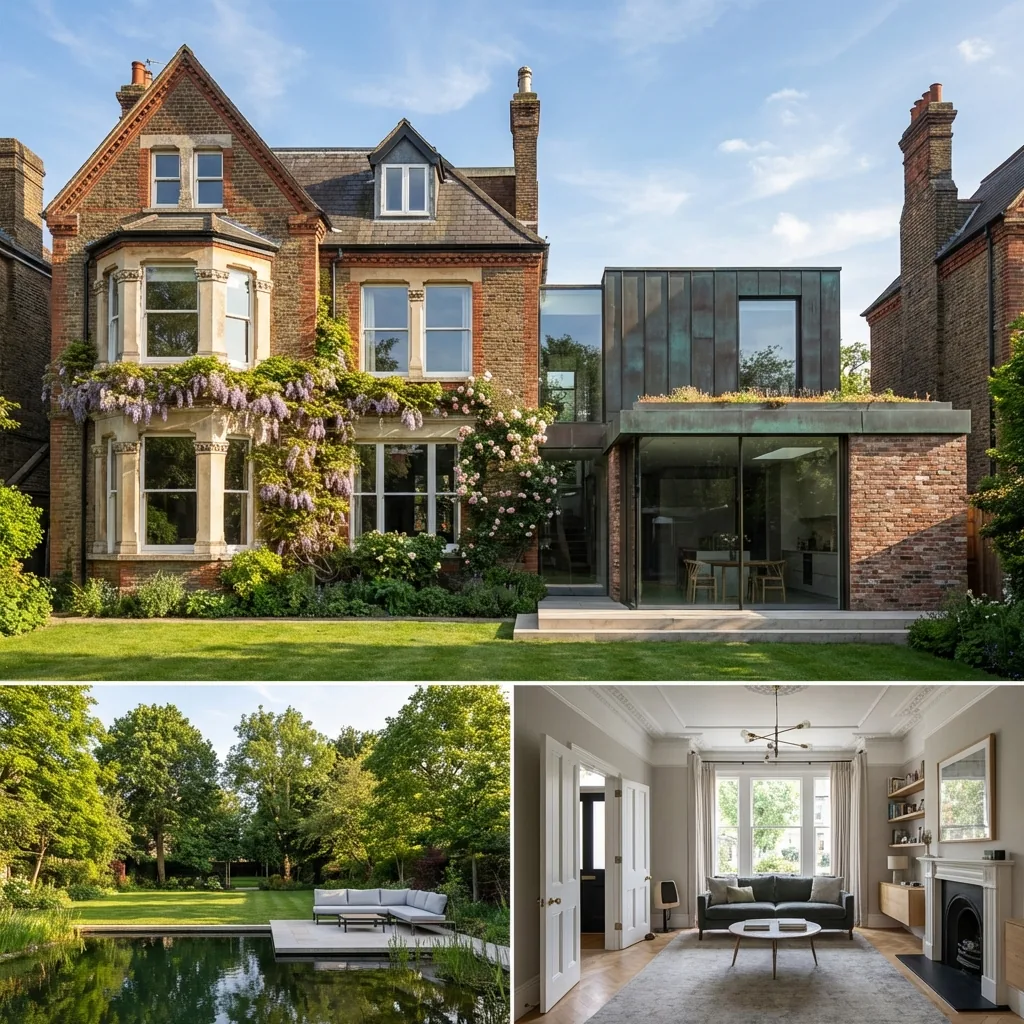
The Statutory 8-Week Rule: What It Actually Means
Planning law in England stipulates that councils must determine planning applications within 8 weeks of receiving a valid application. This is known as the statutory determination period. However, this timeline is far more restrictive than it sounds — it only applies if the application is complete, valid, and no objections trigger a full committee hearing.
The reality is that very few applications in London are determined within 8 weeks. According to recent planning data, only around 35% to 45% of full planning applications are decided within the statutory period across London boroughs. This isn't necessarily failure on the council's part; it reflects the complexity of most applications, the volume of public consultation required, and the need for officer assessment and committee deliberation.
The 8-week clock only starts once the council formally validates your application. This means you can lose 2 to 8 weeks in the validation phase alone before the determination period even begins. If your application is incomplete or requires clarification, the clock stops, restarts, or never begins — adding substantial time to the overall process.
Understanding this distinction is critical: the statutory 8 weeks is a best-case scenario, not a typical outcome. Plan for 12 to 20 weeks as a realistic expectation, with further delays if the application goes to committee or requires design revisions.
The Validation Stage: Where Time Is Lost Before the Clock Starts
Before your application is formally "valid," councils perform a validation check. This checks that all required documents, drawings, and fees are submitted. Many applications fail this initial stage and are returned for further information — meaning the clock doesn't start until the application is resubmitted and re-validated.
Common reasons for failed validation include: missing or incomplete drawings (floor plans, elevations, site plans must meet specific technical standards), lack of Design and Access Statement (required for most applications), missing statutory declaration forms, lack of adequate heritage impact assessment (if the property is listed or in a conservation area), insufficient photo documentation, missing ecology or arboricultural reports (if trees are affected), and incorrect or missing payment.
The validation process typically takes 2 to 5 working days if everything is present. However, if information is missing, the council will formally request amendments. You then have 28 days to resubmit. If you miss this deadline or resubmit with further deficiencies, the application can be registered again — resetting the timeline. Some applicants experience 4 to 8 weeks of back-and-forth during validation.
To minimize validation delays, submit a pre-application advice request to the council (usually £200–£500). This allows officers to review your proposal informally and confirm what information is needed before formal submission. It costs extra but almost always saves time by preventing validation rejection. Alternatively, hire a planning consultant experienced with your specific borough — they know each council's validation requirements intimately and can ensure first-time approval.
Planning Permission Reality Check
8 weeks: Statutory determination period (rarely achieved in London)
2–8 weeks: Typical validation delays before the clock starts
12–20 weeks: Realistic total timeframe from submission to decision
35–45%: Percentage of applications determined within 8 weeks in typical London boroughs
20–30 weeks: Timeline if the application goes to committee
The Consultation Period: Neighbours, Highways, and Statutory Consultees
Once your application is validated and the 8-week clock starts, the council immediately enters the consultation phase. This is mandatory and unfolds in parallel with officer assessment. Notification goes to neighbouring properties (typically within 21 days of validation), and statutory consultees are contacted simultaneously.
Neighbouring properties must be formally notified of your application by letter or site notice. The notification period is 21 days. Neighbours can submit objections, supporting comments, or requests for more information. Objections do not automatically refuse permission, but they do flag concerns that the planning officer must address in their report. Many objections in London relate to overlooking, loss of light, excessive bulk, or impact on street character.
Statutory consultees — including highways authorities, environmental health, heritage officers (if listed or conservation area), ecology consultants, and utilities companies — receive consultee responses during the same window. Highways objections, in particular, can significantly delay determination. If highways objects to parking provision, access arrangements, or visibility splay, the officer must either negotiate amendments with you or include detailed justification in their refusal. This negotiation phase can add 4 to 8 weeks to the process.
Heritage consultations can also be time-consuming. Listed building consent applications and conservation area applications often require specialist input from heritage teams, sometimes engaging external consultants. If the heritage assessment is incomplete or raises concerns, the officer may request design modifications, escalating the timeline further.
The consultation period doesn't add time — it happens simultaneously with officer assessment. But objections and consultee concerns do add time because they must be resolved, negotiated, or formally addressed before determination.
Officer Assessment and Report Preparation
While consultation is underway, the planning officer responsible for your case is conducting an assessment. This involves checking compliance with the development plan, local planning policies, national planning policy framework (NPPF) guidelines, and any other material considerations (precedent cases, officer reports on similar applications, infrastructure capacity).
For routine applications (single-storey rear extension, minor alterations), this assessment is relatively quick and straightforward. The officer will produce a brief report, normally 2 to 4 pages, confirming that the proposal is policy-compliant and recommending approval. These applications can be determined by an officer under delegated authority without going to committee — further speeding up the process.
For more complex applications (loft conversion with dormer, two-storey side extension, new dwelling), the officer assessment is more thorough. The report must address: compliance with design policies; impact on neighbouring amenity; transport and parking arrangements; heritage considerations (if applicable); sustainability and energy efficiency; drainage and flood risk; ecological impact; and any other material considerations raised during consultation. These reports often run 6 to 10 pages and may require specialist input from in-house teams or external consultants.
The officer's workload directly affects your timeline. Councils with high application volumes or staffing shortages can take 8 to 12 weeks to produce an officer report, even after consultation is complete. Some boroughs have notorious backlogs — applications can be queued for weeks waiting for officer time. This is one of the biggest hidden delays in the London planning system and one you cannot directly control.
Committee vs Delegated Authority: The Decision Route Matters
Once the officer report is ready, the decision on your application is made through one of two routes: delegated officer authority or planning committee.
Delegated authority means the officer can approve or refuse the application independently, without committee review. This typically applies to routine applications that comply with policy, generate no significant objections, and present no controversial issues. Delegated applications can be determined within days of the officer report being finalized, sometimes within the 8-week statutory period.
Committee determination is required when the application is contrary to policy, there are significant third-party objections (typically 5+ letters of objection or an objecting councillor), the application involves more than a certain amount of new floor space, or the officer's recommendation is refusal and the applicant has requested committee review. Committee applications must be scheduled in the planning committee calendar — these typically meet monthly, sometimes fortnightly during busy periods.
If your application requires committee determination, expect an additional 4 to 8 weeks beyond the officer report stage. The timeline works like this: officer report finalized (week 10–12 of the process); application added to the next available committee agenda (week 16–20); committee hearing takes place; decision issued. If the committee defers the decision for further information or site visits, add another 2 to 4 weeks.
Committee hearings also introduce uncertainty. The planning officer's recommendation is not binding on the committee — councillors can override it and approve applications the officer recommends for refusal, or vice versa. This occasionally leads to second officer reports and reconsideration, extending timelines further.
Borough-by-Borough Variations: Which Councils Are Fastest and Slowest
Planning performance varies dramatically across London. Some boroughs are notoriously slow; others maintain efficient determination rates. This variation reflects funding, staffing, application volume, and cultural approach to planning.
The fastest boroughs tend to be outer London councils with lower application volumes and dedicated planning teams. Richmond, Kingston, and Barnet typically determine applications in 10 to 14 weeks on average. These councils have smaller caseloads, fewer objections per application, and more officer availability to focus on individual cases.
The slowest boroughs are typically inner London authorities with high application volumes, limited budgets, and chronic staffing issues. Camden, Islington, and Hackney are known for extended timelines. Applications in these boroughs routinely take 18 to 26 weeks or longer. The reasons include: high volume of applications (sometimes 1,000+ per year), limited officer resources, competing priorities, and high levels of community objection requiring committee hearings.
Central London boroughs like Westminster and Kensington & Chelsea fall in between. They have significant application volumes but also reasonable officer resources. Applications typically take 12 to 18 weeks. Croydon, Southwark, and Lewisham have made efforts to improve planning performance in recent years and now achieve 12 to 16 week average timelines.
It's important to note that these timelines are averages. Your specific application may be faster or slower depending on: whether it's delegated or committee; presence of objections; need for design amendments; consultee concerns; and officer availability. If you're planning work in a slow borough, budget additional time or consider phasing the project to reduce complexity at the planning stage.
| Borough | Typical Timeline | Determining Factor |
|---|---|---|
| Richmond upon Thames | 10–14 weeks | Lower caseload, good resources |
| Kingston upon Thames | 11–15 weeks | Efficient processing, delegated focus |
| Barnet | 12–15 weeks | Reasonable caseload, adequate staffing |
| Bromley | 12–16 weeks | Moderate volume, structured process |
| Sutton | 11–14 weeks | Lower application volume |
| Croydon | 13–17 weeks | Improved performance, still busy |
| Southwark | 13–17 weeks | High volume but improving |
| Lewisham | 14–18 weeks | Moderate-high caseload |
| Westminster | 14–18 weeks | High volume, central demand |
| Kensington & Chelsea | 14–18 weeks | Complex applications, high objections |
| Hillingdon | 14–18 weeks | Significant caseload |
| Ealing | 15–19 weeks | High volume, committee heavy |
| Wandsworth | 15–19 weeks | Large caseload, active objections |
| Hounslow | 15–19 weeks | Moderate-high volume |
| Lambeth | 16–20 weeks | High volume, staffing constraints |
| Tower Hamlets | 16–20 weeks | Very high volume, densification |
| Camden | 18–26 weeks | Severe staff shortage, high objections |
| Islington | 18–26 weeks | Chronic backlog, resource constraint |
| Hackney | 18–26 weeks | Large volume, significant delays |
Prior Approval for Extensions: The Faster Alternative
For certain types of extensions — primarily single-storey rear extensions up to specific limits, dormer windows meeting size criteria, and roof conversions — you may not need full planning permission. Instead, you can use the Prior Approval process.
Prior Approval is a streamlined determination under Permitted Development Rights. The council has just 42 days (6 weeks) to determine whether Prior Approval is needed for specific matters: listed building impact, archaeological impact, flood risk, contaminated land, and transport impacts. If the council doesn't formally determine within 42 days, the application is automatically granted.
This is substantially faster than full planning permission. The 42-day determination period is enforced by law, and councils cannot extend it without applicant agreement. No statutory consultation is required, so neighbourhood objections are not formally considered (though neighbours may still submit concerns). Officer workload is therefore significantly reduced.
However, Prior Approval only applies to very specific scenarios. A rear extension must not exceed 4 metres in depth (or 8 metres if the property is a detached house) and not exceed certain volume limits. Dormer windows must meet strict sizing criteria. Listed buildings and properties in conservation areas typically cannot use Prior Approval — they must use full planning permission. If your extension exceeds these thresholds or the property is heritage-listed, you must pursue full planning permission instead.
The advantage of Prior Approval, where applicable, is clear: 6 weeks vs. 12–20 weeks for full permission. If your proposal is within these parameters, strongly consider designing to the Prior Approval thresholds rather than exceeding them, purely for the timeline benefit.
What Causes Delays: Objections, Design Amendments, and Consultee Issues
The timeline variations we've discussed above assume straightforward applications. However, several factors can significantly extend the determination period, sometimes adding 4 to 12 additional weeks.
Neighbour objections, in themselves, do not cause delay. However, multiple objections often trigger a decision to take the application to committee, which adds 4 to 8 weeks. If objections raise new material considerations — such as previously unaddressed overshadowing, parking congestion, or flood risk — the officer must conduct additional assessment or request further information from you, extending the process.
Design amendments are a common cause of extension. If the officer or consultees identify issues during assessment — such as excessive overlooking, inadequate parking, design not in keeping with character — they may request modifications. You then have options: amend the design and resubmit (adding 2 to 4 weeks for re-assessment), negotiate with the officer (adding 1 to 3 weeks), or proceed with the original design knowing refusal is likely. Many applicants choose to amend rather than risk refusal, intentionally extending their timeline.
Highways consultee objections can be particularly time-consuming. If highways raises concerns about parking, access, or traffic impact, the officer must either negotiate with you to address these concerns (adding 2 to 6 weeks) or include detailed rebuttal in the refusal reason. Many applications stall at this stage while parking survey data is collected or transport assessments are undertaken.
Listed building and conservation area applications often face delays due to heritage consultee input. If the local authority's heritage team or external specialists identify concerns about design impact, the applicant typically needs to revise designs to secure heritage sign-off before the application can be determined. This negotiation phase can add 4 to 8 weeks.
Officer caseload is the most significant delay factor — but it's invisible to you. If an officer is handling 25+ cases simultaneously and your application is in queue, you may wait 6 to 8 weeks for the report to be drafted, entirely due to workload rather than application complexity. There's no way to expedite this; it's a systemic issue in many London councils.
After Approval: Conditions, Commencement, and Validity
When planning permission is granted, it rarely comes unconditionally. Councils typically impose conditions: submission of material samples, details of landscaping, confirmation of construction management arrangements, highways improvements, ecological mitigation, or discharge of specific design elements.
Once permission is granted, you have conditions to discharge before commencing work. Most councils allow 12 months from the date of decision to discharge conditions and commence development. If you don't commence within this period, the permission lapses. Some applications are granted with a longer discharge period (18 or 24 months) at the applicant's request, though this is discretionary.
Discharging conditions requires submitting further information, drawings, or specifications to the council for officer approval. Each condition discharge can take 2 to 4 weeks depending on council processing. If you have 5 conditions, allow 10 to 20 weeks to discharge all before you can legally commence. This phase is often overlooked when applicants calculate overall project timelines.
Once you've formally commenced (typically by serving a commencement notice to the council), you have three years to substantially complete the development. If you stop work and do not resume within a two-year continuous period, the permission expires and the remaining works cannot be completed under that consent.
How to Reduce Planning Permission Timelines in London
While some delays are beyond your control (officer caseload, borough backlogs), several strategies demonstrably reduce timelines:
Pre-application advice: Engage with the planning department before formal submission. Most councils offer pre-application consultation (PAC) services. You pay a fee (typically £200–£600), and the planning officer reviews your proposal informally, identifies potential issues, and confirms what information is needed. This prevents validation rejection and often highlights design changes that will secure delegated approval. Pre-application advice typically costs time (2–4 weeks) but saves far more by preventing downstream delays.
Complete application first time: Submit a fully validated application with all required drawings, statements, and supporting information. Rushing to submit an incomplete application hoping to provide missing information later is a classic mistake. It triggers validation rejection, resets timelines, and is invariably slower than taking the extra 1–2 weeks upfront to ensure everything is complete.
Design within policy: Ensure your proposal complies clearly with the development plan, local design guidance, and planning policies specific to your borough. Applications flagged as policy-non-compliant trigger more detailed officer assessment and are more likely to be determined by committee. Policy-compliant applications are often approved by delegated authority within the statutory 8 weeks.
Minimize neighbour objection risk: Design to minimize overlooking, loss of light, and bulk impact on neighbours. Applications with few objections are more likely to be delegated and determined quickly. Applications with many objections almost certainly go to committee, adding 4+ weeks.
Engage with consultees early: If your application requires highways input (new access, parking), contact highways before submission and seek informal sign-off on your proposals. If it's a listed building, engage with heritage officers. Early engagement often resolves concerns before they become formal objections, speeding overall determination.
Use Prior Approval where possible: If your extension qualifies for Prior Approval (single-storey rear, specific dormer criteria), design to these limits rather than exceeding them. The 42-day timeline is dramatically faster than 12–20 weeks.
Choose the borough carefully: If you have flexibility in location (e.g., selecting between boroughs for a development site), be aware of planning timelines. Developing in Richmond or Kingston will be faster than Camden or Islington, all else equal.
Appoint a planning consultant: Professional planning consultants have relationships with planning departments, know local officer preferences, understand each borough's specific policies deeply, and can navigate complex applications more efficiently. They typically charge £1,500–£4,000 for smaller residential applications. For more complex projects, this cost is easily offset by timeline savings and approval certainty.
Frequently Asked Questions
What is the statutory 8-week determination period?
The statutory 8-week period is the legal maximum time councils have to determine planning applications in England. However, this clock only starts once the application is validated and verified as complete. For complex applications, the clock can be stopped by requesting further information from the applicant. In practice, only 35–45% of London applications are determined within 8 weeks because most applications require consultations, committee hearings, or design amendments that extend timelines beyond the statutory limit.
Why do some applications take so much longer than 8 weeks?
The 8-week clock is suspended if the council needs further information from you. It also doesn't account for the validation phase (which can add 2–8 weeks before the clock starts), committee scheduling (adding 4–8 weeks if required), and design amendment negotiations (adding 2–6 weeks). Essentially, the statutory 8 weeks applies only to complete, uncontroversial applications that don't require committee determination — a minority of London applications.
What happens during the validation stage?
The validation stage is where councils check that your application is complete: all required drawings, Design and Access Statement, statutory forms, and fee are present and meet technical standards. If anything is missing or incorrect, the council formally requests clarification. You have 28 days to resubmit. The validation stage typically takes 2–5 working days but can take 4–8 weeks if multiple rounds of clarification are needed.
How long is the consultation period?
Mandatory consultation is 21 days. Neighbours are notified by letter or site notice, and statutory consultees (highways, heritage, ecology, etc.) receive copies simultaneously. The 21-day consultation happens in parallel with officer assessment, so it doesn't directly add time. However, objections and consultee concerns do extend timelines because they must be addressed, negotiated, or formally rebutted in the determination.
What's the difference between delegated and committee decisions?
Delegated decisions are made by the planning officer independently without committee review. Committee decisions require the application to be scheduled on the planning committee calendar and determined by elected councillors. Committee determination typically adds 4–8 weeks because committees usually meet monthly. Delegated applications can be decided within days of the officer report being ready, sometimes within the statutory 8 weeks.
Which London boroughs are the fastest for planning permission?
Richmond, Kingston, and Barnet typically determine applications in 10–15 weeks on average. These are outer London boroughs with lower application volumes, adequate officer resources, and reasonable determination rates. Inner London boroughs like Camden, Islington, and Hackney are significantly slower, typically 18–26 weeks, due to high caseloads and resource constraints.
Can I speed up planning permission by paying a fee?
No, there is no paid expedite option for standard planning permission in England. However, pre-application advice (a paid consultation service, typically £200–£600) can identify issues early and prevent delays later. Planning consultants (also paid) can also navigate the system more efficiently. These don't guarantee faster approval, but they often result in smoother, quicker determination through better-informed applications.
What is Prior Approval and how is it different?
Prior Approval is a streamlined process for specific extension types (single-storey rear extensions up to limits, certain dormer windows, roof conversions). The council has 42 days (not 8 weeks) to determine whether approval is needed for specific matters like flood risk or heritage impact. If the council doesn't formally determine within 42 days, the application is automatically granted. This is much faster than full planning permission, but it only applies to specific criteria — most extensions require full planning permission.
What causes the longest delays in planning applications?
The biggest delay factors are: officer caseload and backlog (can add 6–8 weeks invisibly while applications queue for assessment), committee determination (adds 4–8 weeks due to scheduling), design amendments negotiated with officers or triggered by consultee objections (adds 2–8 weeks), highways consultee concerns over parking or access (adds 2–6 weeks), and heritage consultations (adds 2–6 weeks for listed buildings and conservation areas).
How long after approval can I start construction?
Planning permission is valid for 3 years from the date of grant. You must commence development within this period. However, most permissions include conditions that must be discharged before commencement. Discharging conditions typically takes 2–4 weeks per condition, so expect 4–12 weeks of additional work after approval before you can legally start building. Once you commence (usually by serving a formal commencement notice), you have 3 years to substantially complete the work.
Should I use a planning consultant to speed up the process?
For complex applications (listed building conversions, multiple-storey extensions, new buildings), a planning consultant is worthwhile. They cost £1,500–£4,000+ but often save more through preventing refusals, securing faster delegated approvals, and navigating consultee concerns efficiently. For simple applications (basic rear extension, minor alteration), a consultant is less necessary unless your borough is particularly slow or objections are anticipated. Pre-application advice from the council (paid, £200–£600) is often a cost-effective middle ground.
Further Reading
- UK Government Planning Practice Guidance
- National Planning Policy Framework (NPPF)
- Greater London Authority Planning Guidance
- RIBA Plan of Work – Designing Before Planning
- House of Commons Committees – Housing, Communities and Local Government
- Royal Town Planning Institute – Professional Resources
- Royal Institution of Chartered Surveyors – Planning Guidelines