
Finance
How Much Does a Kitchen Extension Cost in London? 2026 Price Breakdown
Costs vary more than most people expect — house structure, walls, and specification all play a major role. Here's what to expect and how to budget properly.
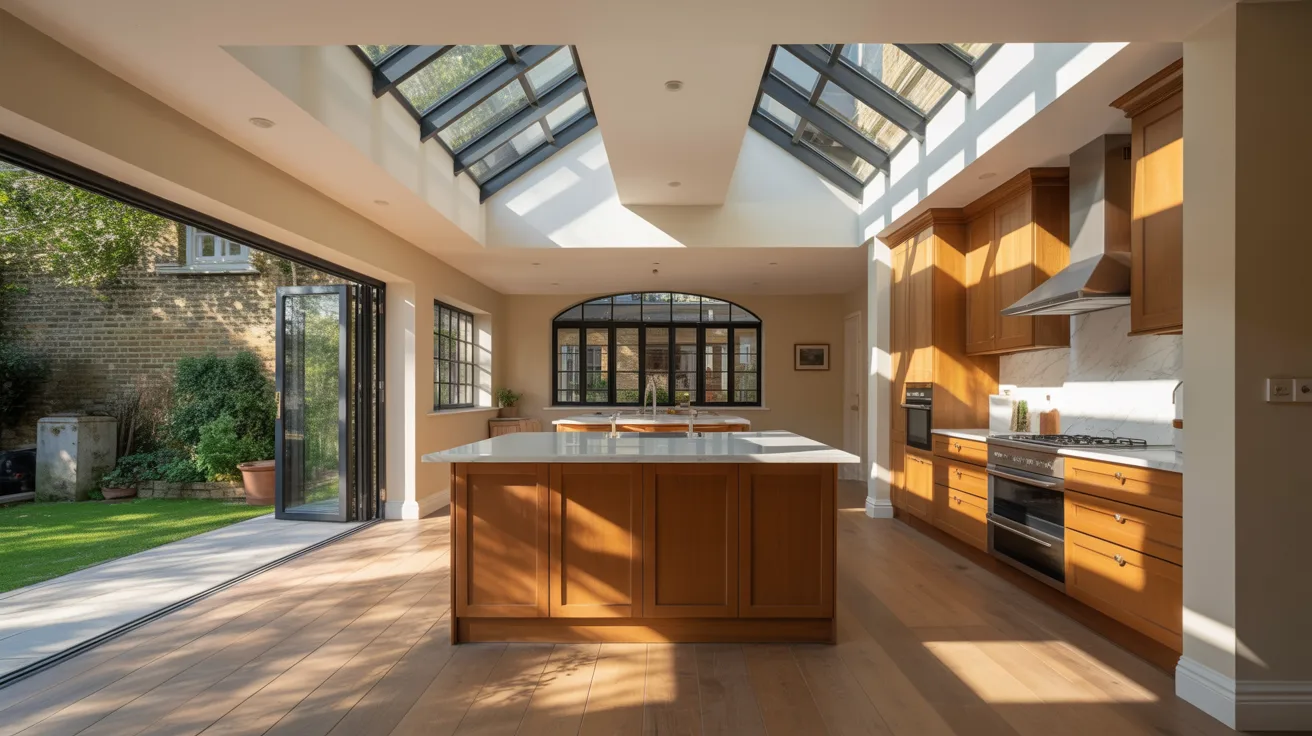
The kitchen extension is the single most popular home improvement project in London. It creates the open-plan kitchen-diner that most families want, adds meaningful space, and — if well designed and well built — adds significantly more to the property's value than it costs to build. It's also one of the most searched and most misunderstood projects in terms of cost.
The reason costs vary so widely is that the build itself is only part of the picture. The structural complexity of your specific property, the state of existing walls and foundations, how much of the existing kitchen needs to be demolished, and how high you set the specification all move the number substantially. A basic single-storey rear extension to a Victorian terrace in Zone 3 and a double-width glazed rear addition to a 1930s semi in a conservation area are both "kitchen extensions" — but they are completely different projects.
This guide gives you realistic ranges, explains the key cost drivers, and sets out what sits inside and outside the builder's quote.
Build Cost Ranges: What to Expect in London in 2026
London construction rates are consistently 20–40% higher than national averages, reflecting higher labour costs, more complex access and logistics, and greater regulatory oversight in many boroughs.
The figures below are build-only costs — the structural shell, windows, doors, and first and second fix. They do not include the kitchen units, worktops, appliances, or decoration. See the section below on total project costs for the full picture.
Standard Specification
Conventional cavity wall construction, flat or pitched roof, uPVC windows, standard plasterboard finish. Suitable for straightforward rear extensions with good access. A 16sqm extension (4m × 4m) typically falls in the £32,000–£42,000 range for build only.
Mid-Range Specification
Structural glazing elements (skylights, bifold or sliding doors), steel frame elements, higher-quality insulation and external finishes. A 20sqm extension typically falls in the £52,000–£68,000 range for build only.
High Specification
Full structural glazing, lantern roof lights, heritage-quality materials in conservation areas, underfloor heating, complex rooflines. A 25sqm high-spec extension typically falls in the £85,000–£115,000+ range for build only.
What Drives the Price Up (or Down)
Understanding the key cost drivers helps you make informed decisions about specification — and helps you challenge quotes that seem out of line.
Structural complexity
The most significant variable is often what's hidden. Victorian and Edwardian terraces in London commonly have shallow foundations, load-bearing walls in unexpected positions, and rubble or lime mortar that behaves differently to modern materials. When your builder opens up the existing structure, what they find can change the programme and cost. This is not a reason to avoid the project — it's a reason to build a 10–15% contingency into your budget from day one.
If your extension requires removing a load-bearing wall to open up to the existing kitchen, the cost of structural steelwork (RSJs, padstones, acrow props, and the structural engineer's beam calculation) typically adds £3,000–£8,000 to the project depending on span and loading.
Glazing choices
The rear wall of a kitchen extension is often mostly glazed, and the type of glazing makes a substantial difference to cost. Bifold doors in a standard size might run £5,000–£10,000 supply and fit. Sliding doors in a slimmer aluminium frame can run £8,000–£18,000. A structural glass rooflight over a flat roof adds £2,000–£6,000 depending on size. A full lantern roof in powder-coated aluminium can run £6,000–£15,000. These are all on top of the per-square-metre build cost.
Roof type
A flat roof with a modern membrane finish (GRP or warm-roof specification) is typically the most cost-effective option. A pitched roof to match the existing house adds cost in both labour and materials but may be required in conservation areas or for planning reasons. A dual-pitch or parapet design adds complexity and cost further.
Site access and logistics
London builds frequently face access constraints — narrow side passages, no rear access at all, skip permit requirements, and party wall obligations. Each of these adds time and cost. Access-restricted sites in inner London can add 10–15% to overall project cost compared to equivalent work with clear access.
Typical Additional Costs — Not in the Build Quote
| Architect / designer fees | £3,000–£10,000+ (varies by scope and firm) |
| Structural engineer | £800–£2,000 for calculations and drawings |
| Planning application fee | £258 (single-storey householder application, England, 2026) |
| Building control | £600–£1,500 for a private building control inspector |
| Party wall surveyor | £700–£1,500 per neighbour (if agreement required) |
| Kitchen (units, worktops, appliances) | £8,000–£60,000+ depending on brand and specification |
| Floor finishes | £2,000–£8,000 for the extension area, depending on material |
| Decoration | £1,500–£4,000 for the new space |
| Contingency | 10–15% of total project cost |
A Worked Example: Victorian Terrace, Zone 2
A typical project we see regularly: a 3-bedroom Victorian terrace in south or east London, converting the galley kitchen into an open-plan kitchen-diner via a single-storey rear extension of approximately 18–22sqm, with bifold doors, a flat roof with skylights, and removal of the existing rear wall.
For this type of project, a realistic total project budget — including build, professional fees, kitchen, and a sensible contingency — typically falls somewhere between £80,000 and £130,000 depending on the specification and the specific property. At the lower end of this range, you're working with a standard build specification and a mid-market kitchen. At the upper end, you have structural glazing, a premium kitchen, and allowance for the complications that Victorian properties reliably produce.
These are ranges, not guarantees. The only way to get a reliable number for your specific property is to get the design drawn up and take it to at least three experienced builders for comparable quotes. Our article on how to choose a builder for a London extension covers what to look for when comparing quotes and the questions you should be asking.
Does a Kitchen Extension Add Value in London?
The short answer is yes — if done well. Estate agents in London consistently cite open-plan kitchen-diners as one of the features that most influences buyer decisions, and extensions that create this layout typically add more to the asking price than they cost to build, particularly in the mid-to-upper price brackets.
The return depends on the local market, the size of the extension relative to the property, and the quality of execution. A poorly specified or badly built extension is worse than no extension — it introduces defects, creates surveyor concerns, and puts off buyers rather than attracting them. This is why the quality of the builder matters at least as much as the cost of the build. If you're thinking about the broader question of whether to extend or sell, our article on extending vs. moving in London in 2026 covers the financial case in more detail.
Permitted Development vs. Planning Permission
Most single-storey rear extensions in London fall within Permitted Development (PD) rights, which means planning permission is not required — subject to specific limits. For terraced and semi-detached houses, the standard PD limit is 3 metres deep. For detached houses, it's 4 metres. Under the Neighbour Consultation Scheme (sometimes called "prior approval"), these limits can extend to 6m and 8m respectively, provided neighbours do not object.
PD rights do not apply to listed buildings, and may be restricted or withdrawn in conservation areas. Your builder or architect will advise on your specific situation. Even where PD applies, you still need building regulations approval — which covers structural adequacy, fire safety, ventilation, insulation, and electrical and plumbing work. Building regs are not optional and are not the same as planning permission.
If you're planning an extension and wondering whether Labour's recent planning reform changes anything for your project, our guide to Labour's planning reforms and London extensions in 2026 explains what has and hasn't changed for householders.
Getting Your Quotes Right
To get meaningful, comparable quotes, you need a set of drawings — at minimum, floor plans and elevations showing the proposed extension. Ideally you also have a structural engineer's report for the beam calculations if you're removing a load-bearing wall. Builders quoting without drawings are guessing. Their prices will shift once they see the actual design.
My Local London Builder connects you with experienced local builders who have a track record with exactly this type of project. When you submit your project details, we match you with builders who can provide quotes based on your specific design and property. We don't set prices — the builder does, based on what they see — but we make sure you're comparing experienced contractors rather than taking a chance on the unknown.
For guidance on how many quotes to get and how to structure the comparison, see our article on how many quotes you should get for a London extension.
Frequently Asked Questions
How much does a kitchen extension cost in London in 2026?
Build costs typically range from £2,000–£2,600 per sqm for standard specification, rising to £3,400–£4,500+ per sqm for high-specification glazed extensions. A typical 16–20sqm rear extension can range from around £35,000 to £90,000 for the build alone, before professional fees, the kitchen itself, and decoration. Final costs always depend on your property structure, existing walls and foundations, and the specification chosen.
What is included in a kitchen extension quote?
A builder's quote typically covers foundations, structural steelwork, external walls, roof, windows and doors, plastering, and basic first and second fix. It usually does not include the kitchen itself, floor finishes, or decoration. Always confirm exactly what is and isn't included before comparing quotes from different builders.
Do I need planning permission for a kitchen extension in London?
Many single-storey rear extensions fall within Permitted Development rights and do not need planning permission. However, extensions in conservation areas, listed buildings, or those exceeding PD limits will need full planning permission. You always need building regulations approval regardless. Your builder or architect can advise on your specific situation.
How long does a kitchen extension take in London?
A typical 16–25sqm kitchen extension takes 10–16 weeks to build, depending on complexity and trades involved. Add 2–4 weeks for kitchen installation after the build. Factor in 4–12 weeks before build start for design, planning (if required), building regulations, and builder availability.
Does a kitchen extension add value in London?
Yes, in most cases. A well-executed kitchen extension that creates open-plan living is one of the highest-return improvements in London. Estate agents commonly cite 10–20% uplift in property value, though this depends on location, existing size, and market conditions. Quality of execution matters — a poorly built extension can reduce value rather than add it.
What extra costs should I budget for beyond the build?
Budget separately for: architect and structural engineer fees (typically 5–12% of build cost), planning and building control fees, the kitchen itself, floor finishes, decoration, and a 10–15% contingency for unexpected structural findings. A complete project budget should include all of these, not just the builder's quote.
Sources & Further Reading
- RICS Residential Costs Guidance — Build Cost Information Service: rics.org
- Planning Portal — Permitted Development Rights for Householders: planningportal.co.uk
- Federation of Master Builders — House Extensions Cost Guide: fmb.org.uk
- HomeOwners Alliance — Extension Cost Guide UK: hoa.org.uk
- Building Regulations Guidance (Part A — Structure, Part L — Conservation of Fuel): gov.uk
Related Articles
- How to Choose a Builder for a London Extension (And 10 Red Flags to Avoid)
- How Many Quotes Should I Get for a House Extension in London?
- Extend or Move? Why London Homeowners Are Choosing to Stay and Build in 2026
- Should I Borrow to Fund a House Extension Now? What UK Mortgage Rates in 2026 Mean for London Homeowners