
Prior Approval for a Larger Home Extension in London — How the Process Works
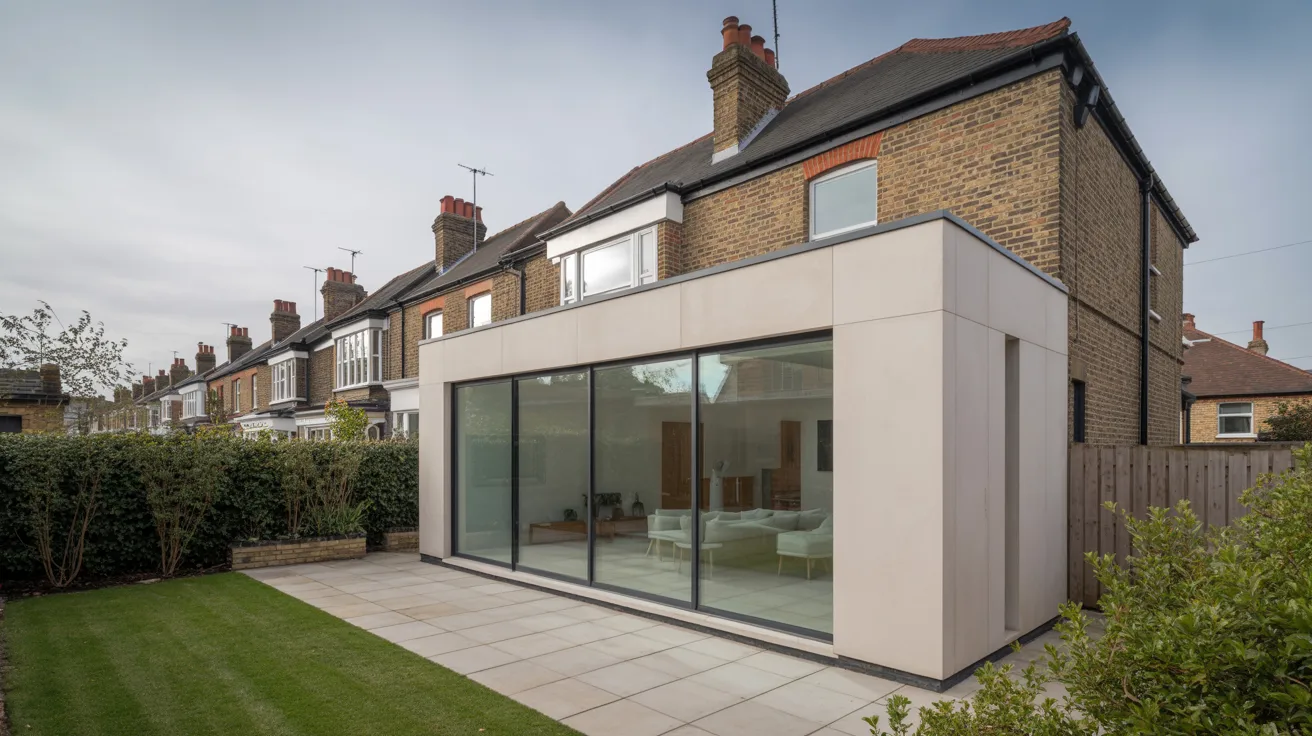
Prior approval is a middle-ground planning process that allows you to build larger single-storey rear extensions than standard permitted development allows—up to 6 metres for terraced and semi-detached houses, or 8 metres for detached homes. Unlike full planning permission, prior approval is determined within 42 days and assessed only on size and siting; however, neighbour consultation is mandatory, and building regulations approval is still required separately.
What Is Prior Approval?
Prior approval is a planning process that sits between permitted development rights and full planning permission. Introduced in 2013, it was designed to encourage house extensions while maintaining a streamlined process that keeps costs and timescales low. The key word is "approval"—the local authority must assess your application, but on a narrower set of criteria than a full planning decision.
Prior approval is not the same as permitted development. With standard permitted development, you notify your local authority and work is allowed to proceed without formal approval (up to certain limits). Prior approval, by contrast, requires explicit local authority sign-off. However, the assessment is quicker and cheaper than full planning permission because the authority only examines two things: is the extension the right size and shape for that location, and will it harm neighbours' amenity through overlooking or loss of light?
Crucially, prior approval does not assess design, materials, or architectural merit. A council cannot refuse your extension because it looks ugly or uses the "wrong" materials. It can only refuse if the size or siting breaches the rules, or if neighbours' rights to light or privacy are materially harmed. This makes prior approval a powerful tool for homeowners who want to extend beyond the basic permitted development limits but need certainty and speed.
The Size Thresholds: What You Can Build
Prior approval has strict maximum dimensions. Understanding these limits is essential before you apply.
Single-Storey Extensions Only
Prior approval applies only to single-storey extensions. You cannot use it for two-storey or higher extensions. The extension must also be to the rear of the original house only—you cannot use prior approval to extend sideways (that would fall under full planning) or forward.
Depth Limits by Property Type
- Terraced houses: Maximum 6 metres deep from the rear wall of the original house.
- Semi-detached houses: Maximum 6 metres deep from the rear wall of the original house.
- Detached houses: Maximum 8 metres deep from the rear wall of the original house.
These depths are measured from the external wall of the original house, not from any existing extensions or outbuildings. If your house already has a small extension or conservatory, you measure the depth from the rear wall of the main structure, not from the back of the existing extension. This is a common point of confusion.
Height and Eaves
The maximum height of the extension is 4 metres. This is measured from ground level to the highest point of the extension (ridge height if it has a pitched roof, or eaves height if it is flat-roofed). The eaves must not exceed the height of the existing house eaves, or 3 metres, whichever is higher.
Within Property Boundary
The extension must sit wholly within the property boundary. It cannot project onto neighbouring land. You also cannot use prior approval if the extension would cross a party wall in an unusual way or create structural issues—though these are matters for building regulations, not prior approval.
What Prior Approval Covers and Does Not Cover
This is where prior approval differs most sharply from full planning permission. The local authority assesses a narrow set of factors.
What the Council Examines
The authority must assess whether the size and siting of the extension comply with the rules above, and whether it will have an unacceptable impact on neighbours' rights to light, privacy, or amenity. The assessment focuses on overlooking (windows that look into neighbours' gardens or windows), loss of light (does it overshadow a neighbour's home or garden), and general privacy concerns. If the council concludes there is no such impact, or the impact is acceptable, the prior approval is granted.
What the Council Does Not Assess
The council does not assess design quality, materials, roofing style, window type, render finish, or aesthetic merit. You could propose a clumsy brick box with mismatched windows, and the council cannot refuse on appearance grounds. They also do not assess parking provision, highways access, or ecological impact in detail—those matters are either covered by your building regulations application or are not relevant to a simple extension.
Neighbour Consultation Is Mandatory
Although prior approval is not a full planning application, the council must notify all affected neighbours—usually those whose gardens or windows face yours—and allow them a period to lodge objections (usually 14 days). A neighbour's objection does not automatically mean refusal, but the council must take their concerns seriously. If a neighbour objects that the extension will cause overlooking or loss of light, the council must investigate this claim. If the evidence supports it, the application can be refused.
The Prior Approval Process: Step by Step
Understanding the procedural steps helps you prepare and submit a strong application.
Step 1: Pre-Application Discussion
It is not mandatory but highly recommended to speak with your council before submitting a formal application. Many councils offer pre-application advice for a small fee or free. Show them your extension plans and measurements, and ask: does this qualify for prior approval, or do I need full planning permission? Are there any local constraints (conservation area, listed status, Article 4 Direction) that would prevent prior approval? Getting clarity upfront saves rejection and resubmission later.
Step 2: Prepare Your Application Documents
You will need the following documents:
- Completed prior approval application form (supplied by the council or available online).
- Block plan showing the site location and boundaries (OS map extract).
- Floor plans of the existing house and the proposed extension, with all dimensions clearly marked.
- Elevation drawings showing the height of the extension relative to the existing house, including measurements to the eaves and ridge.
- Site plan showing the depth of the extension measured from the original rear wall.
- Roof plan showing pitch, direction, and materials (if pitched roof).
- Details of any windows and doors in the extension, particularly any side windows that might overlook neighbours.
- Proof of ownership or letter from the owner (if you are not the registered proprietor).
Accuracy is critical. Undersized or mislabeled plans are a common reason for refusal. Double-check all measurements, especially the depth from the original rear wall and the maximum heights.
Step 3: Submit to the Local Authority
Submit your application to the planning department. Most London councils accept online submissions via their planning portal. Include the completed form, all plans, and the application fee (usually £100–£300 depending on the extension size and council). Once submitted, the council will acknowledge receipt and issue a reference number.
Step 4: The 42-Day Determination Period
From the date of submission, the council has 42 calendar days to determine your application. This is significantly faster than full planning permission (which typically takes 8–13 weeks). During this period, the council will notify affected neighbours and invite their comments. Neighbours usually have 14 days to lodge objections. The council will also consult with highway authorities and utilities as required.
Step 5: Council Assessment and Decision
Once the 42-day period ends (or earlier if the council decides sooner), the authority will issue a decision. The outcome is either:
- Prior Approval Granted: Your extension complies with the rules and poses no unacceptable amenity impact. You can now apply for building regulations approval and begin work.
- Prior Approval Granted with Conditions: Your extension is approved but subject to conditions (e.g., windows must be obscured glass, eaves height must not exceed 3 metres). You must comply with these conditions before or during construction.
- Prior Approval Refused: The extension does not comply with the size limits, the siting is problematic, or there is unacceptable neighbour impact. You can appeal, revert to standard permitted development limits (3–4 metres), or submit a full planning application.
Step 6: Building Regulations Application
Prior approval does not replace building regulations approval. Even after prior approval is granted, you must submit a separate building regulations application and obtain approval before construction. Building regulations cover structural safety, drainage, electrical work, insulation, fire safety, and accessibility. This is a distinct process and is legally required for all extensions.
Where Prior Approval Does NOT Apply
Prior approval is not available in all locations or for all properties. Check these exclusions carefully before investing time in an application.
Conservation Areas
If your house is in a conservation area, prior approval is not available. You must apply for full planning permission instead. Conservation areas are designated because they have architectural or historical interest that the council wishes to preserve. The stricter planning regime applies to all development, including extensions.
Listed Buildings
Listed building status also excludes prior approval. Listed buildings require Listed Building Consent in addition to planning permission. Any extension to a listed building must be considered in detail by the council's conservation team, making prior approval's streamlined process unavailable.
Article 4 Direction Areas
In some areas, the local authority has removed permitted development rights via an Article 4 Direction. If your property is in such an area, prior approval will not apply, and you must seek full planning permission. Article 4 Directions are rare but are sometimes used in areas of particular historic or architectural significance, or where development pressure is high and the council wants stricter control. Check with your council to see if one applies to your address.
Flats and Apartments
Prior approval applies to houses only. If you live in a flat or apartment, you cannot use prior approval for an extension. Flats usually have restrictions on what extensions are possible (party walls, shared services, leasehold restrictions), and the process typically requires freeholder consent and leaseholder agreements rather than a planning application.
Where Permitted Development Rights Have Been Removed
If your house is a new build or the result of a previous planning permission that removed permitted development rights (via a condition), you may not have the right to use prior approval. Check your property's history and any conditions attached to previous permissions. If in doubt, ask the council.
Extensions to Extensions
Strictly speaking, prior approval applies to extensions to the original house. If you wish to extend an existing extension (sometimes called a "secondary" extension), the rules become complicated and prior approval may not apply. Seek advice from the council before proceeding.
Prior Approval vs. Standard Permitted Development
It is important to understand how prior approval differs from basic permitted development rights, as this shapes your options.
Standard permitted development allows you to build a single-storey rear extension up to 3 metres deep for a terraced or semi-detached house, or 4 metres for a detached house. You also cannot exceed 4 metres in height (eaves) or 3 metres to the ridge for a pitched roof. Crucially, standard permitted development is automatic—you do not need to apply to the council or notify neighbours. You can go ahead as soon as you have building regulations approval.
Prior approval lets you build bigger: up to 6 metres (or 8 metres for detached) and 4 metres high. However, you must apply for and receive explicit council approval, and you must notify neighbours. The process takes 42 days and involves neighbour consultation. Why would you choose this? Because you want more space and are willing to accept the formality and 42-day wait to get it. If your extension fits within the 3–4 metre permitted development limits, you can skip prior approval and go straight to building regulations.
| Criteria | Standard Permitted Development | Prior Approval | Full Planning Permission |
|---|---|---|---|
| Max depth (terraced/semi) | 3 metres | 6 metres | No fixed limit |
| Max depth (detached) | 4 metres | 8 metres | No fixed limit |
| Max height | 4 metres | 4 metres | No fixed limit |
| Application required? | No | Yes | Yes |
| Neighbour notification | No | Yes, mandatory | Yes, mandatory |
| Decision timeline | N/A (automatic) | 42 days | 8–13 weeks |
| Design assessed? | No | No | Yes |
| Materials assessed? | No | No | Yes |
| Grounds for refusal | N/A | Size/siting/amenity only | Any material planning consideration |
| Available in conservation areas? | No | No | Yes |
Prior Approval vs. Full Planning Permission
If your extension does not qualify for prior approval (perhaps because you want a two-storey extension, or you are in a conservation area), you will need to apply for full planning permission. Here is how the two differ.
Speed
Prior approval is determined in 42 days. Full planning permission typically takes 8–13 weeks. In practice, many applications take longer if the council asks for additional information or if there are complex issues to resolve. If timing is important, prior approval is the faster route.
Scope of Assessment
Prior approval is assessed only on size, siting, and neighbour amenity. Full planning permission involves a much broader assessment: design quality, materials, parking, highways, ecology, archaeology, flood risk, and any other material planning consideration the council deems relevant. This wider scope is why full planning permission takes longer.
Design and Materials
With prior approval, you are not assessed on design or materials. With full planning permission, the council will scrutinise the appearance of your extension, the roof style, the window type, the render finish, and whether it sits well within the existing streetscene. This means you have less certainty with full planning permission—the council can ask you to change the design—but you also have more freedom to negotiate and agree a mutually acceptable solution.
Grounds for Refusal
Prior approval can only be refused on narrow grounds: the size and siting do not comply with the rules, or there is unacceptable impact on neighbours' amenity. Full planning permission can be refused on any material planning consideration, including design, street character, parking, ecological impact, or cumulative impact on the local area.
Which Should You Choose?
If your extension fits the prior approval criteria (single-storey, within depth limits, in a suitable location, not in a conservation area), prior approval is usually the better route: it is faster, cheaper, and more certain. If you want a larger or different type of extension, or you are in a conservation area or listed building, full planning permission is your only option.
Prior approval offers the best of both worlds: faster than full planning, but with more flexibility than basic permitted development. However, it is not available everywhere, and the neighbour consultation step is non-negotiable.
What Happens If Prior Approval Is Refused
Refusal is not the end of the road. You have several options.
Appeal to the Planning Inspectorate
You have the right to appeal a refusal to the Planning Inspectorate (a national body independent of the local council). The appeal process typically takes 2–6 months. You must submit grounds for appeal demonstrating why the council's refusal was incorrect—for example, the extension does comply with the size limits, or there is no demonstrable impact on neighbours. Appeals are determined by written statement or a site visit, and the Planning Inspectorate's decision is binding on both you and the council.
Revert to Standard Permitted Development Limits
If your extension can be reduced to fit within standard permitted development limits (3–4 metres deep), you can abandon the prior approval application and proceed under permitted development rights without needing council approval. This bypasses the refusal but sacrifices space.
Submit a Full Planning Application
You can submit a full planning application instead. This allows you to propose a design that addresses the council's concerns—for example, setting the extension back slightly, or reducing height. Full planning permission offers more flexibility to negotiate, but it takes longer and costs more than prior approval.
Request a Review or Reconsideration
Some councils offer a review process where you can ask the authority to reconsider a refusal if you believe there is new evidence or a mistake in the decision. This is not standard, so check your council's procedures.
Building Regulations Approval: A Separate Requirement
This is crucial and often misunderstood: prior approval does not replace building regulations approval. They are two entirely separate processes.
What Building Regulations Cover
Building regulations are technical standards set by central government to ensure buildings are safe and compliant. For an extension, building regulations cover:
- Structural safety and adequate foundations.
- Thermal insulation and energy efficiency to current standards.
- Electrical safety and installations.
- Drainage and water supply.
- Fire safety, including emergency escape routes and compartmentation.
- Accessibility and adaptability standards.
- Ventilation and air quality.
Timeline and Process
After prior approval is granted, you must submit a building regulations application to your council's building control department (or a private building control certifier). This is a separate application and fee. Building control will inspect your extension at key stages (foundations, before closing walls, before occupation) to verify compliance. You cannot legally occupy an extension without building regulations sign-off, even if prior approval is granted.
Typical Timeline
Building regulations approval is usually granted within 5–10 working days if your application is complete. However, inspection and final certification happen during and after construction, which can take several months. In summary: prior approval (42 days) + building regulations application (5–10 days) + building control inspection (during work) = approximately 3–6 months from start to finish for a straightforward extension.
Key Fact
Prior approval and building regulations are independent. Receiving prior approval does not mean building regulations approval is granted, and vice versa. Both must be obtained before the extension is legally complete.
Practical Tips for a Successful Prior Approval Application
Measure Accurately from the Original Rear Wall
This is the most common mistake. The depth limit (6 metres or 8 metres) is measured from the external wall of the original house, not from the back of any existing extension, conservatory, or outbuilding. If your house has a 2-metre conservatory, and you measure 6 metres from the back of the conservatory, your extension would actually be 8 metres deep—exceeding the limit. Always measure from the original house wall.
Check All Local Constraints Before Applying
Use your council's planning portal to search your property. Check whether you are in a conservation area, whether the property is listed, or whether an Article 4 Direction applies. If any of these apply, prior approval is unavailable. Do not waste your application fee only to be told your property is ineligible.
Speak to the Council First (Optional but Recommended)
Many councils offer free or low-cost pre-application advice. Book a phone call or email query with the planning officer handling your area. Show them your plans and ask: does this qualify for prior approval? Are there any concerns they foresee? This can save rejection and resubmission.
Ensure Plans Are Clear and Dimensioned
Blurry, hand-drawn, or under-dimensioned plans are a common reason for requests for further information (which eats into your 42-day period) or refusal. Use CAD or a professional drawing service if possible. Every dimension must be clear and consistent across all plans. In particular, show the depth of the extension from the original rear wall, the height to the eaves and ridge, and any relevant neighbour details (windows, boundary lines).
Consider Neighbour Objections in Advance
During the consultation period, neighbours can object. If you anticipate concerns—for example, you live in a tightly-packed terrace and your neighbours might worry about loss of light—consider how your design addresses this. Can you set the extension back slightly? Can you use a lower height or pitched roof? Consulting informally with neighbours before submitting can sometimes prevent objections, though this is not required.
Party Wall Matters
If your extension is within 3 metres of a neighbour's property and is deeper than 1 metre, or if it involves work to a shared wall, the Party Wall Act 1996 may apply. This is a separate process from prior approval and requires you to serve notice on your neighbour and obtain their agreement or arbitration from a surveyor. Do not confuse Party Wall Act requirements with planning requirements. Both may apply. Check whether your extension triggers Party Wall Act requirements and factor in the time and cost of the Party Wall process.
Keep Records of All Communication
Save copies of all correspondence with the council, any pre-application advice, the decision letter, and any council emails. If you need to appeal or modify your application, these records are invaluable.
Frequently Asked Questions
Can I use prior approval for a two-storey extension?
No. Prior approval applies only to single-storey extensions. If you want to build two storeys, you must apply for full planning permission. This is one of the clearest limitations of prior approval.
Does prior approval cover side extensions?
No. Prior approval applies to rear extensions only. A side extension requires full planning permission. Rear is defined as perpendicular to the rear wall of the original house; a side extension would be parallel to the side boundary.
What if my property is listed? Can I use prior approval?
No. Listed buildings cannot use prior approval. You must apply for full planning permission and obtain Listed Building Consent from the council's conservation team. The same applies if you are in a conservation area.
How long does the prior approval process take?
The council has 42 calendar days from the date of submission to determine your application. In practice, the process typically takes 6–10 weeks because the council sends your application out for neighbour consultation (14 days) before making a decision. If the council asks for further information, the clock can pause.
Do I need to inform my neighbours before submitting a prior approval application?
You are not required to, but it can help. If neighbours are surprised by the application and object, the council must consider their objections. Informing them in advance—and, if possible, addressing their concerns—can smooth the process. However, you have no obligation to do so.
What if a neighbour objects to my prior approval application?
The council will consider the objection. If the objection raises valid concerns—for example, the extension will cause overlooking or loss of light—the council may investigate. If there is evidence to support the objection, the application can be refused. However, a neighbour's objection alone does not automatically lead to refusal; the council must find the concern is valid and substantive.
Can I use prior approval if my house is leasehold?
Prior approval is a planning process and applies to both freehold and leasehold houses. However, if you are a leaseholder, your lease may restrict what extensions you can build, and you may need the freeholder's consent. Prior approval approval does not override lease restrictions, so check your lease and obtain freeholder consent before applying. This is a legal matter separate from planning.
If prior approval is refused, can I appeal?
Yes. You can appeal a refusal to the Planning Inspectorate within 6 months of the refusal date. The appeal is decided by an independent inspector on the basis of written statements or a site visit. The inspector's decision is binding on both you and the council.
Do I need building regulations approval if prior approval is granted?
Yes. Prior approval and building regulations are separate. Prior approval relates to planning (land use and siting); building regulations relate to safety and technical standards. You must obtain both approvals for your extension to be legal.
Can I start building as soon as prior approval is granted?
No. You must first obtain building regulations approval. You should apply for building regulations before or immediately after prior approval is granted. Typically, you cannot legally begin construction until building control has given written approval and inspected the foundations.
If my extension is within permitted development limits, should I still apply for prior approval?
Not necessarily. If your extension fits within standard permitted development limits (3–4 metres deep), you do not need prior approval or planning permission. You only need building regulations approval. However, if you need more space and can extend to 6–8 metres, prior approval allows this with council oversight. It is a choice between less space without an application, or more space with a 42-day application process.
Further Reading
- UK Government: Permitted Development Rights for Householders (Technical Guidance)
- UK Government: Prior Approval for Householder Development
- UK Government: Planning Portal – When Permission Is Required
- Planning Inspectorate – Appeals and Enforcement
- Planning Portal – Official UK Planning Gateway
- UK Government: Building Regulations and Building Safety
- UK Government: Party Wall Act 1996 Guidance
- RIBA: Party Wall Agreements