
Rear Extension in Southwark — Planning Permission, Conservation Areas and What to Expect
Southwark's housing stock is diverse and heritage-rich, from Victorian terraces in Peckham and East Dulwich to Georgian properties in Borough and Bermondsey. This variation means rear extension rules differ significantly across the borough, particularly in conservation areas like Dulwich Village and Camberwell Grove. Understanding your specific location, what permitted development rights apply, and when full planning permission is required will determine whether your project is straightforward or requires careful negotiation with planners.
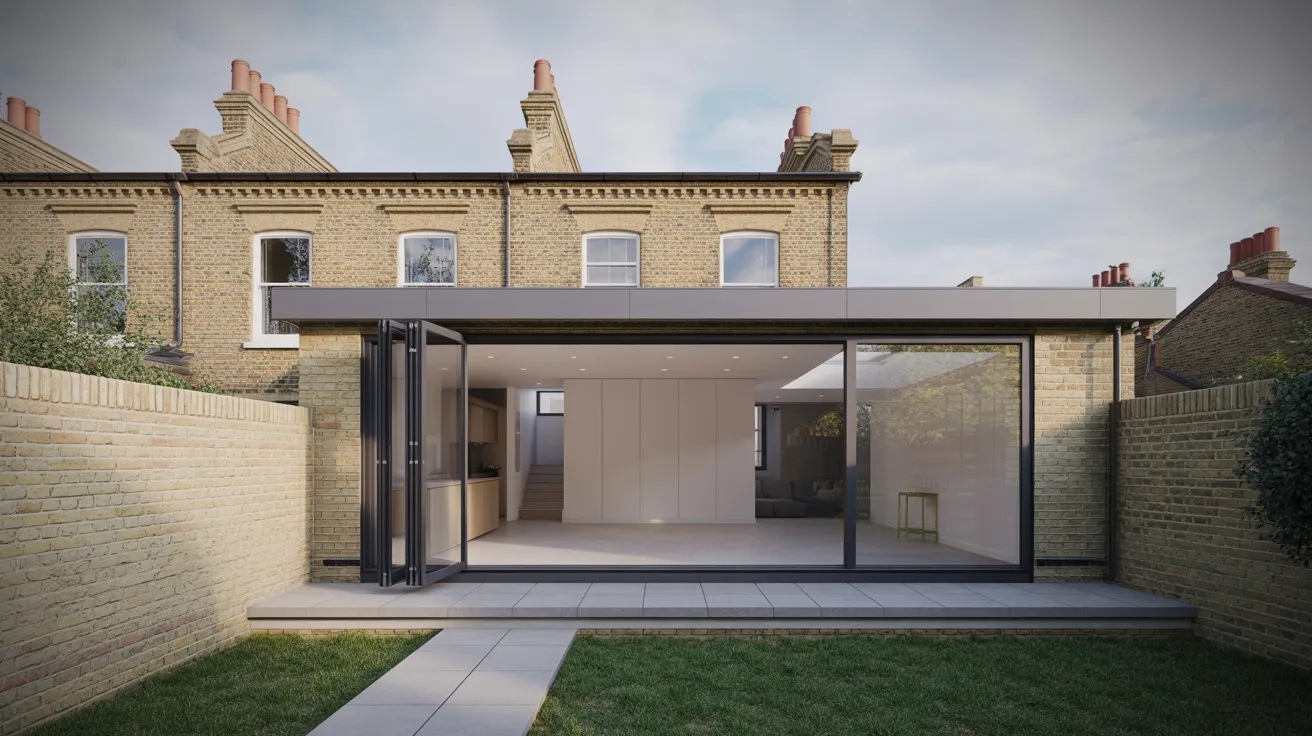
Understanding Southwark's Housing Stock and Its Implications for Extensions
Southwark's residential character varies considerably by neighbourhood, and this affects how planners assess rear extension proposals. The majority of the borough's housing consists of Victorian and Edwardian terraces, particularly concentrated in Peckham, East Dulwich, Herne Hill, and Walworth. These typically feature standard terraced proportions: narrow frontages, deep plots, and pitched roofs. Victorian brick is the default material, and planners expect extensions to respect this vernacular.
Borough and Bermondsey contain significant pockets of Georgian and early Victorian housing with grander proportions and greater historical significance. Properties here often have basement levels and more complex rear elevations facing the Thames or historic street patterns. Rear extensions in these areas face closer scrutiny, particularly if visible from public spaces.
The interwar period brought semidetached housing to Forest Hill, Honor Oak, and Sydenham—sturdier constructions with greater flexibility in rear extension design. These properties typically sit on slightly larger plots and face fewer visual sensitivity constraints, though conservation area designations remain common.
This mix matters because it shapes planning expectations. A simple single-storey rear extension in a Victorian terrace in Peckham follows one set of rules; a two-storey extension to a Grade II listed Georgian townhouse in Borough involves entirely different considerations and higher design standards. Southwark planners expect extensions to be contextually appropriate—matching the scale, massing, and materials of the existing building.
Conservation Areas in Southwark: Where They Apply and What They Mean
Southwark contains multiple conservation areas, each with distinct characteristics. Understanding which one applies to your property is essential because conservation area status restricts permitted development and typically requires planning permission for work that would otherwise be allowed as permitted development.
Dulwich Village Conservation Area
Dulwich Village is Southwark's most stringent conservation area. Covering the heart of Dulwich with its tree-lined streets, large period properties, and estate-like character, this area is extremely conservative about extensions. Rear extensions here must preserve the property's rear elevation and garden character. Two-storey extensions are rarely approved unless exceptionally well-designed and set well back from the house. Dormer windows are almost always refused. Stock brick matching the existing building is mandatory. Planners here treat every application as a design test and expect architects' drawings and detailed justifications.
Camberwell Grove Conservation Area
Camberwell Grove focuses on the original village street with Victorian and Edwardian villas set back from the road. Rear extensions are possible but require careful proportioning. Single-storey rear extensions set back from the rear facade are typically approved, provided they do not dominate the garden or breach the building's rear wall line significantly. Pitched roofs are preferred to flat roofs in this area.
Bermondsey and Rotherhithe Conservation Area
This large conservation area encompasses warehouse conversions, listed riverside properties, and Victorian street housing. Rules vary by sub-character: historic street fronts near the Thames require high design standards, while back-street terraces follow standard rear extension rules more closely. Many properties here are listed, which overrides conservation area rules and requires specific listed building consent.
Borough and Bankside Conservation Area
Borough High Street and the area around Bankside combine historic streets with modern developments. Properties here range from 18th-century buildings to modern apartments. Rear extensions to historic properties require careful design and are often refused if they would be visible from public viewpoints. The conservation area aims to preserve historic street patterns, so rear garden development is permitted if not visible from the street.
Permitted Development Rights in Southwark: What You Can Do Without Planning Permission
Permitted development (PD) rights allow certain extensions without formal planning permission, subject to meeting specific criteria. In Southwark, standard PD rules apply unless an Article 4 Direction has been issued in your area.
Single-Storey Rear Extensions
A single-storey rear extension up to 4 metres deep (or 3 metres for terraced houses) is permitted development, provided the extension does not exceed the height of the main roof and does not obstruct light to neighbouring windows. The extension must not use materials substantially different from the original building, though this rule is applied flexibly for modern extensions. However, this right does not apply in conservation areas or to listed buildings.
Two-Storey Rear Extensions
Two-storey rear extensions are not permitted development in most of London, including Southwark. They require full planning permission regardless of depth or materials. This is where most rear extension projects encounter the planning system formally.
Prior Notification and Full Planning
Some single-storey extensions may fall under "prior notification"—a simplified approval process where you notify the local authority and they have 21 days to respond. Prior notification is often used for smaller or less sensitive extensions but is not available in conservation areas. If the authority is concerned about impact, they can request a full planning application, which extends the decision period to eight weeks.
What Southwark Planners Look For in Rear Extension Proposals
Southwark's planning department has clear design expectations. Understanding these will determine whether your proposal is likely to be approved quickly or requires negotiation and redesign.
Design and Scale
Rear extensions must be proportionate to the existing building. A single-storey extension to a Victorian terrace typically extends 3–4 metres back and matches the ridge height of the main house. Two-storey extensions require careful massing, often set back from the rear facade so they do not dominate the building's profile. Extensions must step down or set back if they would obstruct light to neighbouring properties.
Materials and Detailing
Stock brick matching the existing building is the default expectation. Southwark strongly prefers traditional materials—brick or stone for lower floors, render for upper floors if the original building uses it. Modern materials like timber cladding or metal panels are increasingly accepted for contemporary designs but must be high quality and well-proportioned. Flat roofs are accepted if they do not dominate the rear elevation; pitched roofs are preferred where they match the original building's design language.
Relationship to Neighbours
Planners assess whether extensions will obstruct light or privacy to adjacent properties. Extensions that maintain a 45-degree line from the neighbouring kitchen window or preserve mutual privacy by stepping back at first-floor level are more likely to be approved. Terraced properties in particular are scrutinised for bulk and mass.
Garden Impact
Extensions that leave minimal private garden space—particularly single extensions that reduce usable garden area below 5–6 metres—face resistance. Planners prefer extensions that maintain reasonable garden access and light.
Loft Conversions in Southwark: Dormer Restrictions and Conservation Constraints
Loft conversions are common in Southwark's Victorian and Edwardian housing stock, but they face significant constraints in conservation areas and for certain roof types.
Dormer Windows and Conservation Areas
In conservation areas—particularly Dulwich Village and Camberwell Grove—dormer windows are often refused entirely or severely restricted. Planners view dormers as damaging the roof line and historic street character. In non-conservation areas, rooflights (Velux-style windows) are preferred to dormers. Where dormers are permitted, they must be small, set back from the roof edge, and sympathetic in design. Rear dormers are more readily accepted than front dormers, which are visible from the street.
Roof Structure and Feasibility
Many Victorian properties have timber-frame roofs that make loft conversion difficult or impossible without significant structural work. Pre-1920 properties often lack suitable roof slopes or head heights. Surveying is essential before committing to a loft conversion design.
Planning Requirements
Loft conversions with rooflights are permitted development in most cases, even in conservation areas, provided the rooflights do not materially alter the roof's appearance. However, if you need to remove walls, create a second staircase, or significantly enlarge the roof profile, planning permission is required. Listed buildings always need listed building consent for any roof works.
Article 4 Directions in Southwark: Where They Apply and What They Remove
Article 4 Directions are council decisions that remove specific permitted development rights in designated areas. In Southwark, these are applied selectively to protect character and control development.
Where Article 4 Directions Are in Place
Southwark has Article 4 Directions covering parts of Dulwich Village, Camberwell Grove, and parts of Bermondsey and Rotherhithe. The council also applies Article 4 protections to locally designated heritage areas and some residential conservation zones.
What Rights Are Typically Removed
The most common removal is Class M (change of use), which prevents single-family homes being converted to houses in multiple occupation (HMOs) without planning permission. Article 4 also frequently removes rights to enlarge windows or doors, add external cladding, and in some cases, undertake single-storey rear extensions that would otherwise be permitted development. Always check whether an Article 4 Direction applies to your property before assuming permitted development rights.
How to Check for Article 4
Southwark's planning portal includes an Article 4 search tool. You can also contact the council's planning department directly or request a planning officer's confirmation. If an Article 4 Direction is in place, almost any extension will require planning permission, even work that would normally be permitted development elsewhere in the borough.
Comparison: Rear Extension Rules in Conservation vs. Non-Conservation Areas
| Project Type | Non-Conservation Area | Conservation Area |
|---|---|---|
| Single-storey, 3–4m rear extension (terrace) | Permitted development (no permission needed) if standard materials used | Full planning permission required; design scrutiny; approval likelihood 60–70% |
| Single-storey, 4–5m rear extension (detached) | Permitted development (no permission needed) | Full planning permission required; approval likelihood 40–50% |
| Two-storey rear extension | Full planning permission; 8-week determination; approval likelihood 70–80% if well-designed | Full planning permission; 8-week determination; approval likelihood 20–40%; higher design bar; possible refusal |
| Loft conversion with rear rooflights | Permitted development (no permission needed) | Permitted development allowed; dormers typically refused |
| Loft conversion with dormer | Planning permission required; 8-week determination; likely approval if well-designed and rear-facing | Planning permission required; approval unlikely, especially front-facing; rear dormers may be considered if tiny and recessed |
| Rear extension with modern materials (timber cladding, metal frames) | Permitted development or approved at 8-week stage if justified | Full planning permission; high design standard required; must justify deviation from traditional materials |
"The key to approval in Southwark is respecting context. A rear extension that reads as integral to the original building, not an addition tacked on, stands the highest chance of success—particularly in conservation areas."
Common Rear Extension Mistakes in Southwark
Several recurring issues delay or derail rear extension applications in Southwark. Being aware of these can help you avoid them.
Underestimating Design Requirements
Many applicants submit basic sketches expecting approval, particularly for conservation area properties. Southwark planners expect proper drawings, materials samples, and design rationale. Invest in an architect's drawings before submitting—it improves approval likelihood and speeds decision-making.
Ignoring Neighbour Impact
Proposals that fail to consider overshadowing or overlooking of adjacent gardens often trigger neighbour objections. Demonstrate how your design mitigates these concerns through massing, setbacks, or screening.
Choosing the Wrong Materials
Opt for stock brick and traditional detailing in conservation areas. Modern materials can work but require strong design justification. In non-conservation areas, flexibility is greater, but poor-quality materials or obviously conflicting styles still encounter resistance.
Not Checking Article 4 Directions
Failing to check whether an Article 4 Direction applies to your property is a common oversight. This can mean that work you thought was permitted development actually requires planning permission.
Key Statistic
Southwark Council receives approximately 1,200–1,400 planning applications for extensions annually. Roughly 75% are approved, but approval rates drop to 45–55% in conservation areas, particularly for two-storey extensions and applications lacking detailed design drawings.
The Planning Process: Timeline and Expectations
Understanding the process will help you manage timelines and expectations.
Pre-Application Consultation
Before formally submitting, consider a pre-application consultation with Southwark's planning team (a paid service). Planners will outline potential concerns and design expectations, allowing you to refine proposals before formal submission. This step is particularly valuable in conservation areas.
Formal Determination
Full planning applications are determined within 8 weeks (extendable to 13 weeks if an Environmental Impact Assessment is required, which is rare for extensions). Permitted development notifications are determined within 21 days. If the council requests more information, the clock may reset.
Conditions and Negotiations
Approvals often come with conditions—e.g., materials to be agreed, windows to be obscure-glazed for privacy, or specific roof details to be approved. These are standard and do not indicate a weak approval; they refine the design during construction.
Frequently Asked Questions
Can I build a single-storey rear extension to my Victorian terrace in Peckham without planning permission?
If Peckham is not in a conservation area and no Article 4 Direction applies, a single-storey extension up to 4 metres deep (3 metres for a terrace) is permitted development, provided it uses stock brick and matches the building's materials. However, it must not obstruct light to neighbouring properties or exceed the roof height of the main building. Check Southwark's planning portal to confirm no Article 4 Direction is in place, then you can proceed without permission.
My property is in Dulwich Village conservation area. Can I have a two-storey rear extension?
Two-storey rear extensions in Dulwich Village conservation area are extremely difficult to approve. Planners treat this area as highly sensitive to visual change. Unless your extension is exceptionally well-designed, significantly set back from the original building, and accompanied by a detailed design justification from an architect, expect refusal. Single-storey extensions are more feasible but require careful proportioning and traditional materials. Consult a planning officer before investing in detailed designs.
Do I need planning permission for a loft conversion with a rear roof light in Southwark?
A loft conversion with standard roof lights (Velux windows) is permitted development in most of Southwark, even in some conservation areas, provided the windows do not materially alter the roof's appearance. Dormers are different—they typically require planning permission and are rarely approved in conservation areas. If you need to remove internal walls or create additional stairwells, planning permission is required regardless of roof lights.
What materials should I use for my rear extension to maximize approval chances?
In non-conservation areas, stock brick matching the existing building is the safest choice, but rendered finishes, timber cladding, and even metal are increasingly accepted if well-proportioned and high quality. In conservation areas, traditional materials are strongly preferred. Always provide material samples and justification in planning applications. Avoid obviously cheap or conflicting finishes—they are rarely approved.
How do I check if an Article 4 Direction applies to my property?
Visit Southwark Council's planning portal and use the online search tool, or request a planning officer confirmation by phone or email. Provide your full address and postcode. The council typically responds within 1–2 working days. If an Article 4 is in place, almost any extension requires planning permission, even single-storey work that would normally be permitted development.
What happens if a neighbour objects to my extension application?
Neighbour objections are formal consultations, not vetoes. Planners assess objections against planning policy, not neighbour preference. If objections raise legitimate concerns about light, privacy, or design, planners may request design changes or refusal. If objections are speculative or not planning-related, they are typically given limited weight. Well-designed extensions that demonstrably do not harm neighbours often proceed despite objections.
Is there a financial incentive to do work under permitted development rather than planning permission?
There are no direct financial incentives, but planning permission involves application fees (typically £200–500 for extensions) and determination time. Permitted development avoids these. However, designing an extension to fall within permitted development limits may result in a suboptimal solution. Many homeowners find paying for proper design and planning permission is worth the improved outcome.
How long does a typical rear extension planning application take in Southwark?
Standard applications are determined within 8 weeks. In practice, many are decided within 6 weeks if no objections are raised and information is complete. Conservation area applications and those requiring design revisions can take 10–13 weeks. Pre-application consultation can add 2–3 weeks upfront but often shortens formal determination by clarifying expectations early.