
Article 4 Directions in London — How They Affect Your Permitted Development Rights
Article 4 Directions remove permitted development rights in defined areas to protect character, conservation, or historic importance. If your London property is in an Article 4 area, you will need full planning permission for works that would otherwise be permitted. This guide explains what they are, which areas are affected, and how to check if your property is covered.
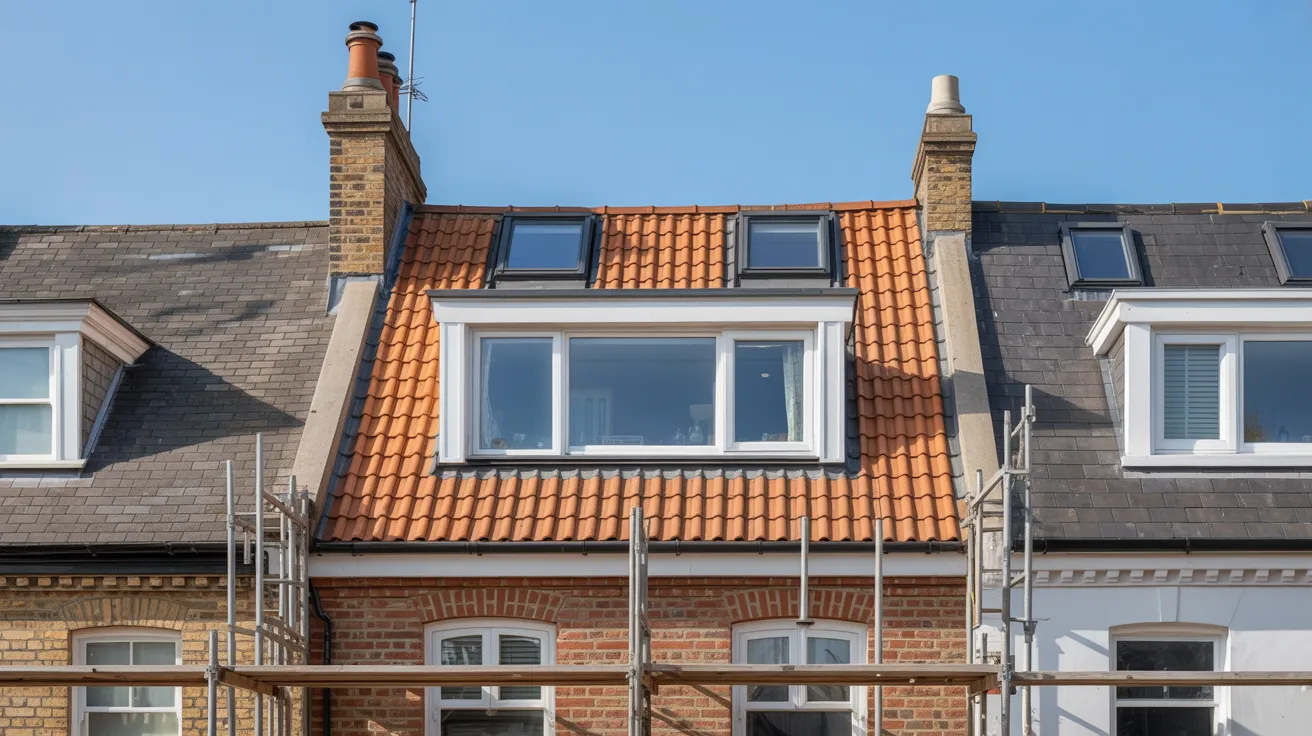
What an Article 4 Direction Is
An Article 4 Direction is a legal tool under the Town and Country Planning (General Permitted Development) (England) Order 2015 (GPDO) that allows local planning authorities to remove or restrict Permitted Development rights in defined areas. When a Permitted Development right is removed, that work becomes a full planning application requiring formal approval.
The purpose of an Article 4 Direction is to preserve the character of an area by giving the planning authority control over minor works that would otherwise bypass the planning system. Without an Article 4 Direction, homeowners can carry out certain extensions, roof works, and alterations without planning permission (Permitted Development). With an Article 4 Direction, the council can assess those same works against planning policy and refuse or impose conditions.
Article 4 Directions are commonly used in London to protect:
- Conservation areas — designated for their special architectural or historic character
- Areas with terraced housing — to prevent inconsistent alterations that break the uniform streetscape
- Historic shopping parades — to maintain shopfronts and ground-floor design consistency
- Residential streets with distinctive character — to control roof additions, extensions, and boundary treatments
- Areas at risk of incremental change — where cumulative minor alterations would progressively degrade character
Which Permitted Development Rights Are Removed and Why
An Article 4 Direction does not remove all Permitted Development rights — it targets specific classes of development that are considered sensitive to the character of the area. The most commonly removed rights in London are:
- Class A (Extensions) — Single-storey rear extensions, side extensions, and wraparound extensions. Removed to control bulk, design, and relationship to neighbouring properties, particularly in conservation areas and terraced housing areas.
- Class B (Roof additions) — Roof extensions, dormer windows, roof lights, and rooflights. Removed to protect the roofline, which is critical to the character of Victorian and Edwardian terraces.
- Class C (Roof coverings) — Changes to roof materials (e.g., replacing slate with concrete tiles). Removed in conservation areas to maintain material consistency.
- Class E (Outbuildings and structures) — Sheds, garages, summer houses. Removed to control cumulative impact on residential character and garden loss.
- Class G (Aerials and satellite dishes) — Rarely removed, but sometimes restricted in historic areas or conservation areas to control skyline clutter.
- Class M (Changes of use) — Conversion of houses to multiple occupancy, offices, or short-term let. Removed to protect residential character and prevent over-intensification.
Which classes are removed depends on the local planning authority's assessment of the area's vulnerability. A terraced housing area may have Classes A and B removed (to control extensions and roof works) but Classes C and E untouched. A conservation area may have all classes removed.
How to Find Out If Your Property Is Affected
To find out whether your London property is in an Article 4 Direction area, you have several options:
- Check the council's planning portal — Most London boroughs publish a map of Article 4 areas on their website. Search your council's name + "Article 4 Direction" to find the map and list of covered areas.
- Request a Property Search Report — A property search report (offered by search companies) will typically flag if your property is in an Article 4 area, though you may need to pay for this.
- Telephone or email the planning department — Call or email your local council's planning department with your address. They can confirm within a few days whether an Article 4 Direction covers your property.
- Check the Land Registry or searches accompanying your purchase — If you've recently bought the property, the conveyancer may have flagged this; check your searches documentation.
The specific wording of the Article 4 Direction matters — it will specify which classes of Permitted Development are removed, so it's important to check the precise scope. Some Article 4 Directions remove only Class B (roofs); others remove Classes A, B, C, and E.
| PD Class | What It Covers | Reason for Removal | Common in Which Boroughs | Planning Permission Needed |
|---|---|---|---|---|
| Class A (Extensions) | Single-storey rear extensions, side extensions, roof extensions | Control bulk, design, and loss of green space in terraced areas | Camden, Islington, Hackney, Kensington & Chelsea | Yes — in affected areas |
| Class B (Roof additions) | Dormer windows, roof extensions, roof lights, mansard roofs | Protect roofline profile critical to Victorian/Edwardian character | Most conservation areas | Yes — in affected areas |
| Class C (Roof coverings) | Replacing roof material (slate to tiles, tiles to cement) | Maintain material consistency and colour harmony | Some conservation areas only | Yes — if removed by Article 4 |
| Class E (Outbuildings) | Sheds, garages, greenhouses, summer houses | Control garden loss and cumulative residential impact | Some conservation areas, mostly terraced areas | Yes — if removed by Article 4 |
| Class G (Aerials/dishes) | Satellite dishes, TV aerials, solar panels over 4m² | Prevent visual clutter and skyline disruption | Historic conservation areas only | Rarely — usually remains PD |
| Class M (Change of use) | Conversion to flats, office, short-term let, HMO | Prevent residential intensification and loss of family housing | Southwark, Lambeth, Hackney, Islington, Lewisham | Yes — in affected areas |
What It Means for Extensions and Loft Conversions
If your property is in an Article 4 Direction area, this has direct implications for common building projects:
- Single-storey rear extension — If Class A is removed, you must obtain full planning permission. Without the Article 4 Direction, a single-storey extension up to 3 metres deep, 4 metres high, and complying with certain setbacks would be Permitted Development. With the Article 4 Direction, it becomes a planning application that the council can refuse on design, bulk, or character grounds.
- Loft conversion with roof dormer — If Class B is removed, you cannot add a dormer window or roof extension without planning permission. Roof lights (flush with the roof) may still be Permitted Development (depending on the exact Article 4 wording), but anything that alters the external roofline requires consent.
- Two-storey side extension — Extensions generally require planning permission anyway (if they exceed PD limits), but an Article 4 Direction may restrict even modest side extensions that would otherwise be permitted.
- Change of roof material — If Class C is removed and you want to replace slate with concrete tiles (or vice versa), you may need planning permission and conservation area consent, adding time and cost.
Article 4 Direction vs Conservation Area — What's the Difference?
Conservation areas and Article 4 Directions often overlap, but they are different legal mechanisms:
- Conservation Area (CA) — A designated area protected under the Planning (Listed Buildings and Conservation Areas) Act 1990. Conservation areas have their own permitted development restrictions (notably the removal of PD rights for certain roof works, cladding, and satellite dishes). Conservation areas are visually distinctive and worthy of preservation.
- Article 4 Direction — A supplementary tool that removes additional Permitted Development rights beyond those already restricted in a Conservation Area. An Article 4 Direction goes further — it allows the council to require planning permission for works that are still Permitted Development in conservation areas elsewhere.
In practice, many Article 4 Directions are made in conservation areas to add extra protection. For example, a conservation area may restrict Class B (roofs) as a matter of law, but an Article 4 Direction in that same area may also restrict Class A (extensions) and Class M (changes of use). Other Article 4 Directions are made in non-conservation areas (such as residential streets with distinctive character) to achieve similar protection.
If your property is in a conservation area, assume that Class B (roofs) and some ancillary buildings restrictions apply. If there is also an Article 4 Direction, additional classes are likely restricted. Always check the specific Article 4 wording for your area.
Article 4 Direction vs Listed Building — What's the Difference?
A Listed Building is a building (or part of a building) officially recognized as being of special architectural or historic interest. Listed Building status is separate from Article 4 Directions:
- Listed Buildings — Listed Buildings require Listed Building Consent (in addition to planning permission) for any external alteration, repair, or internal demolition that affects character. Listed Building Consent is much more restrictive than planning permission, as the consent is focused on historical preservation.
- Article 4 Direction — An Article 4 Direction applies to areas (not individual buildings). It removes Permitted Development rights within a defined zone. An Article 4 Direction does not restrict you more than Listed Building status, but it may require planning permission when Listed Building status would not.
A property can be Listed and also be in an Article 4 area. If so, you must obtain both Listed Building Consent and planning permission for external works. However, they are distinct processes — Planning Control under an Article 4 Direction focuses on design and character impact in the local context; Listed Building Consent focuses on the historical integrity of the building itself.
How Planning Applications Are Assessed in Article 4 Areas
When you submit a planning application for a property in an Article 4 area, the application will be assessed against the same planning policy as any other proposal. However, some factors are particularly important:
- Character and appearance — The application will be judged against the design objectives of the Article 4 Direction. If it's in a conservation area, the statutory test is whether the proposal would preserve or enhance the character. Proposals that are incongruous with the area's character are likely to be refused.
- Cumulative impact — The planning officer may consider the cumulative effect of similar works in the area. If many similar extensions have been approved, the character argument becomes harder. If few have been approved, refusal is more likely.
- Policy compliance — Your application must comply with the local authority's design guide, conservation area appraisal (if applicable), and adopted development plan policies. These documents often set out expectations for extensions, roof works, and alterations in Article 4 areas.
- Pre-application advice — The planning department may request pre-application consultation, which means you should discuss your proposal with planning officers before formal submission to understand their expectations.
In practice, applications for rear extensions or modest loft conversions in Article 4 areas can still be approved if they are well-designed, respect the character, and comply with policy. However, approval is less certain than in areas without Article 4 Directions, and refusal or conditions are more likely. You should budget time and cost for the planning process when your property is in an Article 4 area.
Can You Challenge or Appeal an Article 4 Direction?
Article 4 Directions are made by the local planning authority, usually after consultation. If you believe an Article 4 Direction is unjustified or has been made without proper procedure, you have limited grounds to challenge it:
- Procedural challenge — If the council has failed to follow the correct process (e.g., failed to consult or publish notice), you can challenge the direction through judicial review. This is rare and requires legal advice.
- Compensation claims — If an Article 4 Direction is made without notice and causes you financial loss (e.g., you cannot now carry out a development you had planned), you may claim compensation from the council. However, this is limited and difficult to prove.
- Reversal — The council can voluntarily reverse or modify an Article 4 Direction, but this is unlikely unless circumstances have fundamentally changed or the direction has been shown to be ineffective.
In reality, once an Article 4 Direction is made, it is difficult to challenge. Your best option is to engage with the planning system and design proposals that comply with policy, rather than attempt to overturn the direction itself.
London Boroughs and Their Article 4 Use
Most London boroughs make extensive use of Article 4 Directions. Here are the main areas and the boroughs most likely to use them:
- Camden — Extensive Article 4 Directions in areas including Bloomsbury, Islington, King's Cross, and Hampstead. Classes A, B, C removed in many zones.
- Islington — Article 4 Directions across most of the borough, particularly in Victorian terraced areas. Extensions and roof works restricted.
- Hackney — Widespread Article 4 coverage in conservation areas and terraced housing areas, particularly Stoke Newington and Clissold Park areas.
- Kensington and Chelsea — Article 4 Directions in Chelsea, South Kensington, and other affluent conservation areas. Strict control of extensions and alterations.
- Westminster — Article 4 Directions in West End, Covent Garden, and residential conservation areas. Control of windows, shopfronts, and extensions.
- Southwark — Article 4 Directions in conservation areas and historic neighbourhoods (Borough, Bermondsey, Rotherhithe). Class M (changes of use) often restricted.
- Richmond upon Thames — Article 4 Directions in riverside areas and conservation zones. Control of extensions and roof works.
- Lewisham — Article 4 Directions in conservation areas (Blackheath, Lewisham town centre). Extensions and roof works commonly restricted.
Most London boroughs also allow property searches that specify Article 4 coverage. If you are considering a project in any of these boroughs, you should check the specific Article 4 Direction for your address before assuming Permitted Development rights apply.
Frequently Asked Questions
If my property is in an Article 4 area, do I automatically need planning permission for any extension?
No. An Article 4 Direction only removes specific classes of Permitted Development. For example, if only Class A and B are removed, you must get planning permission for extensions and roof works, but outbuildings (Class E) may still be Permitted Development. Check the exact wording of the Article 4 Direction for your area to see which classes are removed.
Does an Article 4 Direction mean I cannot extend my house?
No. An Article 4 Direction means you must apply for planning permission instead of relying on Permitted Development rights. You can still extend — you simply need formal planning approval. Many extensions are approved in Article 4 areas if they comply with planning policy and respect the character of the area.
How long does a planning application take in an Article 4 area?
The statutory time for determining a planning application is 8 weeks, although extensions of time are common (typically to 13 weeks). In an Article 4 area, the planning officer may request more information or pre-application consultation, which can extend the process. Budget 3-4 months for determination, longer if your proposal is contentious or in a sensitive location.
Can I appeal if my planning application is refused in an Article 4 area?
Yes. If your application is refused, you can appeal to the Planning Inspectorate within 3 months of the refusal. However, appeals in Article 4 areas can be difficult if the refusal is based on character and policy compliance — these are subjective assessments that an Inspector is unlikely to overturn unless the Local Authority's decision is clearly unreasonable.
Is an Article 4 Direction permanent or can it expire?
An Article 4 Direction is permanent unless the local authority decides to revoke or modify it. Some Article 4 Directions have a 6-month or 12-month sunset clause when first made, requiring the council to confirm or withdraw them. However, once confirmed, they remain in force indefinitely. Check the date of your Article 4 Direction to see if it is confirmed or still temporary.
If I have planning permission that was granted under Permitted Development, and then an Article 4 Direction is imposed, is my permission still valid?
Yes. If you obtained a completion certificate or legal confirmation that your work was Permitted Development before the Article 4 Direction was made, your work is protected. However, if you have not yet built and only have a design or sketch, you should check with the council whether your rights have been removed. New works must comply with the current rules in force at the time of application.
What if I disagree with whether a specific class is removed by the Article 4 Direction?
The Article 4 Direction will include a schedule stating which classes are removed. If you believe there is an error in the interpretation or application of the Direction, contact your local planning authority and request clarification in writing. If you still disagree, you may seek legal advice on judicial review, but this is a last resort and should not be done lightly.
Do Article 4 Directions apply to businesses as well as homes?
Article 4 Directions can remove PD rights for commercial premises if the Direction is worded to include Class A (Use), which includes change of use from residential to commercial, or Class M, which includes use changes generally. Many Article 4 Directions in shopping parades or mixed-use areas restrict commercial changes of use to maintain the character of the street.
Can I apply for a formal legal opinion on whether my property is in an Article 4 area?
You can obtain a Property Search Report that includes information about Article 4 Directions, but the definitive source is the Local Authority itself. I recommend contacting your local planning department directly and requesting a formal confirmation letter stating which (if any) Article 4 Directions apply to your address. This is free and takes a few days.
If my neighbour's property is in an Article 4 area but mine is not, do I still need Article 4 compliance for a joint project?
If your property is not in an Article 4 area, you can proceed under Permitted Development (if applicable). However, if your property is adjacent to a neighbour in an Article 4 area and your works interact with or affect the Article 4 area visually, the planning authority may still comment. Best practice is to consult with both local authorities or seek pre-application advice if your works affect the boundary.
Further Reading
- UK Government — Permitted Development Rights Guidance
- Town and Country Planning (General Permitted Development) Order 2015
- Greater London Authority — Planning Policy
- Planning Portal — Article 4 Direction Information
- UK Government — Conservation Areas Guidance
- Historic England — Listed Building and Conservation Area Information
- Royal Institute of British Architects — Planning and Design Guidance
- Planning Inspectorate — Appeals and Decisions
Related Articles
- Permitted Development Rights in London — What Can You Build Without Planning?
- Lawful Development Certificate — Proving Past Works Don't Need Consent
- Extending a Semi-Detached House in London — Party Walls and Party Agreements
- Hip to Gable Loft Conversions in London — Planning and Building Regulations