
Loft Conversion Fire Safety in London — Building Regulations, Escape Routes and Sprinklers
Fire safety is one of the most critical and frequently misunderstood aspects of loft conversions in London. Building Regulations Part B (Fire Safety) imposes strict requirements that differ significantly from single-storey extensions. This guide explains exactly what you need to know: protected staircases, escape windows, smoke alarms, fire-rated doors, and when sprinklers are required. Understanding these rules now will prevent costly compliance failures later.
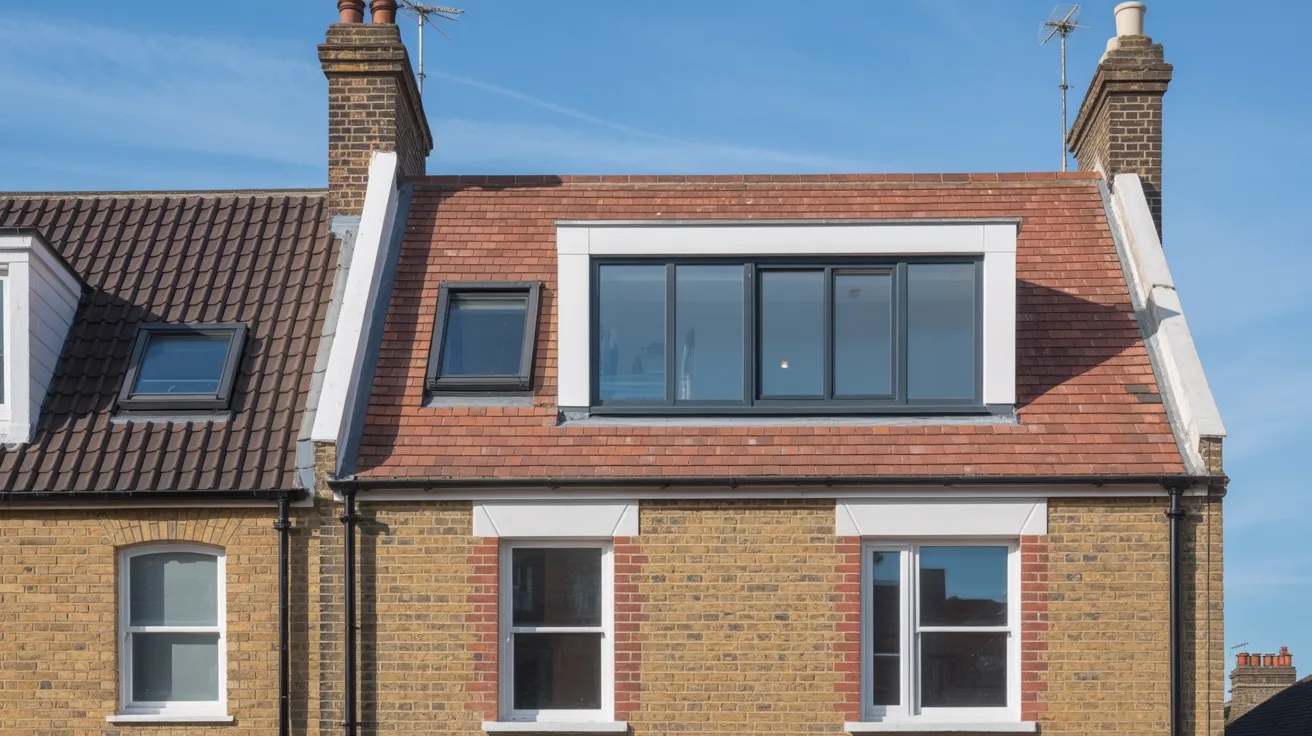
Why Fire Safety is Different for Loft Conversions
When you add a new storey to a dwelling by converting the loft, you're fundamentally changing the escape characteristics of the building. Unlike single-storey extensions, a loft conversion creates a situation where occupants must descend through the entire building to reach safety. If the main staircase is blocked by fire, people trapped in the loft have limited options. This is why Part B of Building Regulations is significantly stricter for loft conversions than for ground-floor or side extensions.
The key principle is that Building Regulations treats a loft conversion as creating a new storey. Whether it's truly a second storey (1-storey to 2-storey conversion) or adds to an existing 3-storey house, the fire safety requirements apply. Building Control officers rigorously inspect fire safety during completion, and non-compliance can result in enforcement action—requiring costly retrofitting or even demolition in extreme cases.
Part B Requirements for Loft Conversions
Part B of the Building Regulations contains four sub-sections: B1 (Means of escape), B2 (Internal fire spread), B3 (External fire spread), and B4 (Provisions in case of outbreak of fire). For loft conversions, B1 and B2 are the most stringent, particularly B1 which governs how occupants escape in a fire.
The fundamental requirement is that every habitable room in the new loft storey must have a safe means of escape to a place of safety (typically the street or designated safe area). For single-storey conversions being added to a 2-storey house, you have two permitted routes: a protected staircase OR an escape window (Velux). For all other scenarios (3+ storey houses, or non-habitable loft spaces), the protected staircase is the default requirement, though escape windows can supplement but not replace it.
The Protected Staircase
A protected staircase is essentially a fire-resistant box that encloses the stairway from the loft to the ground floor. It must be enclosed by a 30-minute fire-resisting enclosure, meaning it can withstand fire exposure for 30 minutes without allowing flame or hot gases to pass through.
Specific requirements include:
- Construction: The walls, ceiling, and door to the staircase must be built with 30-minute fire-resisting materials. Typically, this means plasterboard with a fire-rated specification (often two layers of 12.5mm fire-rated plasterboard, sealed and taped).
- Fire doors: Any door opening into the protected staircase must be a certified FD30 fire door (30-minute fire-resisting door). This includes the door from the loft landing and all intermediate doors. The door must self-close and latch automatically, and hinges must be fire-rated.
- Ventilation: The protected staircase must not serve any other purpose—no utility ducts, pipes carrying flammable liquids, or gas pipes can pass through it unless they are properly protected.
- Separation: The staircase must be completely separated from the rest of the building. Small service openings (such as for pipework) must be less than 100mm² in area and properly fire-sealed.
- Width and dimensions: The staircase must meet standard dimensions for residential stairs (775mm minimum clear width, handrails on both sides if wider than 1,000mm).
Building Control will test the fire resistance by visual inspection, checking that all plasterboard joints are properly sealed, all doors close properly, and no gaps exist around pipes or other penetrations. If the protected staircase fails inspection, the entire project fails, and remedial works must be completed before sign-off.
Escape Windows — The Alternative Approach
For single-storey loft conversions being added to 2-storey houses, an escape window can be used instead of a protected staircase, though in practice most builders still install both for convenience and future-proofing. The escape window must open directly from a habitable room (typically a bedroom) to outside and must meet specific criteria:
- Minimum openable area: 0.33m² (roughly 600mm x 550mm). This is the clear unobstructed area when the window is fully open.
- Minimum dimension: Both width and height must be at least 450mm. This ensures a person can physically exit through the opening.
- Maximum height above floor: 1,100mm from the internal floor level. This allows a person to exit without climbing or jumping from an excessive height.
- Access and landing: Outside the window, there must be a safe place to land. For windows opening onto a flat roof, the flat roof must be constructed to withstand loads and have a parapet or guarding. For windows opening onto a sloped roof, a roof light with a flat velux frame is typically used, and the escape requires a safe landing on an adjacent roof or accessible location.
- Opening mechanism: The window must open to its full extent by a simple manual operation (no tools required). Restricted hinges or opening limiters are not permitted for fire escape windows.
A common mistake is using a standard Velux roof light. Many homeowners and even some builders assume any roof light qualifies as an escape window, but standard Velux windows do not provide the required openable area or safe landing unless specifically specified and installed with protective measures. Building Control will refuse to sign off a loft conversion with an inadequate escape window, so get written confirmation from your supplier and Building Control in advance.
Smoke and Heat Alarms
Part B requires mains-wired smoke alarms (not battery-operated) on every level of the building, interlinked so that when one alarm triggers, all alarms sound. Specifically:
- Smoke alarms in circulation spaces: One mains-wired smoke alarm must be installed in each circulation space (hallway, landing) on each storey, including the new loft storey landing.
- Interlinked system: All alarms must be electrically interconnected so they trigger together. This is typically achieved with wired connections run through the building or wireless mains-powered interlink devices approved for the purpose.
- Heat alarm in kitchen: A mains-wired heat alarm (not a smoke alarm) must be installed in the kitchen, as this is where accidental fires are most common. Heat alarms trigger at a temperature threshold rather than detecting smoke.
- Testing and certification: The system must be certified and tested before handover. The Building Control officer will verify connections and functionality during final inspection.
The requirement is for mains power with battery backup, not standalone battery alarms. Mains-wired alarms are far more reliable and eliminate the hassle of periodic battery replacement.
Fire Doors (FD30)
Fire doors protect occupants by controlling the spread of fire and smoke within the building, buying time for escape. Part B requires specific fire doors in loft conversions:
- Door to protected staircase: If you have a protected staircase, the door from the loft landing into the staircase must be an FD30 fire door. This door is tested to withstand 30 minutes of fire exposure without allowing flame or hot gases to penetrate.
- Doors to habitable rooms: Doors to habitable rooms (bedrooms, studies) that open off the protected escape route (the landing leading to the staircase) must be FD30 fire doors. Doors to bathrooms or non-habitable spaces (storage) do not require fire-rating under Part B, though best practice often includes them.
- Self-closing and latching: All fire doors must be fitted with self-closing devices (closers) and latches so they automatically close and fully engage when released. Propped-open fire doors defeat the purpose and are a building control violation.
- Certification and installation: Fire doors must be CE-marked and installed with fire-rated hinges, locks, and letterboxes (if required). Improper installation—such as using standard hinges or fitting the door in a way that creates gaps—will cause Building Control to reject it.
A common non-compliance issue is installing a door with the right FD30 certification but then allowing it to be wedged or propped open. Building Regulations require fire doors to remain closed and self-close, except when active closure devices (such as electromagnetic door holders linked to the alarm system) are installed.
When Automatic Sprinklers Are Required
Automatic sprinkler systems are not universally required in domestic loft conversions, but in certain scenarios they provide an alternative to other fire safety measures. Building Regulations permits sprinklers as a trade-off for relaxed requirements in some cases, though in London most loft conversions do not trigger sprinkler requirements.
Sprinklers become relevant in the following situations:
- Buildings exceeding 30 metres or 7+ storeys: Not applicable to residential loft conversions, which rarely exceed 4 storeys.
- Complex or inaccessible loft spaces: In rare cases, where a loft space is particularly complex or unusually sized, sprinklers might be specified by Building Control as an additional safety measure, but this is uncommon.
- Shared building fire safety strategies: In some flats or apartment buildings where a loft conversion is being undertaken on a shared building, sprinklers may be part of a broader fire safety upgrade. This is decided on a case-by-case basis by Building Control and the fire safety assessor.
For the vast majority of London residential loft conversions, sprinklers are not mandatory. However, they are sometimes chosen as an optional enhancement by homeowners seeking the highest level of fire protection, or in cases where the protected staircase design is particularly challenging.
The Difference Between 2-Storey and 3-Storey Houses
Building Regulations treats these scenarios quite differently:
- 1-storey to 2-storey conversion (bungalow to 2-storey): This is the most lenient scenario. You may use either a protected staircase or an escape window (Velux). Many conversions use both for safety and convenience.
- 2-storey to 3-storey conversion: A protected staircase becomes mandatory. An escape window can supplement but not replace the protected staircase. This is because the new loft storey is now a third storey, and occupants must be able to escape the full height of the building via a continuous fire-resistant route.
- 3-storey to 4-storey conversion: Again, a protected staircase is mandatory. The entire staircase from the new 4th-storey loft down to ground must maintain 30-minute fire-resistance.
The key principle: once you have 3 or more storeys, the protected staircase is not optional. Escape windows can provide an additional escape route, but they cannot be the sole escape route from a loft storey in a 3+ storey building.
Non-Habitable Loft Rooms
If your loft conversion is used for non-habitable purposes (storage, utility room, plant room), fire safety requirements are relaxed slightly. However, this is rarely a practical option in residential conversions because homeowners want to use the space as a bedroom or study.
A non-habitable loft space is one where people do not sleep and only visit occasionally for maintenance or storage. In such cases:
- An escape window is not required (because there's no habitable occupancy requiring emergency exit).
- A protected staircase is still required as the primary route to exit the building.
- The room must remain non-habitable by design (no bed, permanent seating, or living activities).
In practice, Building Control will require the room to be registered as non-habitable, and any future conversion to habitable use would require retroactive fire safety upgrades. This significantly limits the property's value and utility, so most homeowners choose to design the loft as habitable from the outset.
Common Non-Compliance Issues
Building Control finds recurring fire safety failures in loft conversions:
- Inadequate protected staircase enclosure: Single-layer plasterboard or unsealed joints allow smoke and heat to breach the enclosure. Proper installation requires two layers of fire-rated plasterboard with all joints taped and sealed.
- Incorrect fire doors: Doors marked as fire doors but not correctly installed, or doors that are the wrong fire-rating (e.g., FD20 instead of FD30). All hinges, locks, and handles must be fire-rated components.
- Ineffective escape windows: Windows with insufficient openable area, windows that don't open fully, or unsafe landings outside. A window opening onto a sloped roof with no safe landing is rejected by Building Control.
- Missing or incorrectly wired smoke alarms: Alarms that are not mains-wired, alarms not interlinked, or alarms installed in the wrong locations. Wireless interlink systems must be specifically approved.
- Propped-open fire doors: Doors installed correctly but then held open with door stops or wedges. This is a critical failure because the fire door provides no protection if open.
- Poor staircase construction: Protected staircases built with gaps around pipes, inadequate sealing at walls, or doors that don't fully engage against frames.
Most of these issues can be avoided by engaging an experienced builder familiar with fire safety requirements and working closely with Building Control during design and construction. Requesting a pre-completion inspection by Building Control (before final sign-off) gives you an opportunity to address issues early rather than discovering them at the final stage.
What Building Control Officers Will Inspect
During final inspection for fire safety, the Building Control officer will check:
- The protected staircase enclosure (visual inspection for gaps, sealing, and integrity).
- All fire doors, including operation, closure, and proper engagement with frames.
- Escape windows (openable area, mechanisms, external landing conditions).
- Mains-wired smoke and heat alarm installation, wiring, and interconnection.
- Fire-rated hinges, locks, and other hardware on fire doors.
- Absence of hazardous combustible materials or gaps in fire-resistant barriers.
- Proper signage indicating fire escape routes and escape window operation instructions.
If any element fails, the officer will issue a notification of work not complying with Building Regulations, and you will be required to rectify before final sign-off. This can delay completion by weeks, so getting fire safety right during construction is essential.
Designing for Fire Safety and Convenience
Good design integrates fire safety seamlessly with usability. A protected staircase doesn't need to be cramped or inconvenient; it can be generously proportioned and finished to high standards. Escape windows can be framed as architectural features—a dormer window with both escape functionality and attractive exterior appearance, for example.
Work with your architect and builder to ensure fire safety requirements are incorporated from the design stage. Last-minute retrofitting of fire doors and escape routes often results in compromise and non-compliance. By designing for fire safety upfront, you achieve both safety and quality.
| Scenario | Protected Staircase Required | Escape Window Required | Mains Smoke Alarms | Heat Alarm (Kitchen) | FD30 Fire Doors |
|---|---|---|---|---|---|
| New bedroom in loft (2-storey to 3-storey) | Yes, mandatory | Can supplement | Yes, interlinked | Yes | Yes, to all habitable rooms off escape route |
| New bedroom in loft (3-storey to 4-storey) | Yes, mandatory | Can supplement | Yes, interlinked | Yes | Yes, to all habitable rooms off escape route |
| Loft room as study/non-habitable | Yes, mandatory | Not required | Yes, interlinked | Yes | Yes, if room has door to escape route |
| Dormer extension with bedroom (2-storey to 3-storey) | Yes, mandatory | Can supplement | Yes, interlinked | Yes | Yes, to all habitable rooms off escape route |
| Hip-to-gable with bedroom (2-storey to 3-storey) | Yes, mandatory | Can supplement | Yes, interlinked | Yes | Yes, to all habitable rooms off escape route |
Frequently Asked Questions
What exactly is a 30-minute fire-resisting enclosure?
A 30-minute fire-resisting enclosure is a construction that can withstand direct flame exposure and radiant heat for 30 minutes without allowing flames or hot gases to penetrate to the unexposed side, and without structural collapse. For loft conversion protected staircases, this is typically achieved with two layers of 12.5mm fire-rated plasterboard on both sides of a timber stud frame, with all joints taped and sealed with fire-rated sealant. The specification must comply with British Standard BS 476 or European Standard EN 13501-1.
Can I use a standard Velux roof light as an escape window?
No. Standard Velux roof lights do not provide the required minimum openable area (0.33m²) or safe landing unless specifically designed and installed for escape purposes. You must specify an escape window rated for this purpose, and the external landing must be verified as safe (typically a flat roof with guarding or a properly designed external structure). Confirm with your supplier and Building Control before installation.
Do I need both a protected staircase AND an escape window?
For a 1-storey to 2-storey conversion (bungalow to 2-storey), you may choose either a protected staircase or an escape window, but not both (though many builders install both for redundancy). For 2-storey to 3-storey conversions and above, the protected staircase is mandatory, and an escape window can supplement it but not replace it. Check with Building Control on your specific project.
What happens if my protected staircase fails Building Control inspection?
Building Control will issue a Notification of Non-Compliance. You will have a specified period (typically 28 days) to rectify the work. If not corrected, Building Control can serve an Enforcement Notice requiring demolition or remedial works. In practice, rectification (resealing joints, installing proper doors, etc.) is almost always possible and must be completed before final sign-off and occupation.
Are battery-operated smoke alarms acceptable instead of mains-wired?
No. Building Regulations Part B requires mains-wired smoke alarms (with battery backup for power continuity) in loft conversions. Battery-only alarms are not acceptable. Mains-wired alarms are far more reliable and eliminate the need for regular battery replacement checks.
Can I use a standard door as a fire door if I fit it carefully?
No. A fire door must be a certified FD30 or FD20 door, complete with fire-rated hinges, locks, and seals. A standard timber door, no matter how well installed, provides no fire resistance and will be rejected by Building Control. Only use doors that carry a third-party fire certification mark and are installed per manufacturer specifications.
What if I want a larger escape window for better access?
A larger window is fine, as long as it meets the minimum openable area (0.33m²) and minimum dimensions (both width and height at least 450mm). The maximum height above floor (1,100mm) must still be observed for safety. Consult your architect to ensure the larger window integrates well with the design and external landing.
Do I need to upgrade fire safety in the rest of the building during a loft conversion?
Building Regulations requires mains-wired, interlinked smoke alarms on every storey, which may mean upgrading existing alarms in the building to be integrated with the new loft storey alarm system. However, you do not generally need to upgrade fire doors on lower storeys unless they are part of the new protected escape route. Confirm with Building Control what is required for your specific project.
What is the cost implication of fire safety for a loft conversion?
Fire safety is a fixed requirement and is not negotiable. Costs vary depending on the design and specification of the protected staircase and escape window, but fire safety is a non-negotiable component of any loft conversion budget. Early integration into design minimizes cost and avoids expensive remedial work later.
Can fire safety requirements be waived or relaxed?
No. Part B of Building Regulations is a statutory requirement and cannot be waived. Building Control has no discretion to relax fire safety standards. Compliance is mandatory, and any non-compliance will be enforced.
How long does fire safety inspection take during the final Building Control visit?
Fire safety checks are part of the final inspection and typically take 1–2 hours. The officer will visually inspect the protected staircase, test all doors and alarms, and verify escape window functionality. Issues found during inspection must be corrected before final sign-off, so allocate time for potential remedial work.
Further Reading
- Building Regulations Technical Guidance Document B (Fire Safety) — Published by the Government — The official statutory guidance on fire safety requirements.
- BS 9414:2017 Code of practice for the design of fire-rated and smoke control door and shutter assemblies — British Standard for fire door installation and performance.
- Loss Prevention Certification Board (LPCB) Standards for Fire Safety in Buildings — Independent testing and certification of fire safety components.
- Local Authority Building Control (LABC) Guidance on Loft Conversions — Regional guidance from building control authorities on common fire safety issues and expectations.
- Royal Institution of Chartered Surveyors (RICS) Guidance on Party Wall and Building Regulations Compliance — Professional guidance on regulatory compliance in residential works.
Related Articles
- Hip-to-Gable Loft Conversions in London — Design, Planning and Building Regulations
- Rooflights and Skylights in London Extensions — Design, Planning and Building Regulations
- Permitted Development Rights for Loft Conversions in London
- Lawful Development Certificates in London — What They Are and When You Need One