
Loft Conversion in Lambeth — Planning Rules, Conservation Areas and What to Expect
Lambeth's Victorian and Edwardian terraces are ideal for loft conversions, but planning rules vary dramatically across the borough. If your property sits in a conservation area—particularly Clapham Old Town or Brixton—regulations are significantly stricter. This guide covers what Lambeth Council approves, how conservation designations affect your options, and the building regulations you must satisfy.
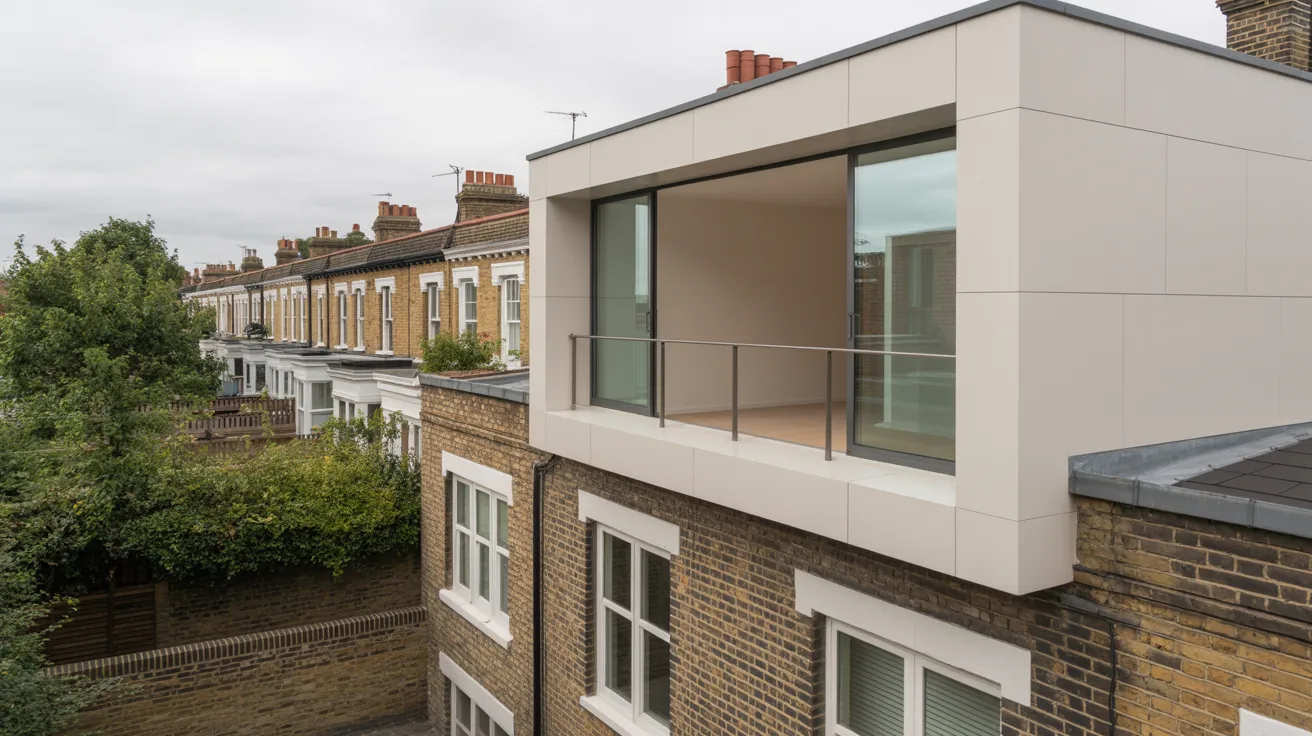
Lambeth's Housing Stock and Loft Conversion Potential
Lambeth contains some of London's most desirable Victorian and Edwardian residential neighbourhoods. Brixton, Stockwell, Herne Hill, and Tulse Hill are dominated by period terraces—typically two to three storeys with pitched roofs and substantial roof voids. These are excellent candidates for loft conversion, both functionally and aesthetically.
The more affluent areas of Clapham and Streatham feature a similar architectural character, with many period homes showing consistent fenestration and roof profiles. West Norwood and Gipsy Hill contain a mix of semis and terraces, often interwar stock, which widens the range of loft conversion options available to homeowners.
The challenge in Lambeth is not the suitability of the housing stock—it is the overlay of conservation area designations. Many of these attractive period properties are precisely the ones protected by stricter planning rules.
Conservation Areas in Lambeth: What They Mean for Your Loft
Lambeth has designated conservation areas across its most character-rich neighbourhoods. These include Clapham Old Town, Brixton, Streatham, Herne Hill, and the Railton Road area. Conservation status triggers additional planning considerations that go beyond standard Permitted Development rules.
Clapham Old Town
Clapham Old Town is one of the strictest conservation areas in Lambeth. The historic streetscape consists of Georgian and Victorian terraces with consistent rooflines and dormer windows that date from the 19th century. Any contemporary dormer addition must respect this established pattern. Lambeth Council expects rear dormers only in most cases, and even then, dormers must use traditional materials, appropriate proportions, and sympathetic detailing. Front dormers are virtually never approved in this area, as they would disrupt the unified roofline visible from the street.
Brixton Conservation Area
Brixton's conservation area protection focuses on the Victorian terrace fabric around Brixton Road and the surrounding residential streets. The character of the area relies on consistent pitched roofs, brick elevations, and period detailing. Loft conversions here typically require planning permission due to conservation status. Dormer design is subject to detailed scrutiny; materials must match existing brickwork, and the dormer must be positioned to avoid visual prominence from public vantage points.
Streatham and Herne Hill
Streatham's conservation area contains late Victorian and Edwardian terraces, many with particularly fine proportions. Herne Hill is similarly designated and features grand Victorian properties on tree-lined streets. Both areas are protective of roofline continuity. Loft conversions in these neighbourhoods frequently require planning permission, and dormer applications are assessed on a case-by-case basis with strict reference to the conservation guidelines.
Railton Road Area
This smaller conservation area around Railton Road in Brixton protects a cluster of Victorian properties with distinctive architectural merit. Roofline and dormer visibility from the street is a key consideration. Any loft conversion here will almost certainly need planning permission.
Conservation area status does not prevent loft conversion—it requires greater care and precision in design, materials, and positioning.
Permitted Development for Loft Conversions in Lambeth
Outside conservation areas, homeowners may benefit from Permitted Development (PD) rights for loft conversions. In England, the standard rule allows a loft conversion within the roofspace up to 40 cubic metres for a terrace or semi-detached house without requiring planning permission, provided certain conditions are met. This is a significant advantage for properties not subject to conservation controls.
The 40m³ Rule for Terraces
For a terraced property outside a conservation area, you can typically enlarge the roof structure by up to 40m³ (or add 40m³ of habitable space) without planning permission. This covers both the conversion of existing roof void and a modest extension upward through the roof (such as a rear dormer or hip-to-gable alteration). The 40m³ allowance is measured as the external volume of the enlarged roof structure, not the usable floor space.
Lambeth applies this rule consistently to terraces not in conservation areas. However, Permitted Development does not grant unconditional approval. The work must comply with building regulations, satisfy fire safety requirements, and not harm the amenity of neighbouring properties (for example, by creating excessive overshadowing or overlooking). If the conversion breaches these limits, planning permission becomes necessary.
Class B and PD Removal
Several circumstances remove Permitted Development rights entirely. If the property is within a conservation area, PD rights are removed—planning permission is required. If the property is listed or within the curtilage of a listed building, PD rights do not apply. If the property is in an Article 4 direction area (which Lambeth has not widely imposed), PD rights may be withdrawn. Check your specific postcode and address with Lambeth Council before assuming PD eligibility.
Dormer Loft Conversions: What Lambeth Typically Approves
Dormer windows are the most common method of increasing headroom and usable floor space in a pitched-roof loft conversion. They extend vertically up from the existing roof plane, creating full-height walls and additional floorspace within the roof structure. For many Lambeth properties—especially Victorian and Edwardian terraces with modest ceiling heights on upper floors—dormers are functionally necessary.
Rear Dormers: Generally Approved
Lambeth Council is generally receptive to rear dormers in loft conversions, even where planning permission is required. Rear dormers are less visually intrusive from the street and less disruptive to the public character of a neighbourhood. Most approvals include rear dormers that are well-proportioned (typically 50–70% of the roof width), set down slightly from the ridge, and finished in materials matching the existing roof and walls. A well-designed rear dormer will not trigger conservation concerns in most cases.
Front Dormers: Rarely Approved
Front dormers are much more problematic in Lambeth, particularly in conservation areas. A front dormer is visible from the street and disrupts the established roofline. In Clapham Old Town, Brixton, Streatham, and Herne Hill, front dormers are almost never approved unless they can be justified as reinstatement of historical dormers. Even outside conservation areas, Lambeth officers assess front dormers critically, looking at the cumulative impact on the streetscape and the precedent it might set for neighbouring properties.
Rooflight Conversions: A Lower-Impact Alternative
Where front dormers are not viable, rooflights (velux-style windows) combined with roof structure alteration (hip-to-gable or raising the roof) may provide an alternative. Rooflights are less visually obtrusive than dormers and may be easier to justify in sensitive locations. However, they provide less usable headroom and floor area than a dormer, so the building layout must be carefully considered.
Hip-to-Gable Conversions in Lambeth
Hip-to-gable conversions are common in Lambeth, particularly on interwar semis and terraces in Streatham, Tulse Hill, and West Norwood. A hip-to-gable conversion removes the sloping "hip" roof at the side of the building and extends it upward to a full gable wall. This creates additional floor area and headroom without a dormer protruding from the roof slope.
Lambeth's treatment of hip-to-gable conversions depends on visibility and conservation status. On the rear or side elevation of a property, a hip-to-gable conversion is often less controversial than a dormer. However, if the gable end is visible from the street—particularly in a conservation area—the conversion is subject to the same scrutiny as a dormer. The new gable wall must be constructed in matching materials and proportioned to appear integral to the original design rather than an obvious modern addition.
Outside conservation areas, hip-to-gable conversions within the 40m³ PD allowance may not require planning permission, provided they comply with building regulations and do not breach neighbour amenity. However, always verify whether the conversion triggers PD removal due to other factors (listed status, Article 4 direction, etc.).
Key Lambeth Statistic
Approximately 65% of Lambeth's residential stock dates from the Victorian and Edwardian periods (1860–1920). This makes the borough a prime loft conversion market, but also means that conservation area designations affect a significant proportion of potential projects. Always check your property's conservation area status before commencing design work.
Building Regulations for Loft Conversions in Lambeth
Even if your project qualifies for Permitted Development (and thus does not require planning permission), it must still satisfy Building Regulations. Lambeth Building Control enforces these standards rigorously. The most common issues affecting loft conversions are fire safety, structural adequacy, and thermal performance.
Fire Safety and Escape Routes
A new loft room must have an adequate means of escape in case of fire. This typically means either a staircase leading directly to a protected route, or a window of sufficient size to allow escape or rescue. Building Regulations Part B (Fire Safety) requires that the staircase to the loft be enclosed in a 30-minute fire-resistant construction (a "protected staircase"). All windows must be openable and of a size that allows occupants to climb out and reach safe ground, or allows rescue personnel to access the room.
Victorian properties often have sash windows on upper floors. These are usually acceptable for escape purposes if large enough (typically 775mm wide × 1230mm high minimum opening). However, if windows are small or obstructed, you may need to add a new escape window, which can complicate the design (particularly on front elevations in conservation areas).
Structural Considerations
Victorian and Edwardian roof timbers are often undersized by modern standards and may show signs of movement, rot, or woodworm. Lambeth Building Control requires a structural engineer's report before approval. The engineer will assess whether the existing timbers can support additional load (particularly a dormer or hip-to-gable alteration) or whether reinforcement or replacement is necessary. Roof ties (horizontal timbers connecting the two roof slopes to prevent spreading) are often missing in older properties; these may need to be added.
Thermal Performance
New loft conversions must meet current insulation standards (Building Regulations Part L). The roof, walls, and any new windows must achieve U-values consistent with modern energy efficiency requirements. This typically means 110–150mm of mineral wool or equivalent between rafters, plus a vapour control layer and ventilated cavity. Condensation and interstitial moisture are common problems if thermal design is inadequate.
Headroom and Floor Area
Building Regulations requires that at least 50% of the new room has a ceiling height of at least 2.3m. This is important for defining habitable space and calculating floor area. In shallow-pitched roofs (common in some areas of Lambeth), a dormer may be necessary to meet this requirement.
Planning Permission vs. Permitted Development: Comparison for Lambeth
| Conversion Type | Outside Conservation Area (No Listing) | Inside Conservation Area | Listed Property |
|---|---|---|---|
| Simple roof void conversion, no external alteration (rooflights only, within 40m³) | Permitted Development (no permission needed) | Planning permission required | Listed Building Consent + Planning Permission |
| Rear dormer, modest scale (within 40m³ for terraces) | Permitted Development (no permission needed) | Planning permission required; often approved | Listed Building Consent + Planning Permission |
| Front dormer | Planning permission required; discretionary approval | Planning permission required; rarely approved | Listed Building Consent + Planning Permission; rarely approved |
| Hip-to-gable (rear/side facing, within 40m³) | Permitted Development (no permission needed) | Planning permission required; often approved if not street-facing | Listed Building Consent + Planning Permission |
| Hip-to-gable (front/street-facing) | Planning permission required; discretionary approval | Planning permission required; rarely approved | Listed Building Consent + Planning Permission; rarely approved |
| Roof raising (new gable, exceeding 40m³) | Planning permission required | Planning permission required; rarely approved | Listed Building Consent + Planning Permission; rarely approved |
The Lambeth Planning Application Process
If your loft conversion requires planning permission (whether due to conservation area status, listed building designation, or exceeding PD limits), you will need to submit an application to Lambeth Council. The process typically takes 8–13 weeks from submission to decision, though this can be longer if the council requests amendments.
What You'll Need to Submit
Your application should include location plans, block plans, existing and proposed floor plans, roof plans, and elevation drawings showing the dormer or hip-to-gable alteration in context with neighbouring properties. Photographs of the existing roof and streetscape are helpful. In conservation areas, a Design & Access Statement explaining how the conversion respects the conservation area character is often required or strongly advisable.
Lambeth Council's conservation officers review applications in conservation areas. They assess visual impact from public vantage points, material compatibility, and consistency with the character of the area. A well-prepared application with professional drawings and a thoughtful design approach significantly improves approval prospects.
Frequently Asked Questions
Can I convert my loft in Clapham Old Town conservation area without planning permission?
No. All loft conversions in conservation areas require planning permission, even simple ones. The conservation area designation removes Permitted Development rights. However, rear dormers and roof conversions with appropriate materials and design are often approved.
What is the 40m³ rule, and does it apply to my Lambeth property?
The 40m³ rule allows a terrace or semi to enlarge its roof structure by up to 40 cubic metres without planning permission (Permitted Development). This applies only to properties outside conservation areas and not subject to other constraints (listing, Article 4 directions). Check with Lambeth Council to confirm your property is eligible.
Is a rear dormer always approved in Brixton?
Not automatically. Brixton is a conservation area, so all loft conversions require planning permission. However, well-designed rear dormers with appropriate materials and proportions are frequently approved. A front dormer in Brixton is much less likely to be approved.
Do I need listed building consent for my Victorian terrace loft conversion?
Only if the property is listed. Many Victorian and Edwardian properties in Lambeth are not listed, even though they are in conservation areas. Check the Historic England list or contact Lambeth Council. If listed, you need both Listed Building Consent and Planning Permission.
What happens if I exceed the 40m³ limit in a dormer conversion?
Any volume over 40m³ requires planning permission. The council will assess whether the larger conversion is appropriate to the property and neighbourhood. Approval is discretionary and not guaranteed, particularly in conservation areas.
Can I add a front dormer to my house in West Norwood?
West Norwood is not a conservation area, so a front dormer would not be prevented by conservation status alone. However, Lambeth Council still assesses front dormers discretionarily under the Town & Country Planning Act. The proposal must not harm the character of the area, result in harmful precedent, or impact neighbours. Approval is not assured.
What are the main building regulation issues for a loft conversion?
Fire safety is the most common concern. You must provide an adequate escape route (typically a protected staircase) and ensure windows are large enough for emergency exit. Structural adequacy (particularly in Victorian properties) must be verified by a structural engineer. Insulation and condensation control are also key requirements.
How long does a loft conversion planning application take in Lambeth?
The statutory determination period is 13 weeks. However, applications often take longer if the council requests amendments. Submitting a complete application with professional drawings and addressing conservation concerns upfront can speed up the process.